
Herbert A. Hauptman: Pioneer of Direct Methods in X‑ray Crystallography
Herbert A. Hauptman (1917–2011) was an American mathematician whose development of direct methods transformed X‑ray crystallography and earned him, with Jerome Karle, the 1985 Nobel Prize in Chemistry.
Herbert A. Hauptman (February 14, 1917 – October 23, 2011) was an American mathematician who applied abstract mathematical ideas to a practical scientific problem: how to determine the three‑dimensional arrangement of atoms in crystalline materials from X‑ray diffraction data. His work is widely regarded as a turning point in structural chemistry and crystallography.
Image gallery
2 Images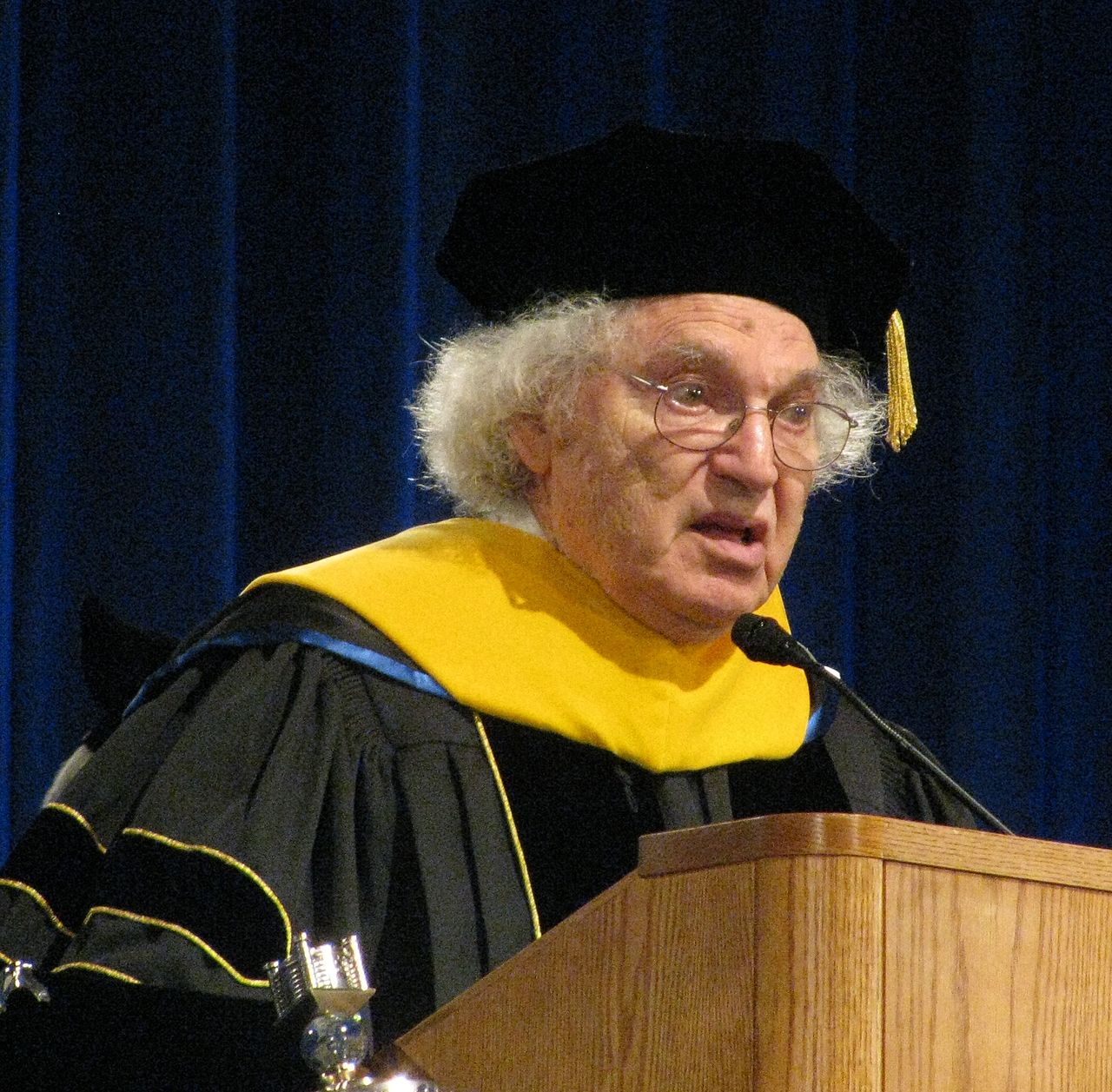

Scientific contribution
Hauptman developed what are known as direct methods, probabilistic and algebraic techniques that address the central difficulty of X‑ray crystallography: the phase problem. X‑ray experiments measure intensities but not phases of scattered waves, and without phase information a diffraction pattern cannot be straightforwardly transformed into an electron‑density map. By introducing statistical relations between structure factors, Hauptman produced practical procedures for estimating phases directly from intensity data, making it possible to compute accurate atomic models for many classes of compounds.
Collaboration and recognition
Hauptman carried out this work in close collaboration with Jerome Karle. Their combined theoretical and experimental efforts culminated in major improvements to crystallographic practice. For these achievements they were awarded the Nobel Prize in Chemistry in 1985. The prize highlighted the interdisciplinary nature of their contribution: a mathematical advance that produced broad chemical and biological impact.
Applications and impact
Direct methods rapidly became standard tools in small‑molecule crystallography and later influenced approaches to larger structures. The ability to solve crystal structures more reliably accelerated research in organic chemistry, mineralogy, pharmaceuticals, and materials science. Determining molecular geometry is essential for understanding reactivity, designing drugs, and engineering novel materials—activities that benefitted from Hauptman’s innovations based on X‑ray diffraction of crystallized materials.
Legacy and notable facts
- Hauptman is often cited as an example of successful interdisciplinary science: a mathematician whose abstract work produced a major experimental advance.
- His methods remain part of the foundation of modern crystallographic software and education.
- Although their work began with small molecules, conceptual descendants of direct methods continue to inform structural biology and materials research.
Hauptman’s career illustrates how theoretical insight can unlock practical techniques with long‑lasting consequences across multiple scientific fields. For further reading on his life and methods, consult specialized histories of crystallography and accounts of the 1985 Nobel Prize award.
Author
AlegsaOnline.com Herbert A. Hauptman: Pioneer of Direct Methods in X‑ray Crystallography Leandro Alegsa
URL: https://en.alegsaonline.com/art/139656