
Goldfinger (1964 film)
Goldfinger (1964) is the third Eon Productions James Bond film, starring Sean Connery and directed by Guy Hamilton. Based on Ian Fleming's novel, it popularized many franchise conventions and features Shirley Bassey's theme.
Overview
Goldfinger is a 1964 spy film produced by Eon Productions and adapted from Ian Fleming's novel of the same name. It is the third film in the official James Bond series and the third to star Sean Connery as the British secret agent James Bond. The film is widely credited with consolidating elements that became signatures of the franchise: a memorable title theme, exotic locations, elaborate villains, gadgetry, and set pieces designed for spectacle.
Image gallery
10 Images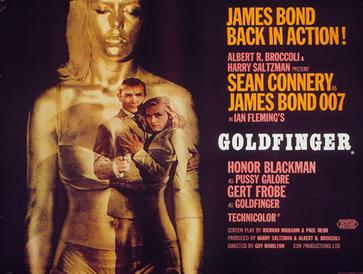





Cast and contributors
The picture was directed by Guy Hamilton and features Sean Connery in the role of James Bond. Gert Fröbe portrayed the titular antagonist Auric Goldfinger, and Honor Blackman appeared as Pussy Galore. Shirley Eaton is noted for a striking visual sequence, while the title song was performed by Shirley Bassey, whose powerful rendition became one of the most recognizable film themes of the era. The film's production team combined experienced technicians and designers to create distinctive sets and props, including the famous Aston Martin and inventive gadgetry.
Plot elements and notable scenes
Without revealing every detail, Goldfinger follows Bond as he investigates a wealthy industrialist whose scheme poses a global threat to financial stability. The movie contains several iconic sequences that entered popular culture: the gadget-equipped Aston Martin DB5, the henchman known for a deadly hat, and the image of a character covered in gold paint. These scenes emphasize the film's mix of espionage, suspense, and tongue-in-cheek bravado.
Production, style and music
The production combined location shooting with elaborate studio work and practical effects typical of 1960s filmmaking. Screenwriters adapted material from Fleming while creating new cinematic moments to increase drama and visual impact. Musically, the title theme sung by Shirley Bassey and the score helped define the film's tone, and the powerful theme song has been strongly associated with the Bond brand ever since.
Reception and legacy
Goldfinger was a commercial success and is often cited as one of the defining early entries in the Bond canon. It played a major role in shaping how subsequent spy films approached spectacle, characterisation, and marketing. Many tropes that audiences now associate with James Bond were either introduced or firmly established in this film, and its influence can be seen in decades of franchise instalments and imitations.
Further reading and links
Author
AlegsaOnline.com Goldfinger (1964 film) Leandro Alegsa
URL: https://en.alegsaonline.com/art/138978