
Fraser Stoddart — supramolecular chemist and pioneer of molecular machines
British-born chemist known for work on mechanically interlocked molecules and molecular machines; Nobel laureate (2016); Board of Trustees Professor at Northwestern University and head of a mechanostereochemistry group.

Fraser Stoddart (born 24 May 1942) is a British chemist best known for his contributions to supramolecular chemistry and the design of molecular-scale devices. He holds the title of Board of Trustees Professor of Chemistry and leads the Stoddart Mechanostereochemistry Group at Northwestern University in the United States. Stoddart shared the 2016 Nobel Prize in Chemistry with Ben Feringa and Jean-Pierre Sauvage for developing molecular machines, a class of molecules capable of performing controlled movements in response to stimuli.
Image gallery
8 Images


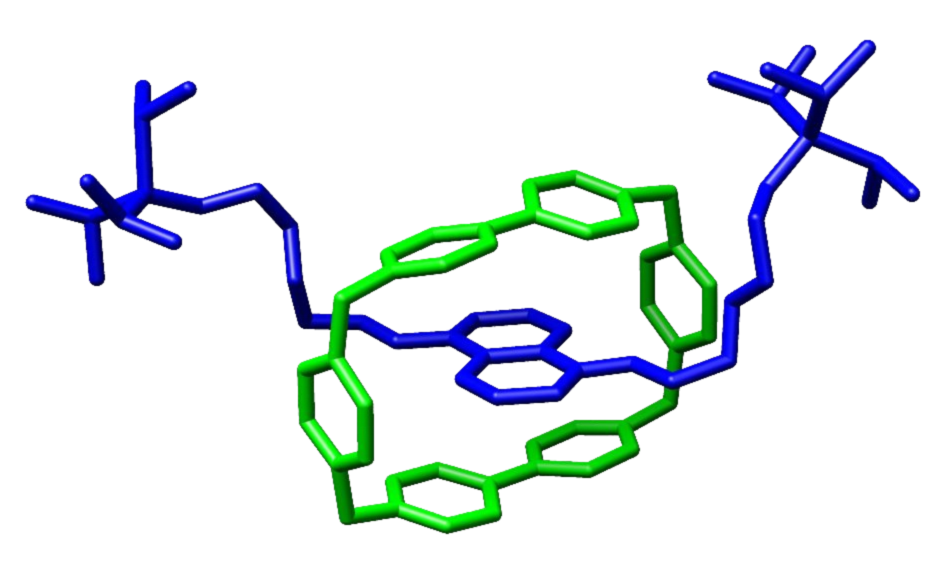


Research focus and major concepts
Stoddart's research centers on mechanically interlocked molecules such as rotaxanes and catenanes. These architectures consist of components that are linked by their topology rather than by covalent bonds, allowing parts to move relative to one another. His group's work often emphasizes mechanostereochemistry, the stereochemical consequences of mechanical bonds, and explores how to use non-covalent interactions and templating strategies to assemble complex, functional systems.
Methods, examples and applications
Key approaches in Stoddart's lab include template-directed synthesis and the design of molecular switches and shuttles. Examples of concepts and systems investigated include:
- Rotaxanes — dumbbell-shaped components threaded through macrocycles that can translate along the axle.
- Catenanes — interlocked ring systems with controlled relative motion.
- Molecular switches that toggle between states under chemical, photonic, or electrochemical control.
These systems serve as prototypes for nanoscale actuators, responsive materials, and components of molecular electronics, and they illustrate how chemical design can translate into controllable mechanical action at the molecular level.
Career and honours
Born in Edinburgh, Stoddart's scientific career spans several countries and academic appointments. He is a Fellow of the Royal Society (FRS), the Royal Society of Edinburgh (FRSE) and the Royal Society of Chemistry (FRSC). Further information on his work and profile can be found in online profiles and institutional pages describing his lab's activities and publications. He continues to supervise research that bridges chemistry, materials science and nanotechnology.
Significance and legacy
The Nobel-awarded advances in molecular machinery elevated supramolecular chemistry from conceptual studies of weak interactions to an engineering discipline capable of producing tiny devices with predictable behavior. Stoddart's contributions are notable for demonstrating practical synthetic routes to interlocked architectures and for inspiring new directions in molecular design, with ongoing implications for diagnostics, smart materials and molecular-scale information processing. For general information about chemists and chemistry careers, see a short entry on the profession chemist.
Author
AlegsaOnline.com Fraser Stoddart — supramolecular chemist and pioneer of molecular machines Leandro Alegsa
URL: https://en.alegsaonline.com/art/138587