
Molecular machine (nanomachine)
A molecular machine is an assembly of molecules that produces controlled mechanical motion in response to specific stimuli. Found in biology and built synthetically, they enable sensing, transport, and nanoscale actuation.
Overview
A molecular machine, often called a nanomachine, is any discrete molecular assembly that produces a controlled mechanical response when stimulated. Inputs can be chemical changes, light, electric fields or thermal variations; the output is motion or conformational change at the molecular scale. These systems are studied within nanotechnology and intersect chemistry, physics and biology.
Image gallery
10 Images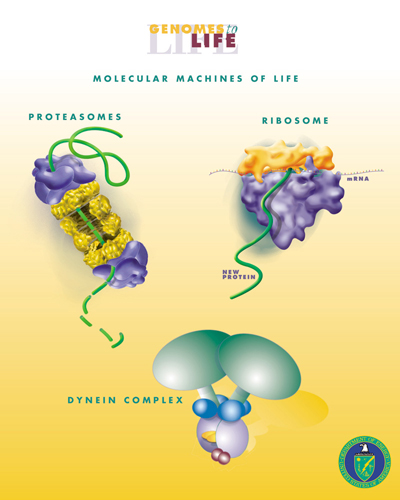




Components and common designs
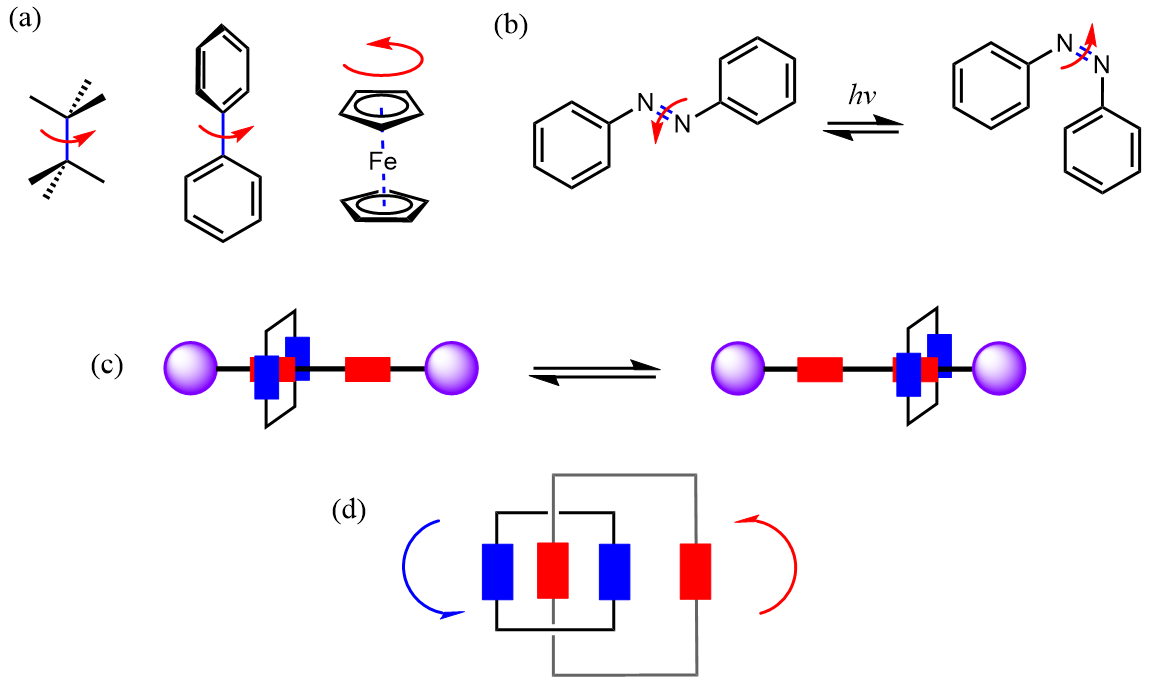
Typical molecular machines consist of components that play roles analogous to macroscopic parts: moving joints, tracks, rotors and switches. Examples include rotors that rotate about an axis, walkers that step along a molecular track, and switches that change state reversibly. Architectures used by chemists include rotaxanes, catenanes and photoresponsive units; energy input is converted into directional motion through carefully designed reaction cycles.
History and notable milestones
Work on deliberately designed molecular machines grew out of supramolecular chemistry and studies of mechanically interlocked molecules. A pivotal recognition of the field came with the 2016 Nobel Prize in Chemistry, awarded to Jean-Pierre Sauvage, Fraser Stoddart and Ben Feringa for contributions to the design and synthesis of molecular machines. Their experiments demonstrated controlled motion and laid foundations for later functional systems.
Applications and examples
Molecular machines have potential uses in targeted drug delivery, responsive materials, molecular sensing, and nanoscale assembly. In research settings they have been shown to carry cargo along synthetic tracks, to act as molecular pumps, and to change surface properties on demand. They are also explored as elements of molecular computing and as components in hybrid devices that bridge molecular and larger scales.
Biological versus synthetic molecular machines
Biological molecular machines — such as ATP synthase, motor proteins (kinesin, dynein) and ribosomes — are complex assemblies evolved to convert chemical energy into directed motion or mechanical work. Synthetic molecular machines are designed and built by chemists; they are typically simpler but can be tuned to specific stimuli. Key distinctions include energy source, robustness, and the level of structural complexity.
Challenges and outlook
Major challenges remain: achieving high efficiency, coordinated motion of many units, integration into larger systems, and reliable operation in complex environments. Ethical, safety and scalability issues are also topics of discussion as the field moves from laboratory demonstrations toward practical applications. Continued advances in synthesis, characterization and interfacing with micro- and macroscopic devices will shape future possibilities.
Questions and answers
Q: What is a molecular machine?
A: A molecular machine is any set of molecules that produce mechanical movements in response to specific stimuli.
Q: What is the purpose of a molecular machine?
A: The purpose of a molecular machine is to produce mechanical movements in response to specific stimuli.
Q: What are the two broad categories of molecular machines?
A: The two broad categories of molecular machines are synthetic and biological.
Q: What is the significance of the 2016 Nobel Prize in Chemistry?
A: The 2016 Nobel Prize in Chemistry was awarded to Jean-Pierre Sauvage, Fraser Stoddart, and Ben Feringa for the design and synthesis of molecular machines, which highlights the importance of molecular machines in the field of nanotechnology.
Q: What is nanotechnology?
A: Nanotechnology is the study and application of materials and devices with structures and properties that exist on a nanoscale.
Q: What is a molecular assembler?
A: A molecular assembler is a hypothetical device that could assemble complex molecular structures via molecular machines.
Q: Can molecular machines be found in nature?
A: Yes, molecular machines can be found in nature and are referred to as biological molecular machines.
Related articles
Author
AlegsaOnline.com Molecular machine (nanomachine) Leandro Alegsa
URL: https://en.alegsaonline.com/art/65860
Sources
- bbc.co.uk : bbc.co.uk/news/science-environment-37563673
- springerlink.com : "Structure and function of mammalian cilia"
- doi.org : 10.1007/s00418-008-0416-9
- ncbi.nlm.nih.gov : 2386530
- pubmed.ncbi.nlm.nih.gov : 18365235
- pubs.acs.org : "Artificial molecular-level machines: which energy to make them work?"
- doi.org : 10.1021/ar000170g
- nobelprize.org : "The Nobel Prize in Chemistry 2016"
- nytimes.com : "3 makers of 'world's smallest machines' awarded Nobel Prize in Chemistry"
- linkinghub.elsevier.com : "Proteins MOVE! Protein dynamics and long-range allostery in cell signaling"
- doi.org : 10.1016/B978-0-12-381262-9.00005-7
- pubmed.ncbi.nlm.nih.gov : 21570668