
Bracket fungi (shelf fungi): characteristics, ecology, and human uses
Bracket fungi (shelf fungi) are wood-inhabiting basidiomycetes that form shelf- or bracket-shaped fruiting bodies. They play key roles in wood decay, forest ecology, and have traditional and practical uses.
Bracket fungi, often called shelf fungi or polypores, are a diverse group of wood-inhabiting fungi that produce conspicuous shelf-like fruiting bodies. These structures, commonly referred to as conks, may appear as single caps, overlapping tiers, or massive perennial shelves attached to trunks, stumps or fallen logs. Many bracket fungi belong to the larger assemblage of basidiomycetes and are classified within or near the phylum Basidiomycota, a group characterized by spore-producing cells called basidia.
Image gallery
10 Images

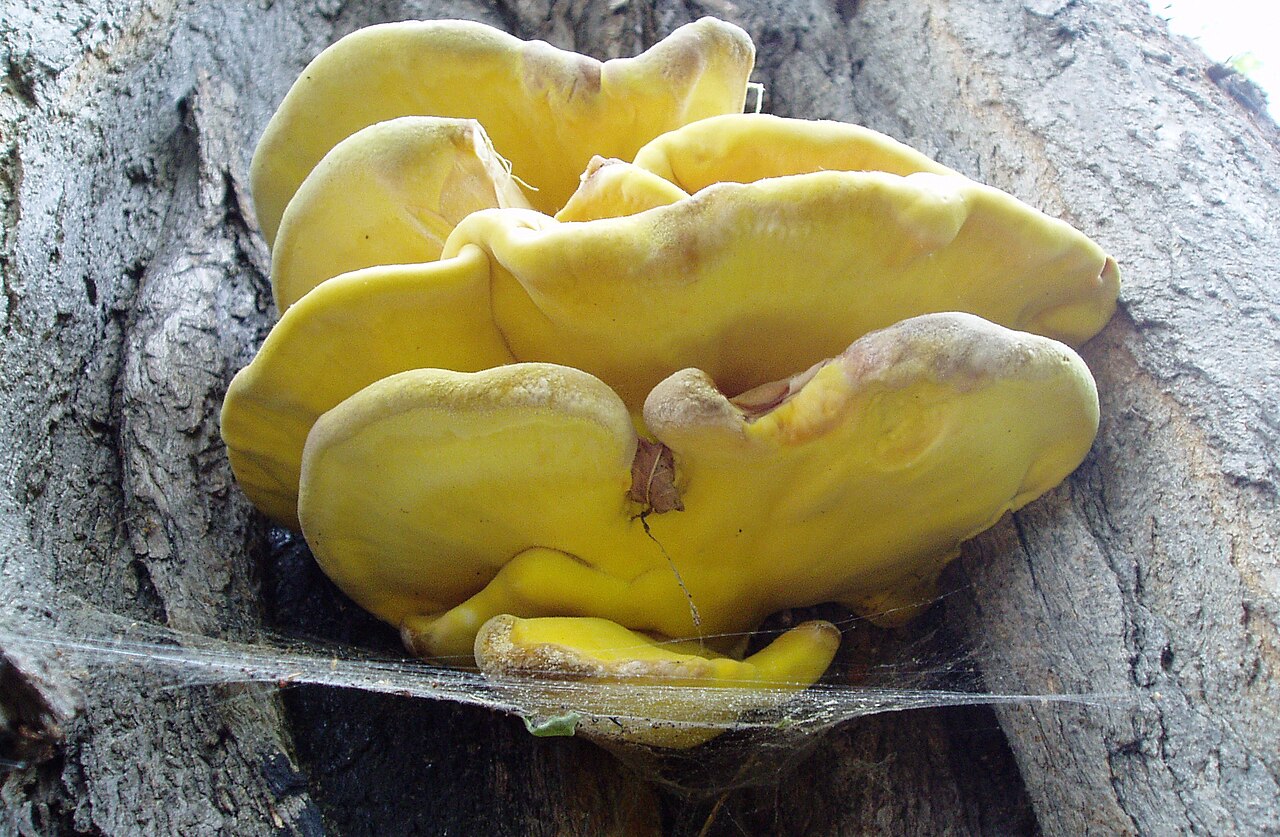


Appearance and internal structure
Bracket fruiting bodies vary from thin and leathery to hard and woody. The upper surface can be smooth, zoned with concentric rings, hairy, or crusty depending on species. The undersurface commonly bears tiny pores or tubes from which basidiospores are released; in some taxa the hymenium may take the form of teeth or gills instead of pores. Perennial conks add new layers of tissue each season, producing visible growth rings, while annual fruiting bodies form, release spores and decay within a single year. Spores and microscopic structures on the pore surface drive reproduction and dispersal for these organisms (spore-producing surface).
Ecology and life cycle
Bracket fungi are primarily saprotrophs and parasites of woody plants. They colonize both living and dead trees as well as woody debris, where they decompose lignin and cellulose. Different species produce characteristic types of wood decay: some cause white rot by degrading lignin and leaving a fibrous pale wood, others cause brown rot that leaves dry, crumbly, brown residue. Through these processes bracket fungi are important agents of nutrient recycling in forests and can influence habitat complexity by hollowing trunks and creating cavities used by wildlife.
Examples, uses and significance
Well-known bracket fungi include sturdy perennial species such as Fomes and Ganoderma and more delicate forms like Trametes versicolor (turkey tail). Several have traditional uses: some perennial conks were used as tinder and kindling, others are incorporated in folk medicines or studied for bioactive compounds, and certain species yield natural dyes or are crafted into ornaments. At the same time, bracket fungi can be plant pathogens or indicators of structural weakness in veteran trees, posing concerns for forestry and urban tree management.
Distinctions and notable facts
- "Bracket" and "shelf" are informal terms describing form; scientifically many of these fungi are called polypores because of the pore-bearing surface.
- Some species are long-lived and perennial, accumulating annual growth layers (perennial versus annual), while others fruit only briefly each year.
- Identification often depends on a combination of macroscopic traits (shape, color, pore size), substrate preference and microscopic features — consultation of regional keys or specialists is recommended (taxonomic resources).
As conspicuous elements of woodland ecosystems, bracket fungi combine ecological importance with cultural and practical roles. Their presence on a tree invites closer inspection: in some cases they signal natural recycling of deadwood; in others they warn of decay that may affect tree stability. For further general information and photographic guides, see relevant mycology references and field guides (tree hosts, woody substrates, conk morphology).
Related articles
Author
AlegsaOnline.com Bracket fungi (shelf fungi): characteristics, ecology, and human uses Leandro Alegsa
URL: https://en.alegsaonline.com/art/13584