
Boys on the Side (1995 film)
1995 road comedy-drama about three women who travel cross-country, forming an unconventional family while facing violence, illness and love. Stars Drew Barrymore, Mary-Louise Parker and Whoopi Goldberg.
Overview
Boys on the Side is a 1995 American movie that mixes comedy and drama to tell a character-driven road story. The film follows three women who travel together across the United States, forging a bond as they cope with personal crises and changing circumstances. The premise centers on friendship, survival, and the small, human choices that shape lives when people are pushed outside familiar routines.
Image gallery
2 Images
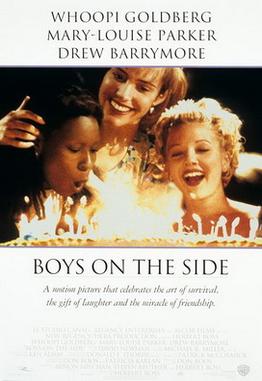
Characters and cast
The central trio is played by well-known performers. Drew Barrymore portrays Holly, a pregnant woman fleeing an abusive relationship; Mary-Louise Parker plays Robin, a real estate agent whose life is complicated by an HIV diagnosis; and Whoopi Goldberg appears as Jane, a warm and outspoken lesbian singer who becomes a stabilizing presence. Their interactions provide much of the film's emotional weight.
- Holly — the vulnerable but determined friend
- Robin — professional life, private crisis
- Jane — music, humor and moral center
Themes and style
As a road movie, the film uses travel as a device to reveal character and to create situations that test loyalty and compassion. It addresses themes of domestic violence, illness (including the social implications of HIV in the 1990s), sexual identity—Jane is depicted as a lesbian—and the ways chosen families can offer refuge. The tone shifts between light, often comic moments and more somber scenes, aiming for balance rather than melodrama.
Release and reception
Released in the mid-1990s, the film drew generally positive notices from critics, who highlighted the performances and the chemistry among the leads. While reviewers noted its ambition and heart, the picture achieved only modest commercial returns, earning little more than its production costs. For a snapshot of contemporary commentary, see a selection of critical responses collected here.
Legacy and notable facts
Though not a blockbuster, the movie is remembered for its focus on female friendship and for addressing social issues that were prominent in public discussion at the time. It offered roles that allowed each lead actor to show range, and it contributed to a series of 1990s films that blended comedy and drama to explore mature themes. For viewers interested in character-focused road stories and representations of women's solidarity, this title remains a frequently cited example.
For further reading on the cast and era, consult profiles of the principal actors and overviews of 1990s cinema trends. Additional resources and archival material can be explored via relevant film databases and retrospectives.
Related articles
Author
AlegsaOnline.com Boys on the Side (1995 film) Leandro Alegsa
URL: https://en.alegsaonline.com/art/13543