
April 2018 inter-Korean summit — Panmunjom meeting between Moon Jae-in and Kim Jong‑un
A neutral overview of the April 27, 2018 inter‑Korean summit at the Joint Security Area, its context, key outcomes (Panmunjom Declaration), and historical significance for Korean Peninsula diplomacy.
Overview
The April 2018 inter‑Korean summit was held on April 27, 2018, in the Joint Security Area (JSA) within the Korean Demilitarized Zone. The meeting brought together Moon Jae‑in, the President of South Korea, and Kim Jong‑un, the Supreme Leader of North Korea. It was the third summit between leaders of the two Koreas and the first such meeting in eleven years. The leaders issued the Panmunjom Declaration, a document that set out a series of cooperative steps and stated mutual intentions related to peace and security on the Korean Peninsula.
Image gallery
7 Images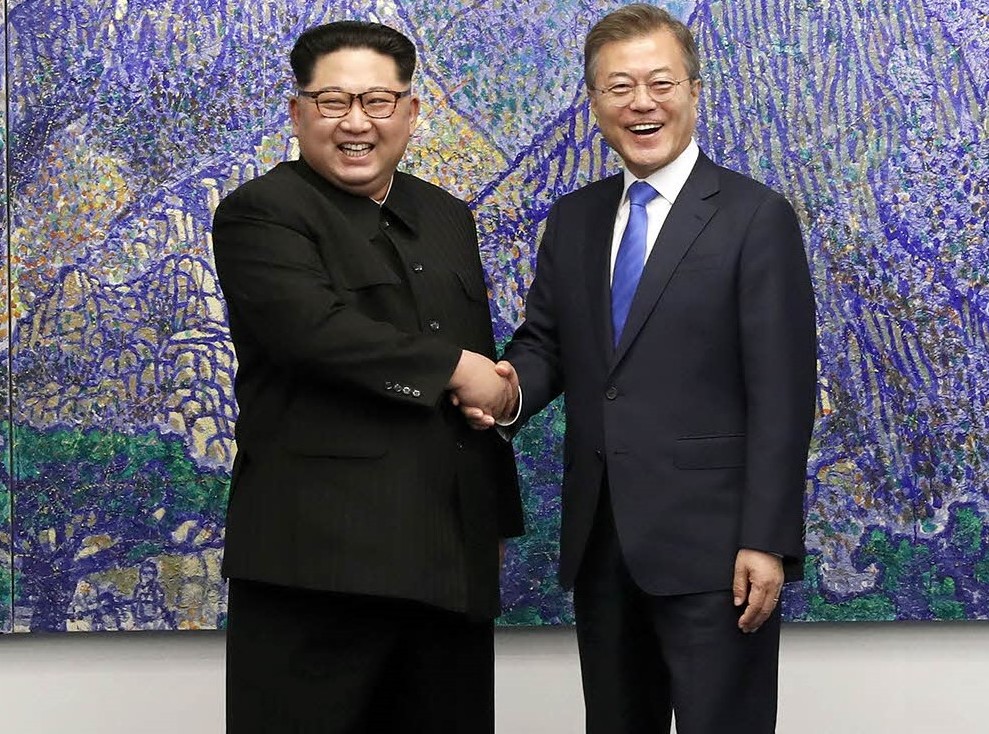


Historical context
The summit took place against a backdrop of heightened diplomatic activity following years of tension over the North's weapons programs. Earlier inter‑Korean summits occurred in 2000 and 2007 and focused on engagement and family reunions. The April 2018 meeting gained international attention because it marked the first time since the end of the Korean War in 1953 that a North Korean leader crossed south of the Military Demarcation Line; President Moon also stepped briefly into the north. The symbolic act underscored the summit's aim of reducing long‑standing hostilities.
Location and protocol
The talks were held on the southern side of the JSA. The Joint Security Area is a unique facility where personnel from both sides are physically close, and it has been used for inter‑Korean dialogue and prisoner handovers. The ceremony emphasized protocol: the leaders met at the MDL, exchanged brief words, and walked together before formal discussions. The visible crossing of the MDL carried both symbolic and media significance.
Key outcomes and commitments
Participants framed their discussions largely around security, military confidence‑building and the future of the North's nuclear capabilities. The Panmunjom Declaration highlighted intentions to pursue:
- efforts to reduce military tensions and prevent accidental clashes;
- expanded inter‑Korean exchanges and cooperation in economy, transport and culture;
- measures aimed at advancing the denuclearization process, with a focus on dialogue and verification.
The declaration did not set precise technical deadlines but established political commitments that were intended to create momentum for follow‑up negotiations and international diplomacy concerning the North's nuclear weapons and the broader goal of denuclearization of the Korean Peninsula.
Aftermath and significance
Following the summit, the Panmunjom Declaration served as a basis for further inter‑Korean working‑level talks and helped open space for talks between North Korea and other states. Observers noted the meeting's symbolic success in easing tensions and creating a diplomatic opening, while also cautioning that tangible verification steps and concrete implementation would be required to convert political commitments into lasting change.
Notable facts and distinctions
This summit stands out for several reasons: it was the first summit hosted at the JSA in decades; it revived leader‑level dialogue after an extended gap; and it combined symbolic gestures with an agreed text addressing security and cooperation. While the long‑term impact depended on follow‑through, the meeting remains a major milestone in contemporary Korean Peninsula diplomacy.
For further context on the location and diplomatic sequence, see references to the Joint Security Area and background on the leaders: Moon Jae‑in and Kim Jong‑un. The summit forms part of a broader international process involving regional and global actors concerned with the legacy of the Korean War and the future of nuclear weapons policy and denuclearization.
Author
AlegsaOnline.com April 2018 inter-Korean summit — Panmunjom meeting between Moon Jae-in and Kim Jong‑un Leandro Alegsa
URL: https://en.alegsaonline.com/art/133734