
1980 Eruption of Mount St. Helens
Major volcanic eruption in Washington state on May 18, 1980. A lateral blast removed the summit, killed 57 people, produced widespread ashfall, and changed volcanology and hazard planning.
Overview
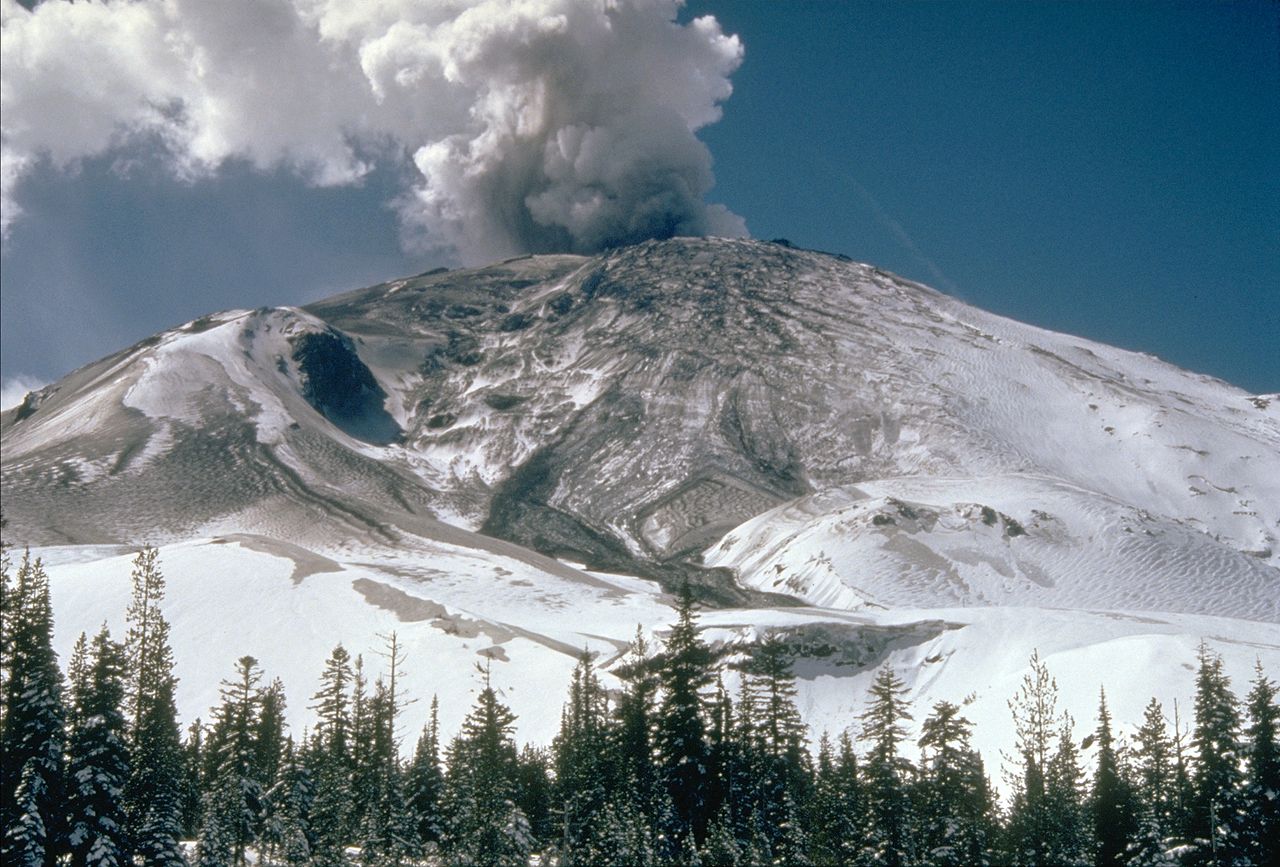
On May 18, 1980, Mount St. Helens in Washington produced one of the most significant volcanic events in United States history. The eruption is generally rated a 5 on the Volcanic Explosivity Index, and it dramatically altered the mountain’s summit and north slope. A lateral blast, powerful pyroclastic flows and a high ash column combined to reshape the local landscape and affect communities hundreds of miles away.
Image gallery
10 Images




Precursors and immediate cause
For about two months before the main blast there was a notable increase in seismic activity: frequent earthquakes and other unrest were recorded. Observers also saw persistent steam emissions from the volcano’s crater and a growing bulge on the mountain’s north flank. The collapse of that bulge triggered the lateral blast, which was a key factor in the eruption’s unusually destructive pattern.
The eruption and human toll
The sudden lateral explosion swept away the mountain’s upper slopes and left a large crater. Devastating flows and surges knocked down forests, filled valleys with debris, and caused 57 confirmed fatalities. Among those killed were the well-known local resident Harry R. Truman and the volcanologist David A. Johnston, who had been monitoring the event from a nearby observation post.
Effects and environmental impact
The eruption produced widespread ashfall that disrupted transportation, damaged machinery and buildings, and affected agriculture across several states. A massive landslide — often described as the largest in recorded North American history — and subsequent pyroclastic density currents transformed river valleys and Spirit Lake, destroying timber and altering ecosystems over a broad area.
Aftermath, research and recovery
In the years following the eruption, the area became a focus for scientific research into volcanic processes, ecological recovery and hazard mitigation. Monitoring systems and emergency planning for volcanic crises were expanded nationwide. Over decades, plant and animal life gradually returned, providing a long-term natural laboratory for studying succession after catastrophic disturbance.
Legacy and significance
The 1980 eruption of Mount St. Helens remains a landmark event in modern volcanology and public policy. It highlighted the need for improved eruption monitoring, clearer risk communication, and coordinated evacuations. The mountain and its surroundings continue to draw scientists, students and visitors interested in volcanism, recovery, and the lessons learned from a sudden, large-scale natural disaster.
Author
AlegsaOnline.com 1980 Eruption of Mount St. Helens Leandro Alegsa
URL: https://en.alegsaonline.com/art/133552