
.357 Magnum cartridge
A high-velocity revolver cartridge developed from the .38 Special, the .357 Magnum is valued for its ballistic performance, versatility in revolvers and rifles, and use in self-defense, hunting, and law enforcement.
Overview
The .357 Magnum is a rimmed, centerfire handgun cartridge developed in the early 20th century from the earlier .38 Special case. It is best known for combining relatively high muzzle velocity with easily handled recoil in compact firearms. The cartridge has been adopted for a wide range of roles, from civilian self-defense to hunting and law enforcement; technical information and specifications are available from many sources (general data).
Image gallery
8 Images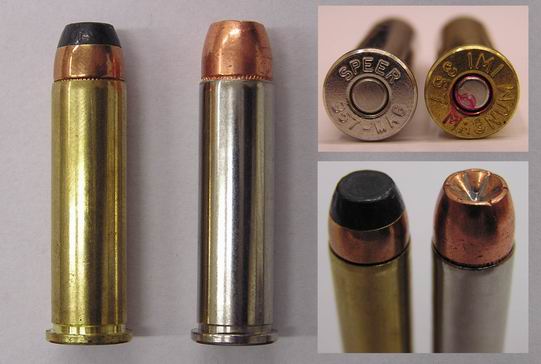


Design and characteristics
The .357 Magnum is essentially a lengthened and higher-pressure version of the .38 Special, so many revolvers chambered for .357 can safely fire the shorter .38 Special cartridge. Typical .357 loads produce greater energy and penetration than standard .38 loads, owing to elevated pressures and higher velocities. Because of this, the cartridge exhibits good terminal performance in many environments but also produces muzzle blast and recoil that are more pronounced than lighter handgun cartridges (stopping and terminal performance, penetration characteristics).
History and development
The cartridge was developed to meet demands for increased power in a handgun round. Designers lengthened the .38 Special case and loaded it to higher pressures to obtain higher speeds and energy. Early promotion emphasized its ability to defeat early protective garments and vehicle bodies in criminal encounters; accounts of its era mention concerns about offenders using cover or armor (historical context). For many years after its introduction it ranked among the highest-velocity production handgun cartridges available.
Firearms and compatibility
Most commonly the .357 Magnum is fired from double-action and single-action revolvers; these remain the most popular and historically significant platforms (revolver use). The cartridge also found a place in short- to medium-barrel lever-action rifles and in a small number of specially built semi-automatic pistols and larger handguns designed to withstand the pressures involved (rifle platforms, semi-automatic examples). Many manufacturers offer models chambered for .357 that accept both .357 and .38 Special ammunition.
Common uses and performance
- Self-defense: favored for its mix of power and controllability in many defensive handguns.
- Hunting: suitable for medium game at moderate ranges in revolvers and carbines.
- Law enforcement and sport shooting: used historically and in specialized roles where penetration and compact size matter (pistol context).
Notable facts and distinctions
The .357 Magnum’s ability to fire the shorter .38 Special cartridge gives shooters flexibility in practice and load selection. While it offers improved performance over its parent cartridge, increased pressure and recoil mean firearms must be designed or rated specifically for .357 use. Semiautomatic adoption has been limited to a few large-frame designs that can handle the cartridge’s energy (platform differences, penetration notes, further reading).
Safety, ammunition selection and local regulations should guide ownership and use. For technical ballistics, cartridge dimensions and pressure standards, consult manufacturer literature or authoritative references (historical sources, revolver guidance, rifle adaptations).
Author
AlegsaOnline.com .357 Magnum cartridge Leandro Alegsa
URL: https://en.alegsaonline.com/art/133385