
William Dampier: English explorer, navigator and natural historian
Seventeenth-century English navigator and privateer who explored parts of Australia, circumnavigated the globe three times, wrote influential voyage accounts and recorded early natural history observations.
William Dampier (baptised 5 September 1651; died March 1715) was an English sailor whose career combined privateering, exploration and scientific observation. He made significant contributions to navigation and natural history during long voyages around the world. Dampier is known for being the first Englishman to explore some coastal regions of Australia and for completing multiple global circumnavigations.
Image gallery
8 Images


Voyages and achievements
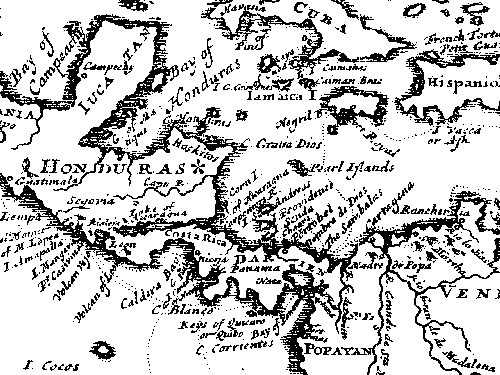
Dampier sailed in different roles: as a buccaneer in the Caribbean and Pacific, as captain of merchant and exploratory ships, and later as a pilot for royal expeditions. He became the first person recorded to have circumnavigated the globe three times. On one Pacific voyage he encountered and rescued the marooned sailor Alexander Selkirk, an episode that attracted wide public interest and may have helped inspire contemporary fiction.
Writings and scientific observations
Dampier published detailed accounts of his journeys that combined practical seamanship with descriptions of climate, flora, fauna and indigenous peoples. His books — widely read in the late 17th and early 18th centuries — influenced later explorers, naturalists and writers. Dampier's notes introduced new botanical and zoological observations to European audiences and informed navigation charts and sailing instructions.
Influence and legacy
Beyond exploration, Dampier's narrative style and factual reporting left a cultural mark. Contemporary writers, including Daniel Defoe, drew on public fascination with castaway stories when fiction about solitary survival gained popularity. Dampier's rescue of Selkirk is often linked to the literary tradition represented by Robinson Crusoe, though the novel is a composite work with multiple influences.
His practical manuals and voyage accounts improved maritime knowledge: he described winds, currents and coastal features useful to navigators, and reported on foods and medicines observed abroad. Over time Dampier was celebrated as both an adventurous sea captain and an early observer of the natural world.
Further notes and notable facts
- He combined roles as privateer and scientific recorder, a common mix among seafarers of his era.
- His published works were translated and read across Europe, contributing to the period's curiosity about distant lands.
- Dampier's accounts sometimes attracted criticism for bias or exaggeration, but they remain important primary sources for the history of exploration.
Dampier's life bridged practical seamanship, early scientific inquiry and the expanding European reach into the Pacific and Australian regions. His writings and voyages continue to be studied for their maritime, scientific and cultural significance.
Author
AlegsaOnline.com William Dampier: English explorer, navigator and natural historian Leandro Alegsa
URL: https://en.alegsaonline.com/art/132903