
Walther Leisler Kiep
German CDU politician, long-serving federal treasurer and state minister in Lower Saxony; Bundestag member and CDU candidate in Hamburg. Prominent fundraiser; died in 2016 in Kronberg im Taunus.
Overview
Walther Gottlieb Louis Leisler Kiep (5 January 1926 – 9 May 2016) was a German politician best known for his long association with the Christian Democratic movement. He was active at both the federal and state levels, serving multiple terms in the Bundestag and holding senior portfolios in state government. His lengthy tenure as the federal treasurer of the party publicized his role as a chief fundraiser and organizer.
Image gallery
3 Images
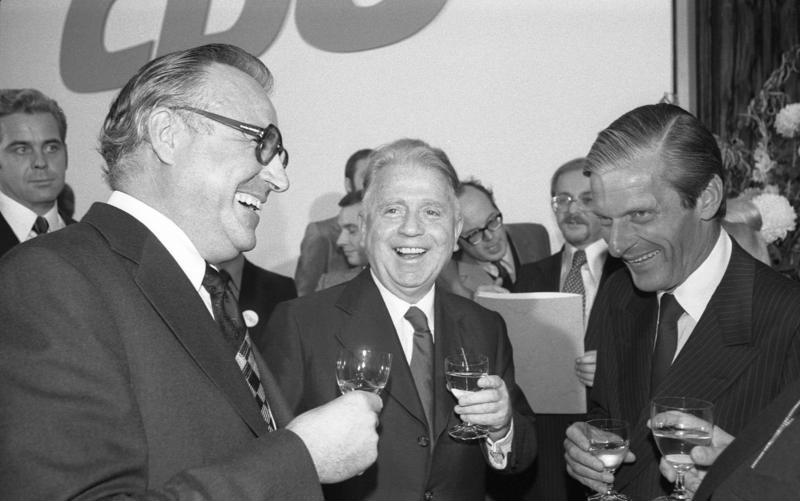

Political career and offices
Kiep represented the Christian Democratic Union throughout his public life and combined parliamentary service with executive positions in state government. He sat in the Bundestag from 1965 to 1976 and again from 1980 to 1982. At the state level he joined the cabinet of Lower Saxony, where he served as Minister of Economy and Minister of Finance in the late 1970s. In 1982 he led the CDU's electoral ticket in two state elections in Hamburg, reflecting his prominence within the party.
- Member of the Bundestag: 1965–1976; 1980–1982.
- Lower Saxony government: Minister of Economy (1976–1977) and Minister of Finance (1976–1980).
- CDU federal treasurer: 1971–1992, a position that made him responsible for party finance and fundraising for two decades.
- Leading CDU candidate in Hamburg: 1982 state elections.
Role in party finance and legacy
As federal treasurer for more than twenty years, Kiep helped develop the CDU's fundraising structures during a formative period in post‑war German politics. His stewardship made him one of the party's most influential administrators behind the scenes. Because party financing became a matter of sustained public interest in later decades, Kiep's name is often mentioned in discussions of how modern German political parties raised and managed funds during the Cold War and the reunification era.
Context and historical significance
Kiep's career spanned a period of consolidation for the Federal Republic of Germany. Active in both national parliament and state cabinets, he exemplified a generation of politicians who moved between legislative duties and executive administration. His work in economic and financial portfolios at the state level connected him to industrial and fiscal policy debates of the 1970s and 1980s. The administrative role he held in the party for decades also illustrates the importance of party apparatus and financing in German democracy.
Notable facts and later life
Beyond formal offices, Kiep was widely recognized as a skilled organizer and fundraiser within his party. In later years he and the CDU more broadly faced scrutiny over historical financing practices, a subject that led to public debate about transparency and regulation in party funding. Kiep retired from active office well before his death, and remained a public figure through interviews and commemorations of post‑war politics.
- Full name: Walther Gottlieb Louis Leisler Kiep.
- Born: 5 January 1926.
- Political affiliation: Christian Democratic Union (CDU).
- Federal treasurer of the CDU: 1971–1992.
- Held state ministerial roles in Lower Saxony and was a leading candidate in Hamburg elections in 1982.
His life and career are summarized in many biographical references and obituaries that document post‑war party politics. For basic biographical information and archival records consult general political directories and histories of the CDU. For further context on the role of party finance in German politics, see discussions of election law and party funding reform.
Additional references and profiles are available through institutional and media archives: biographical resources, regional archives, and contemporary news reports. Medical notices reported that he died at his home in Kronberg im Taunus, Hesse, of pneumonia; see health and death notices for contemporary coverage.
Even after leaving front-line politics, Kiep's long service as a party official and his combined roles in parliament and state government make him a figure of ongoing interest to students of German political history and party organization.
Author
AlegsaOnline.com Walther Leisler Kiep Leandro Alegsa
URL: https://en.alegsaonline.com/art/132755