
Sweet chestnut (Castanea sativa)
Broad-leaved deciduous tree native to the Mediterranean and Asia Minor, grown for edible nuts, durable timber and traditional coppice management. Distinct from the unrelated horse chestnut.
Sweet chestnut (Castanea sativa) is a broad-leaved deciduous tree valued for its edible nuts and durable timber. Common English names include European chestnut, Spanish chestnut and Portuguese chestnut. It is unrelated to the horse chestnut; for that separate group see horse chestnut.
Image gallery
10 Images
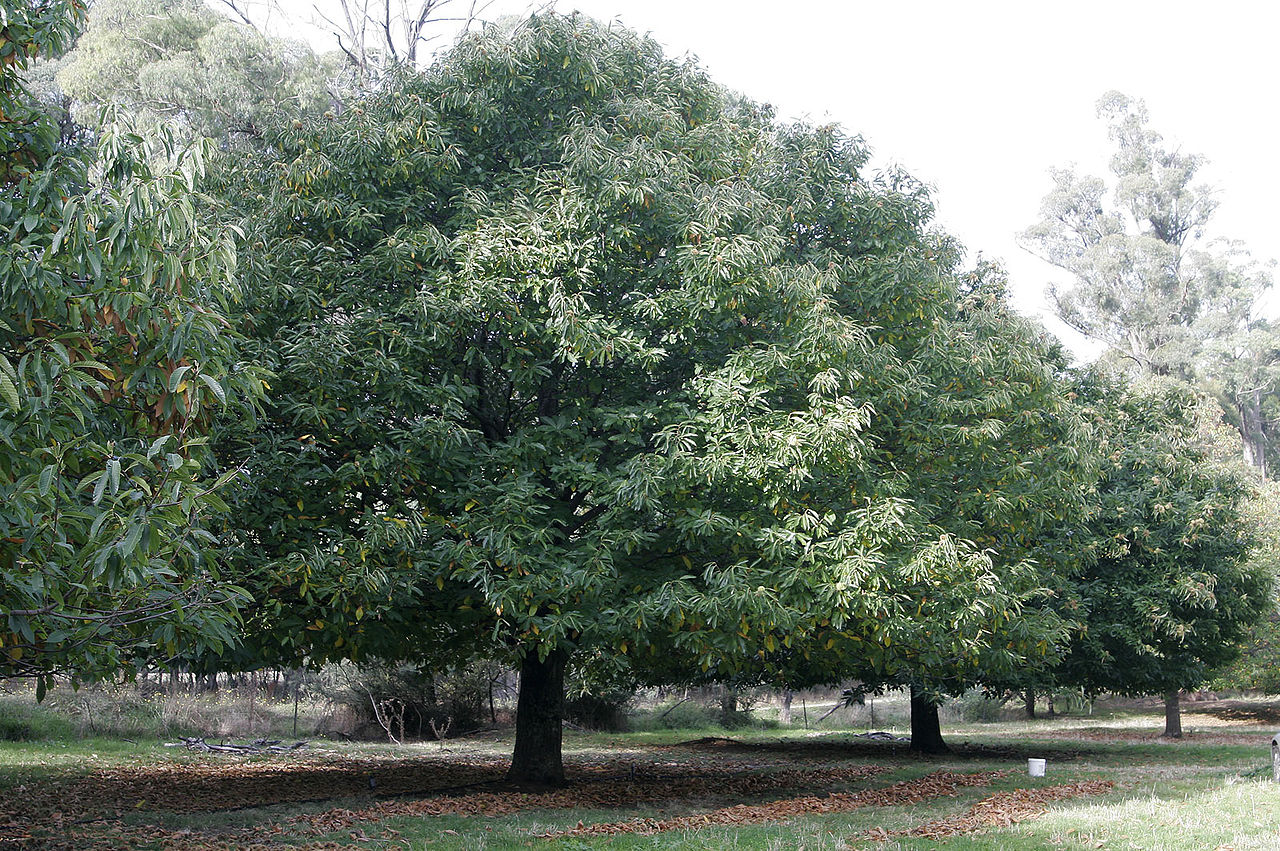


Identification
Sweet chestnut is a member of the beech family (Fagaceae). Mature trees typically reach between 20 and 35 m in height and may live for several centuries in favourable conditions. Leaves are alternate, simple and serrated; the species flowers in long, catkin-like inflorescences in summer. The nuts develop inside spiny burs (burrs) that split open when ripe, each containing one to several glossy brown nuts commonly called chestnuts.
Distribution and history
Castanea sativa is native to the Mediterranean basin and parts of western Asia, including Anatolia. It has a long history of cultivation and has been spread by humans across southern and western Europe where it became a regional staple in many upland agricultural systems. For general context about trees and terminology see tree and for regional plant accounts see Mediterranean and regional flora.
Uses
- Food: Nuts are eaten roasted, boiled or processed into flour, sweets and preserves; certain large, single-seeded varieties are sold as marrons.
- Wood: Chestnut timber is durable and was traditionally used for fencing, posts, joinery and outdoor carpentry because of its resistance to decay when in contact with soil.
- Management: Coppicing and managed orchards were important rural practices, producing both timber and regular nut harvests.
Cultivation and care
Sweet chestnut prefers well-drained, slightly acidic to neutral soils and a temperate climate. Trees are often grown from grafts or seedlings in orchards; pollination is by wind and insects and many cultivated stands benefit from mixed planting to ensure fruit set. Practical advice on propagation, pruning and orchard design can be found in a cultivation guide.
Ecology, pests and diseases
Chestnut trees support a range of wildlife and are used in mixed woodlands and agroforestry. The species has been affected by serious pests and diseases in some regions, most famously chestnut blight (caused by Cryphonectria parasitica) and soil-borne ink disease; more recently, invasive insects such as the chestnut gall wasp have caused local damage. Conservation of historic trees and breeding for disease resistance are active areas of work.
For brief regional or introductory resources consult general nature and plant references such as deciduous tree guides and other botanical overviews.
Author
AlegsaOnline.com Sweet chestnut (Castanea sativa) Leandro Alegsa
URL: https://en.alegsaonline.com/art/131492