
Suzanne Lilar
Flemish Belgian writer and intellectual who wrote in French; first woman in Belgium to earn a law degree and a prolific essayist, novelist and playwright known for reinterpretations of myth and theological drama.
Suzanne Lilar (1901–1992) was a Flemish Belgian essayist, novelist and playwright who produced most of her work in French. Trained as a philosopher and jurist, she combined legal and philosophical training with a literary vocation to explore moral, theological and existential themes. Her writing, often compact and reflective, includes stage dramas, essays on art and love, and fiction that revisits classical myths from new angles.
Image gallery
2 Images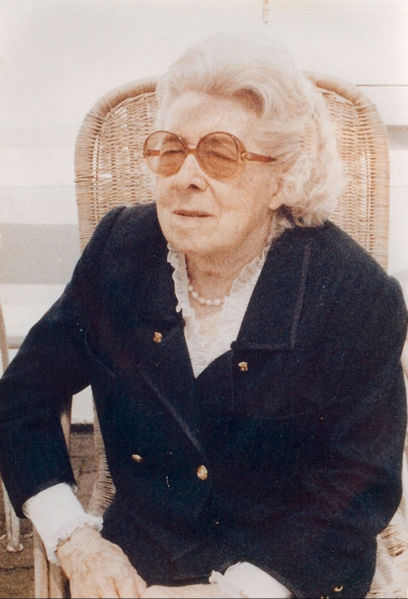

Life and education
Born Suzanne Verbist, she studied at the State University of Ghent beginning in 1919, taking courses in philosophy and law. In 1925 she became the first woman there to receive a law degree and subsequently established herself as the first woman lawyer in Antwerp. In 1929 she married Albert Lilar, later a Belgian Minister of Justice; their daughters included the novelist Françoise Mallet-Joris and the art historian Marie Fredericq-Lilar. After Albert Lilar's death in 1976, Suzanne moved from Antwerp to Brussels where she continued to write until her death in 1992. She was a member of the Royal Academy of French Language and Literature from 1952 until 1992, a mark of her standing in Belgian letters.
Career and major works
Lilar began as a journalist, reporting on events such as Republican Spain for Belgian newspapers in the early 1930s, and later turned to plays, essays and novels. She wrote in French and became best known for theatrical works that reinterpret traditional stories and for philosophical essays that probe questions of love, freedom and responsibility. Her 1946 play Le Burlador offers an original interpretation of the Don Juan legend, told notably from a female perspective. Two other stage pieces followed in rapid succession and helped to establish her dramatic voice.
- Le Burlador (1946) — a rewriting of Don Juan centered on moral and gendered consequences.
- Tous les chemins mènent au ciel (1947) — a theological drama set in a fourteenth‑century convent, examining faith and doubt.
- Le Roi lépreux (1951) — a play that engages the history and ideas surrounding the Crusades.
- Further dramatic work and essays (see later plays and essays) that treat myth, ethics and aesthetics.
Lilar's plays are compact and intellectually rigorous rather than melodramatic; they favor dialogue and staged reflection over spectacle. Critics have noted her interest in classical and religious motifs, and her tendency to reconceive familiar narratives in order to expose latent questions about agency, sin and redemption. Her essays also engage with artistic creation and modes of love, approaching these subjects with philosophical subtlety.
Although she wrote in a period of social change, Lilar's standing rests on the formal clarity of her prose and her persistent engagement with moral and metaphysical problems. Her role as a pioneering woman in Belgian law and public life, combined with a long literary career, makes her a notable figure in twentieth‑century Francophone culture. For further reading and archival material consult institutional and literary resources linked to her biography and works (see bibliography and archives at biographical sources and reviews at theatrical histories).
Author
AlegsaOnline.com Suzanne Lilar Leandro Alegsa
URL: https://en.alegsaonline.com/art/131481