
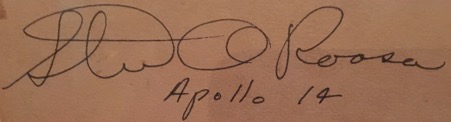
Stuart Roosa — Apollo 14 Command Module Pilot and NASA astronaut
American astronaut and USAF colonel who served as Command Module Pilot on Apollo 14, orbited the Moon 34 times, carried the 'Moon Trees' seed experiment, and later worked in public life.
Overview
Stuart Allen "Stu" Roosa (August 16, 1933 – December 12, 1994) was an American aeronautical engineer, United States Air Force colonel, test pilot and NASA astronaut. He is best known for serving as the Command Module Pilot on Apollo 14, the third Apollo mission to successfully land astronauts on the Moon. While two crewmembers descended to the lunar surface, Roosa remained in lunar orbit conducting experiments and operating the Command Module, named Kitty Hawk.
Image gallery
8 Images



Career and responsibilities
As Command Module Pilot, Roosa's duties included maintaining the spacecraft systems, performing orbital science, photographing the lunar surface, and standing ready to rendezvous with the lunar module after ascent. His training blended military aviation and test-flight experience with scientific and spacecraft systems instruction. Roosa held the rank of colonel in the United States Air Force and had a background as a test pilot.
Apollo 14 and work in lunar orbit
Apollo 14 was the third mission to land humans on the Moon. While crewmates Alan Shepard and Edgar Mitchell worked on the surface, Roosa orbited the Moon 34 times. From the Command Module he operated experiments, gathered orbital photography, and monitored systems critical to a successful lunar rendezvous and return. The mission returned new scientific data about the Moon and demonstrated precise lunar surface operations.
Notable experiments and legacy
Roosa carried a small, now-famous payload of tree seeds that later became known as the "Moon Trees"; after return to Earth the seeds were germinated and distributed for planting as commemorative trees. His role in Apollo 14 placed him among the relatively small group of people who traveled to lunar orbit — twenty-four men in total. The work done from orbit during Apollo 14 contributed to the wider Apollo program's scientific record and operational knowledge.
Later life and death
After his NASA career Roosa remained involved in public engagements and activities related to aviation and space exploration. He died of pancreatitis in Falls Church, Virginia, on December 12, 1994, at age 61. His service is remembered both for the operational success of Apollo 14 and for the cultural legacy of projects like the Moon Trees.
Further notes and links
- NASA biography and mission summary
- Astronaut career highlights
- Apollo 14 mission details
- Alan Shepard (fellow Apollo 14 crewmember)
- Edgar Mitchell (fellow Apollo 14 crewmember)
- The Moon and Apollo program context
- Information on pancreatitis
- Falls Church, Virginia — place of death
- United States Air Force — service and rank
- Test pilot career
Author
AlegsaOnline.com Stuart Roosa — Apollo 14 Command Module Pilot and NASA astronaut Leandro Alegsa
URL: https://en.alegsaonline.com/art/131391