
Stjepan Mesić — Croatian politician and statesman
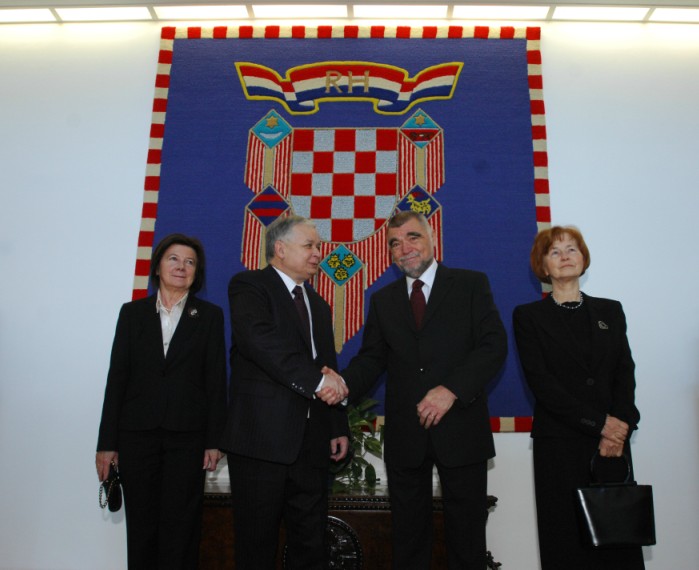
Stjepan "Stipe" Mesić (born 1934) is a Croatian politician who served as President of Croatia (2000–2010), was the last President of the Presidency of Yugoslavia (1991), and held several senior public offices.
Stjepan "Stipe" Mesić (born 24 December 1934) is a prominent Croatian public figure and longtime politician. Over a career spanning several decades he held local, judicial and national offices, culminating in two terms as President of Croatia from 2000 to 2010. He is also known for being the last head of the collective Presidency of Yugoslavia in 1991 and for serving briefly as Secretary General of the Non-Aligned Movement the same year. In Croatia he served as Speaker of Parliament and earlier worked as a judge and as mayor of his home town.
Image gallery
10 Images





Overview and roles
Mesić’s career combined local government, judicial duties and national leadership. He earned a reputation as an independent-minded politician who emphasized democratic institutions, regional cooperation and the rule of law. He was elected President of Croatia in 2000 and re-elected in 2005, serving two five-year terms. During his presidency Croatia pursued closer ties with Euro-Atlantic institutions and promoted transitional justice and reconciliation in the region.
Early career and local offices
Before rising to national prominence Mesić trained in law and began his public service at a municipal level. He worked as a judge in Našice and later returned to local politics as mayor of Orahovica, his birthplace. Those early roles provided administrative experience and a platform for entering higher office in the era of Yugoslavia’s dissolution.
Critical years: Yugoslavia and the 1990s
In 1991, as the Socialist Federal Republic of Yugoslavia unraveled, Mesić served as the final chairman of the federal presidium. His brief tenure coincided with violent confrontations and state collapse, and he also held the rotating leadership of the Non-Aligned Movement for that year. Returning to Croatian politics, he became Speaker of the Croatian Parliament (1992–1994) and remained an active, sometimes outspoken, critic of wartime excesses and authoritarian tendencies.
Presidency of Croatia (2000–2010)
As president Mesić championed democratic reform, transparency and integration with Western institutions. He supported Croatia’s path toward membership in the European Union and oversaw deepening cooperation with NATO; Croatia completed its accession to NATO during his second term. His presidency emphasized reconciliation in the Western Balkans, cooperation with international tribunals, and strengthening civil liberties and civic institutions at home.
Key offices and notable facts
- Croatian politician active from local to national level
- President of Croatia (2000–2010) — two terms
- Last chairman of the federal Presidency of Yugoslavia (1991)
- Secretary General of the Non-Aligned Movement (1991)
- Speaker of the Croatian Parliament (1992–1994)
- Former judge and mayor of Orahovica
Mesić’s long public life makes him a significant figure in the transition from socialist Yugoslavia to an independent Croatia. Observers often note his pragmatic approach to international relations and his role in the country’s early postwar political stabilization. For more detailed biographical information and timelines, consult official profiles and academic treatments of Croatian politics and the Yugoslav dissolution. Additional context on his public positions and controversies can be found through dedicated political histories and archival sources.
Further reading and external resources: official presidency records and biographies.
Author
AlegsaOnline.com Stjepan Mesić — Croatian politician and statesman Leandro Alegsa
URL: https://en.alegsaonline.com/art/131373