
Sandy Gandhi (Sandra Aranha) — Australian comedian and columnist
Profile of Sandy Gandhi (1958–2017), Australian comedian and columnist known for an Indian character-based stand-up act, local journalism in Byron Bay, and television appearances including Australia's Got Talent.
Overview
Sandy Gandhi (born Sandra Aranha; 28 January 1958 – 1 February 2017) was an Australian comedian, columnist and local media personality based in Byron Bay, New South Wales. Billing herself as "Australia's Most Easterly Indian," she performed a recurring character that drew on Indian cultural references and immigrant experience to deliver observational humour. Her career combined live performance, written columns and editorial work in community media; a concise profile of her life and work can be found in contemporary notices and local coverage here.
Image gallery
1 Image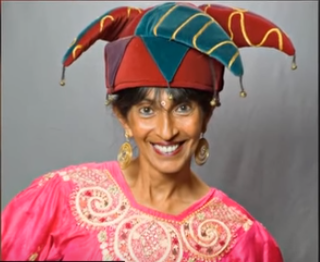
Early life
Gandhi was born in New Delhi, India. She spent parts of her childhood in other Indian cities and later emigrated to Australia, where she lived for extended periods in Bangalore and in Melbourne before settling on the north coast of New South Wales. Her multicultural upbringing and experience of migration informed the themes and tone of much of her material, giving her a bilingual and bicultural perspective that she used as source material rather than as strict biography.
Career and comic style
Gandhi worked primarily as a stand-up comedian and character performer. Her act combined characterisation, timing and observational comedy that played with cultural stereotypes and domestic situations. Rather than aiming to offend, her routine typically used self-deprecating humour and gentle satire to highlight contrasts between Indian and Australian social norms. She performed in clubs, regional venues and festivals, and was known for an accessible stage persona that connected with local audiences. Details of her stand-up appearances and recurring themes are documented in reviews and event listings related to her work.
Media roles
Beyond the stage, Gandhi contributed to community journalism. She served as an entertainment editor and columnist for a local newspaper, writing about arts, culture and lifestyle with a humorous slant. Her columns mixed personal anecdote with commentary on popular culture, giving readers a familiar voice in regional media. She was active in the Byron Bay media scene and often referenced her adopted home in articles and promotional material about Byron Bay.
Television and public appearances
Gandhi appeared on television as a contestant and guest, bringing her character-based comedy to a wider audience. One of her more visible national appearances was on the entertainment talent programme Australia's Got Talent, which introduced her material to viewers beyond her regional base. Her public appearances combined performance with interviews and community events, where she frequently reflected on cultural identity and the comedic possibilities of cultural misunderstanding.
Reception and legacy
Her work drew attention for its use of cultural character work at a time when Australian comedy was expanding to include more diverse voices. Audiences and commentators noted her ability to use humour as a bridge between cultures, and local media remembered her both as a performer and as a columnist. Coverage of her life and career often situates her within the regional comedy circuit and the tradition of comedians who adopt recurring stage personae rooted in cultural experience related to Indian cultural themes.
Personal life and death
Sandy Gandhi lived and worked in the Byron Bay area until her death on 1 February 2017, aged 59. Tributes published after her passing recalled her contributions to local arts coverage, her distinctive onstage identity and her role in regional entertainment circles. For biographical background and contemporary reporting, see profiles and obituaries that document her life from early years in India to her later public roles Bangalore and Melbourne.
- Born Sandra Aranha in New Delhi; later lived in Bangalore and Melbourne.
- Known for a recurring Indian-derived comic character and observational stand-up.
- Worked as an entertainment editor and columnist in Byron Bay and appeared on national television.
- Died in Byron Bay on 1 February 2017 at age 59.
Further information about her performances, columns and recorded appearances can be found in archived local media and event listings, and in contemporary profiles of comedians using cross-cultural material see profile or check regional archives for listings and reviews.
Author
AlegsaOnline.com Sandy Gandhi (Sandra Aranha) — Australian comedian and columnist Leandro Alegsa
URL: https://en.alegsaonline.com/art/130472