
Ronald McNair: Physicist and NASA Astronaut
Ronald E. McNair (1950–1986) was an American physicist and NASA astronaut. He flew on STS-41-B, was assigned to STS-51-L, and died in the Challenger disaster; he is remembered through scholarships and memorials.
Overview
Ronald Erwin McNair (October 21, 1950 – January 28, 1986) was an American physicist and a NASA astronaut who combined academic research with operational work in human spaceflight. He completed advanced study and research in physics, served as a mission specialist on the Space Shuttle, and became the second African American to travel into orbit. His professional life is noted for both scientific achievement and outreach to young people considering careers in science, technology, engineering and mathematics.
Image gallery
10 Images




Early life and education
McNair was born in Lake City, South Carolina, where he grew up during the era of segregation and developed early interests in music and science. He pursued higher education and earned academic degrees that prepared him for research and teaching. He received a B.S. from North Carolina A&T State University and later completed a doctorate in physics at the Massachusetts Institute of Technology. After his Ph.D., he worked as a research scientist, publishing and collaborating in areas of laser physics and related fields, and he held a number of professional fellowships.
NASA selection, training and career
Selected as an astronaut in the late 1970s, McNair trained in spacecraft systems, payload operations and extravehicular procedures common to shuttle flight crews. He flew on STS-41-B in 1984 aboard the Space Shuttle Challenger, a mission that deployed satellites and tested crew procedures. He was assigned to fly again on STS-51-L in January 1986. In addition to his flight duties, McNair maintained ties to education through speaking, mentoring and programs designed to broaden participation in STEM fields.
Challenger accident and death
On January 28, 1986, the Space Shuttle Challenger broke apart shortly after liftoff, in a catastrophic accident that killed all seven crew members aboard, including McNair. The loss had a deep impact on NASA and the wider public, prompting investigations into technical causes and organizational practices and leading to a lengthy suspension of shuttle flights while safety changes were implemented.
Personal life
McNair was married to Cheryl Moore McNair and they had two children. He was known personally for his modesty, musical talent, and determination to support young students aspiring to scientific careers. Colleagues remembered him as both a skilled scientist and a dedicated educator.
Legacy and honors
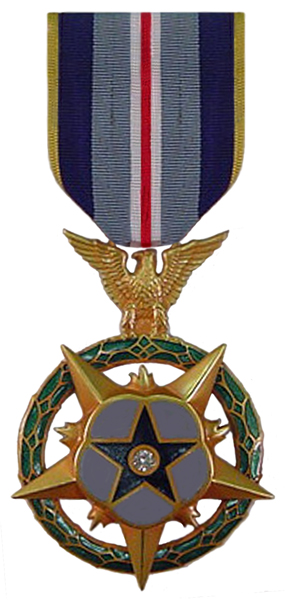
McNair's legacy includes scholarships, memorials and programs that bear his name. He received multiple recognitions during his life and posthumously, including several honorary doctorates. Federal and institutional programs inspired by his name seek to increase access to graduate education and to encourage underrepresented students to pursue doctoral study; memorials and educational initiatives preserve the memory of his work and his commitment to outreach.
Significance
- McNair was the second African American to fly in space, an important milestone in the history of U.S. human spaceflight.
- He bridged laboratory research and practical mission work, contributing to both physics and space operations.
- His life has been commemorated through scholarships, school names, and public programs that emphasize science education and opportunity.
For further information about McNair's missions, scientific work and memorial programs, consult archival materials, NASA historical summaries and educational resources that document the Shuttle era and its crews. Many institutional pages and biographies collect his publications, honors and the educational initiatives established in his memory.
Author
AlegsaOnline.com Ronald McNair: Physicist and NASA Astronaut Leandro Alegsa
URL: https://en.alegsaonline.com/art/130014