
Robert Schuman — French statesman and architect of European integration
French statesman (1886–1963). Christian Democrat leader who helped create postwar European institutions; author of the Schuman Declaration that launched supranational European cooperation.
Robert Schuman was a leading French statesman of the mid-20th century who played a central role in rebuilding Europe after World War II. Born on 29 June 1886, he became a prominent member of the Christian Democratic movement in France and served in several senior government posts, including two terms as prime minister, finance minister and foreign minister. Schuman combined a commitment to democratic, Christian-social politics with a pragmatic belief that lasting peace required new institutions of international cooperation. Biographical note Death notice
Image gallery
9 Images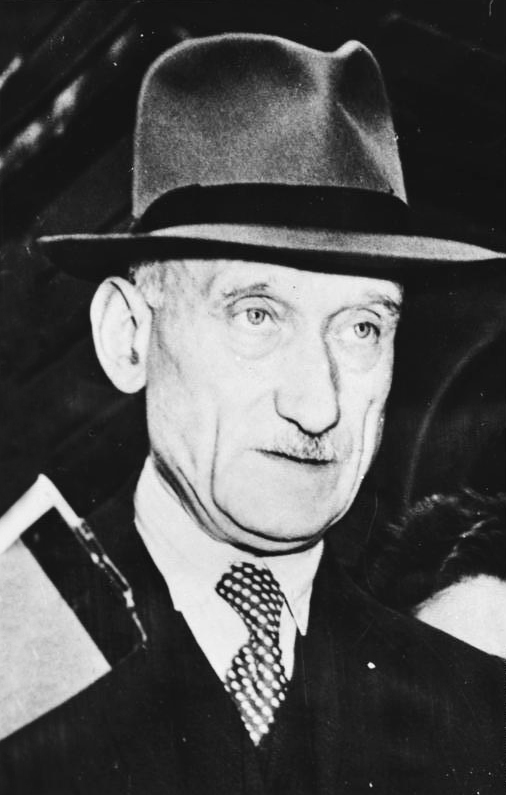




Early life and political formation
Schuman’s background and upbringing shaped his European outlook. He came from the borderlands between France and Germany, a region that experienced frequent shifts of sovereignty and which left him sensitive to the dangers of nationalism and irredentism. Trained as a lawyer and active in public life, he became associated with the Mouvement Républicain Populaire, a Christian Democratic party that sought to reconcile social reform, Christian ethics and parliamentary democracy. His identity as a French politician was rooted in a desire to rebuild democratic institutions weakened by war and occupation. Profile of his public life Political affiliation
Statesman and foreign minister
In government Schuman combined administrative skill with a conciliatory diplomatic style. As finance minister he navigated postwar reconstruction; as foreign minister he worked to stabilize relations among former adversaries and to anchor France in transatlantic security arrangements. He was an advocate for close cooperation with the United States and for collective defence in the emerging Cold War context while also pursuing a vision of European cooperation that went beyond traditional intergovernmental bargains. Europe context
The Schuman Declaration and European integration
Schuman is best known for the 1950 proposal — the Schuman Declaration — that recommended pooling French and German coal and steel production under a common authority. The idea was that economic interdependence, supervised by a supranational institution, would make another war between France and Germany materially impossible and would lay the foundations for wider European integration. That initiative led to the Treaty of Paris and the European Coal and Steel Community, an early step toward today’s European Union. The Schuman plan is commemorated as a milestone in the gradual creation of supranational European institutions and is widely cited by historians and political leaders. European Union origins
Legacy and institutions
Schuman is often described as one of the founders of the postwar European order. Beyond the coal and steel proposal, he supported the establishment and strengthening of institutions that now form the backbone of transnational cooperation: the Council of Europe, which focused on human rights and rule of law, and NATO, which organised collective defence for Western democracies. His contribution is remembered in annual commemorations and in the way European identity and institutions evolved after 1945. Council of Europe NATO
Positions and notable facts
- Prominent leader of the Christian Democratic Mouvement Républicain Populaire.
- Served in senior French government roles: prime minister (on two occasions), finance minister and foreign minister.
- Author of the Schuman Declaration that initiated supranational economic cooperation in Europe.
- Regarded as a founding figure of several postwar institutions that shaped Europe’s political order.
Schuman’s combination of practical statecraft, moral language rooted in his political tradition, and a legalistic approach to international structures left a durable mark on European politics. His work illustrated a belief that law-based institutions, economic ties and collective security arrangements could prevent the return of large-scale conflict in Europe and create a framework for prosperity and liberty.
Author
AlegsaOnline.com Robert Schuman — French statesman and architect of European integration Leandro Alegsa
URL: https://en.alegsaonline.com/art/129819