
René-Robert Cavelier, Sieur de La Salle
17th-century French explorer who mapped the Great Lakes and Mississippi, claimed the Mississippi basin for France, led expeditions to the Gulf of Mexico and founded a short-lived colony in Texas.
René-Robert Cavelier, sieur de La Salle (1643–1687) was a French explorer and colonial entrepreneur whose voyages across North America helped shape European claims in the interior of the continent. He travelled widely through the Great Lakes region and into territories that are part of the modern United States and Canada. La Salle is best known for his descent of the Mississippi River to its mouth and for asserting French sovereignty over the vast river basin, a region later called Louisiana. He sailed into the Gulf of Mexico and attempted to establish permanent settlements to secure trade routes and influence.
Image gallery
8 Images




Explorations and achievements
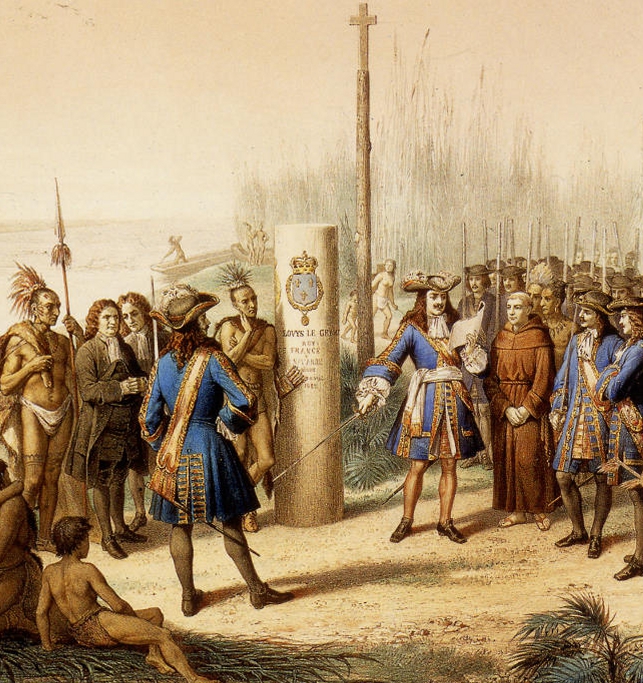
La Salle organized and led several important expeditions in the 1670s and 1680s. His overland and river journeys mapped previously little-known waterways and brought French presence deep into the continental interior. In 1682 he formally claimed the Mississippi watershed for King Louis XIV, giving France a legal basis for expanding trade and settlements along the river system. La Salle also sought to build forts and colonies to protect fur trade networks and to open a route to the Gulf.
Notable expeditions
- Voyages in the Great Lakes and upper waterways that increased French knowledge of inland North America.
- 1682 expedition down the Mississippi to the Gulf, culminating in a claim of the river basin for France.
- 1684–1687 colonial expedition that intended to establish a settlement at the mouth of the Mississippi but instead landed on the Gulf coast of present-day Texas and founded Fort Saint Louis.
These efforts had mixed results: cartographic and diplomatic successes in claiming territory, but also logistical failures and loss of supplies and lives during transatlantic voyages and frontier operations.
Background, rivalry and final years
Born in Rouen, France, La Salle came to New France as a young man and became involved in exploration, trade and colonial promotion. He navigated a complex colonial environment that included competition with other French officials and traders. Among his adversaries was Joseph-Antoine le Fèbvre, sieur de La Barre, with whom he clashed politically and commercially. La Salle's final enterprise to secure a French presence on the Gulf coast ended in disaster: after missing the Mississippi delta, his party suffered hardship, and he was killed by members of his own expedition in 1687 while seeking aid inland.
La Salle's voyages left a long legacy: they expanded European geographic knowledge, provided a basis for France's inland empire, and influenced later settlement patterns. The name Louisiana, applied to the French claim, and many later place-names and commemorations reflect his role in early North American exploration. For further summaries and maps of his routes, consult specialized historical sources and archival material on early French exploration in North America.
References and further reading can be found through general historical overviews and the linked resources above: Great Lakes, United States, Canada, Mississippi River, Gulf of Mexico.
Author
AlegsaOnline.com René-Robert Cavelier, Sieur de La Salle Leandro Alegsa
URL: https://en.alegsaonline.com/art/129376