
Paul Volcker: Federal Reserve Chair and Architect of Anti‑Inflation Policy
Paul Volcker (1927–2019) led the U.S. Federal Reserve (1979–1987), is credited with defeating high inflation of the 1970s–80s, and later advised on financial reform and recovery.
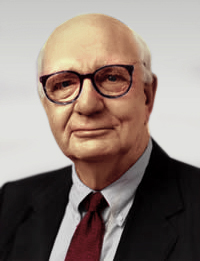
Paul A. Volcker (1927–2019) was a prominent American economist and public official best known for serving as Chair of the Federal Reserve from August 1979 to August 1987. Appointed at a moment of economic turmoil, he led a dramatic shift in U.S. monetary policy that prioritized price stability. Volcker's tenure spanned the administrations of Jimmy Carter and Ronald Reagan, and his decisions shaped central banking debate for decades afterwards.
Image gallery
4 Images


Early career and rise to public leadership
Before becoming Fed chair, Volcker built a career in government and finance, holding senior roles in Treasury and in private banking. He developed a reputation for steady stewardship and technical expertise, which made him a consensus choice to confront the persistent inflation and economic dislocations of the late 1970s.
Federal Reserve chairmanship (1979–1987)
Volcker is widely credited with restoring credibility to U.S. monetary policy by sharply tightening the money supply and endorsing higher short‑term interest rates to break the inflationary cycle. These measures contributed to a deep, short‑term recession in the early 1980s but are generally seen as laying the foundation for the prolonged period of lower inflation and stable growth that followed. His approach emphasized central bank independence and long‑term price stability as core objectives.
Policies, controversies and lasting influence
The Volcker era is notable for showing how forceful monetary restraint can reduce inflation even at the cost of short‑run unemployment. The episode remains a benchmark in debates over central bank mandates and tools. In later years, the phrase "Volcker Rule"—adopted into U.S. financial reform—evoked his views by restricting proprietary trading by commercial banks and aiming to limit systemic risk.
Later work and public service
After leaving the Fed, Volcker continued to advise on economic and financial issues. He chaired the Economic Recovery Advisory Board under President Barack Obama, providing guidance during the aftermath of the 2007–09 financial crisis. He also served as a public voice on regulatory reform and the need to strengthen institutions to prevent future crises.
- Reputation: known for integrity, technical command of policy, and willingness to take politically costly decisions.
- Legacy: associated with a turn toward low inflation and the regulatory ideas summarized by the "Volcker Rule."
- Final years: Volcker was diagnosed with prostate cancer in 2018 and died in New York City in December 2019 at age 92.
Today Volcker is remembered as a defining central banker of the late 20th century: his tenure demonstrates how monetary policy, institutional independence, and a focus on inflation can reshape economic expectations and governance.
Author
AlegsaOnline.com Paul Volcker: Federal Reserve Chair and Architect of Anti‑Inflation Policy Leandro Alegsa
URL: https://en.alegsaonline.com/art/128363