
Nikolai Bulganin — Soviet statesman and mid‑20th century Premier
Soviet politician Nikolai Bulganin (1895–1975) served as Minister of Defence (1953–55) and Chairman of the Council of Ministers (Premier) (1955–58) during the post‑Stalin power struggles.
Nikolai Alexandrovich Bulganin (1895–1975) was a Soviet politician who held senior government and defense posts during the 1950s. He served as Minister of Defence from 1953 to 1955 and as Chairman of the Council of Ministers (Premier) from 1955 to 1958. His career spanned the revolutionary period, the interwar and wartime Soviet state, and the turbulent transition after Stalin's death.
Image gallery
6 Images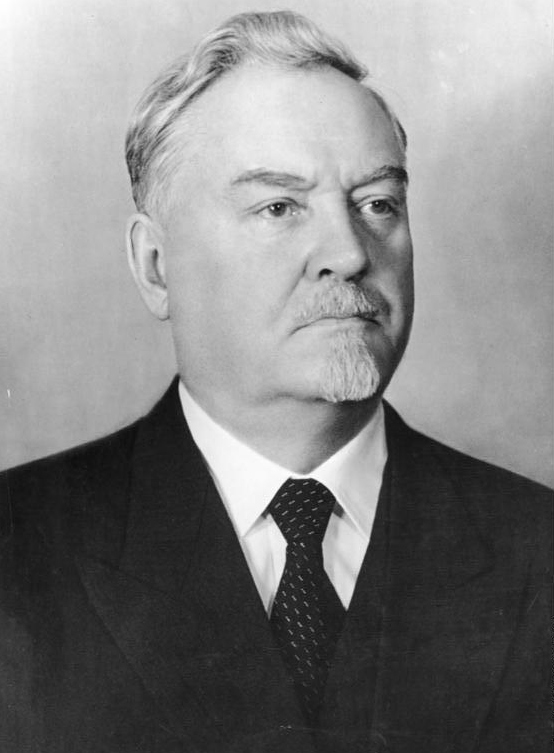


Early life and rise
Bulganin came to prominence after joining the Bolshevik movement in 1917 and then occupying various technical and administrative roles in the early Soviet state. He served under the leadership of Vladimir Lenin in the formative years of the Russian Soviet state and continued to rise through the party and government bureaucracy during Joseph Stalin's long rule, holding industrial and administrative posts that gradually increased his political profile.
Senior offices and political role
As a senior official Bulganin combined party loyalty with administrative experience. He was appointed Minister of Defence in the years immediately after Stalin's death and in 1955 became Premier. In the mid‑1950s he worked closely with other leading figures of the era, including Georgy Malenkov and Nikita Khrushchev, during a period of policy adjustments and international outreach. He accompanied top Soviet leaders on several high‑profile foreign visits, a sign of his status in the government.
Key positions
- Minister of Defence (1953–1955)
- Chairman of the Council of Ministers / Premier (1955–1958)
- Longstanding party and government administrator across the Lenin and Stalin periods
Power struggle, removal and later life
The mid‑1950s were marked by intense factional rivalry as the Soviet leadership adjusted after Stalin's death. Bulganin's standing shifted in this environment: he worked with and later found himself at odds with rival figures as Nikita Khrushchev consolidated control. By 1958 he was removed from the premiership and retired from top government duties. He lived out his later years away from the political center and died in 1975 during the leadership of Leonid Brezhnev.
Legacy and assessment
Historians regard Bulganin as a representative of the party bureaucratic class who reached the summit through administrative skill and loyalty rather than charismatic leadership. His tenure coincided with early moves away from the excesses of the Stalin era and with the Soviet Union's renewed engagement abroad, making him a notable figure in the transitional decade of the 1950s.
For further context on names and related figures see his Russian name and spelling, the history of the Soviet Union, his role as Premier, and the senior leaders he worked with: Lenin, Stalin, Malenkov, Khrushchev, and the later period under Brezhnev.
Author
AlegsaOnline.com Nikolai Bulganin — Soviet statesman and mid‑20th century Premier Leandro Alegsa
URL: https://en.alegsaonline.com/art/127676