
Mohammad-Ali Rajai — Iranian political leader (1933–1981)
Mohammad-Ali Rajai was an Iranian politician who served briefly as prime minister and then as president in 1981; he was killed in a bombing that deepened post-revolutionary turmoil.
Mohammad-Ali Rajai (Persian: محمدعلی رجائی; 15 June 1933 – 30 August 1981) was an Iranian political figure who rose to prominence after the 1979 Iranian Revolution. He held several senior posts in the early Islamic Republic and is best known for his short tenure as President of Iran and for his assassination in 1981, a violent event that sharpened political conflict in the country.
Image gallery
5 Images



Early life and political rise
Born in 1933, Rajai emerged from modest origins and became active in the political currents that opposed the monarchy. After the revolution that overthrew the Pahlavi dynasty, he became closely involved with the new government structure and with groups that supported clerical leadership. His practical style and revolutionary credentials brought him to national office as the post-revolutionary leadership organized ministries and executive institutions.
Government roles and responsibilities
Rajai held multiple senior roles in the early 1980s. He served as prime minister under President Abolhassan Banisadr and later held the post of foreign minister from 11 March 1981 to 15 August 1981 while still prime minister. In August 1981 he was elected president and inaugurated on 2 August. His presidency lasted only weeks, during which he continued to support the revolutionary government’s consolidation of power amid internal divisions and the ongoing Iran–Iraq War.
Assassination and aftermath
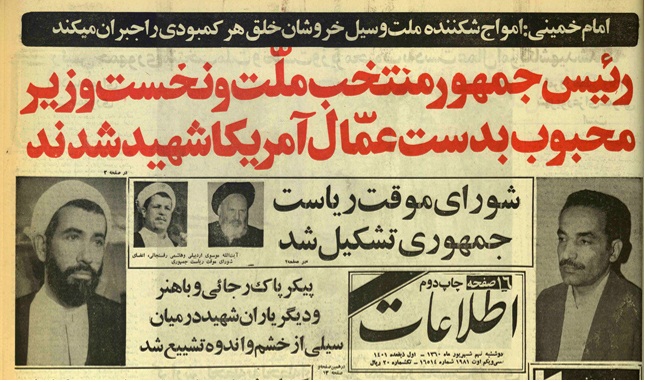
On 30 August 1981, Rajai was killed in a bombing that also took the life of Prime Minister Mohammad-Javad Bahonar. The explosion occurred during a high-level meeting and was blamed by Iranian security forces on an opposition organization. The assassination removed two of the republic’s most prominent officials at once, provoked wide mourning, and led to intensified security measures and reprisals against groups accused of involvement.
Legacy and significance
Rajai is remembered as a revolutionary-era leader whose time at the top of state institutions was brief but consequential. His death is often cited as a turning point in the early 1980s, accelerating factional struggles and shaping subsequent policies on internal security and political dissent. Monuments, memorials and references in Iranian official history reflect his place among the early post-revolutionary leadership.
- Key offices: prime minister, foreign minister, president.
- Presidency: inaugurated 2 August 1981; assassinated 30 August 1981.
- Incident: killed in a bombing that also killed the prime minister; authorities blamed an organized opposition group.
Author
AlegsaOnline.com Mohammad-Ali Rajai — Iranian political leader (1933–1981) Leandro Alegsa
URL: https://en.alegsaonline.com/art/127162