
Louise of Mecklenburg-Strelitz: Queen, Consort, and Symbol of Prussia
Biography of Duchess Louise of Mecklenburg-Strelitz (1776–1810), queen consort of Prussia, her political role, the 1806 defeat by Napoleon, the Tilsit meeting, death, and cultural legacy.
Overview
Louise of Mecklenburg-Strelitz (Luise Auguste Wilhelmine Amalie; 10 March 1776 – 19 July 1810) served as queen consort of Prussia as the wife of King Frederick William III. She was widely admired in her lifetime for personal charm, devotion to family and country, and for taking a visible public role during years of military and political crisis. Over the nineteenth century she came to be celebrated in Prussia and later German historiography as a symbol of patriotic resistance against Napoleon and as an exemplar of virtue and feminine political influence.
Image gallery
10 Images


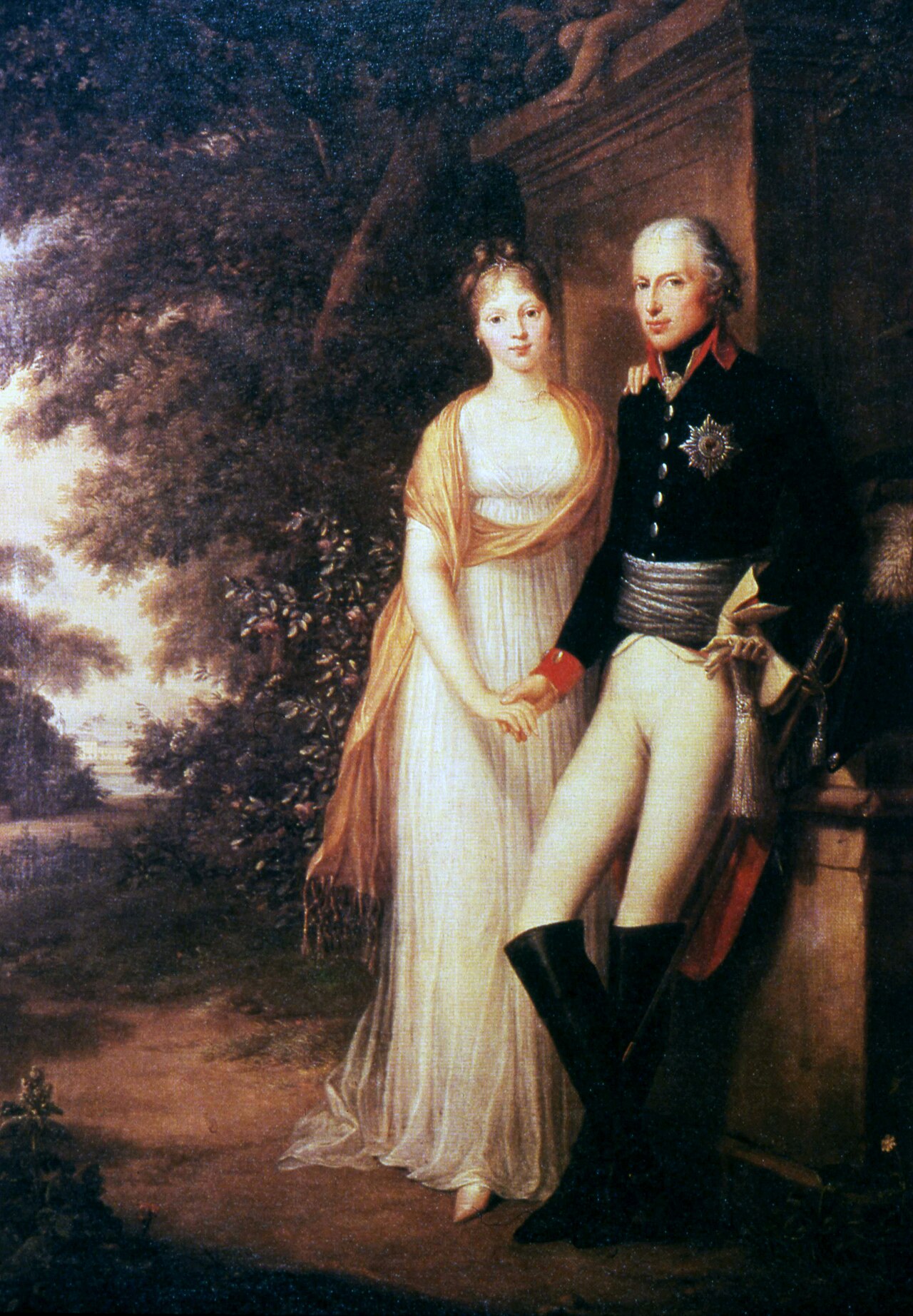


Origins, family and character
Born a duchess in the small North German house of Mecklenburg-Strelitz, Louise married the future king of Prussia and became a central figure at the Berlin court. Contemporaries described her as graceful, intelligent and serene; she cultivated relationships with senior ministers and sought to influence policy by counsel rather than formal office. Though not a trained stateswoman, she kept herself informed of diplomatic and military affairs and was frequently consulted by her husband, who valued her judgment.
Political involvement and influence
As queen consort, Louise moved beyond private patronage to become a prominent presence in state life. She built ties with ministers and generals and performed public functions that helped to consolidate royal authority. Her interventions were usually informal: letters, conversations and personal appeals to the king and his advisers. In times of war and diplomatic danger she offered moral leadership and used her standing to press for action she believed necessary for Prussia’s survival.
The 1806 campaign and its aftermath
In 1806 Prussia entered hostilities against Napoleon after a period of uneasy peace. Mobilization culminated in the catastrophic battles of Jena and Auerstedt in October, where Prussian forces were decisively defeated. The king and queen had accompanied the army to the theater of operations and were present at the retreat; accounts emphasize Louise’s visible presence and spirited comportment—one description even compared her appearance to an Amazon. After the battles Napoleon’s troops occupied Berlin, and the royal family was forced to flee eastward toward Königsberg under difficult winter conditions. The rout exposed Prussia’s military weaknesses and precipitated a prolonged period of political reorganization.
Tilsit and the meeting with Napoleon
Following defeat, Prussia negotiated a settlement with the French emperor that resulted in heavy territorial and political concessions in the Peace of Tilsit (1807). Louise traveled to the conference zone to seek more lenient terms and attempted a private audience with Napoleon in an effort to persuade him to moderate his demands. Contemporary narratives emphasize her courage and dignity during this encounter; while the meeting did not alter the essential terms imposed on Prussia, her conduct enhanced her reputation at home and among later generations who viewed her as striving to defend her country’s honor.
Death and immediate impact
Queen Louise died on 19 July 1810 at a relatively young age; the precise medical cause was not clearly established at the time, but her premature death was widely mourned and often linked in public discourse to the stresses of the French occupation and the hardships of the preceding years. King Frederick William III mourned deeply; contemporaries and later commentators remarked that the monarch had "lost his best minister," reflecting the perception that Louise had been an informal but crucial advisor.
Legacy and cultural significance
In the decades after her death Louise became an important symbolic figure. She featured in memorials, portraits and literature that emphasized loyalty, maternal virtue and patriotic sacrifice. Her memory shaped debates about monarchy, reform and national identity in Prussia: reformers and conservatives alike invoked her example to legitimate political change or to promote traditional values. Historians today treat her both as an individual who exercised genuine influence within the limits of her position and as a constructed national symbol whose image was adapted for a variety of political purposes.
Notable facts
- Born into the ducal house of Mecklenburg-Strelitz and married into the Prussian royal family.
- Actively consulted by King Frederick William III and respected by ministers.
- Present during the 1806 campaign and flight after the Battle of Jena and Auerstedt.
- Sought a personal audience with Napoleon during negotiations leading to the Peace of Tilsit; these events are often recounted with reference to her meeting with the emperor and contemporary commentaries that contrasted her earlier denunciations of him with the conciliatory posture she adopted at Tilsit.
For contemporary and popular portrayals, see portraits and memorial writings that emphasize Louise’s dignity and patriotism. She remains a subject of interest to those studying the Napoleonic era, gender and power in monarchy, and the cultural construction of national heroes. Additional resources and primary materials can be consulted via collections that specialize in Prussian history and Napoleonic diplomacy; for further reading follow institutional guides or archival finding aids such as those referenced by historical overviews and catalogues (queen consort profile, visual and literary reception).
Questions and answers
Q: Who was Queen Louise of Mecklenburg-Strelitz?
A: Queen Louise of Mecklenburg-Strelitz was the wife of King Frederick William III and Queen consort of Prussia.
Q: What role did she play in the Prussian government?
A: After her husband's ascension, Louise developed many ties to senior ministers and became a powerful figure within the government as she began to command universal respect and affection. The king consulted her on matters of state, making her an influential figure in Prussian politics.
Q: What event caused Prussia to enter into war with France?
A: After a small incident concerning an anti-French pamphlet occurred, King Frederick William was finally pressured by his wife and family to break off his uneasy peace and enter the war against the French emperor.
Q: How did Napoleon respond when he occupied Berlin?
A: When Napoleon occupied Berlin, the king, queen and rest of the royal family had to flee from him despite Louise's illness in the dead of winter to Königsberg in easternmost part of kingdom.
Q: What were Queen Louise's efforts during negotiations with Napoleon at Tilsit?
A: At Tilsit, Queen Louise tried to use her beauty and charm to flatter Napoleon into more favorable terms for Prussia. She also requested a private interview with him but he refused any concessions. Her efforts were admired by future generations for trying protect her adopted country from French aggression.
Q: How did King Frederick William react upon hearing about his wife's death?
A: Upon hearing about his wife's death, King Frederick William was left alone during a period of great difficulty as Napoleonic Wars continued and need for reform persisted. Napoleon remarked that "the king has lost his best minister."
Q: Was there any speculation as to what caused Queen Louise's early death?
A:The queen's subjects attributed her early death as being due to French occupation.
Related articles
Author
AlegsaOnline.com Louise of Mecklenburg-Strelitz: Queen, Consort, and Symbol of Prussia Leandro Alegsa
URL: https://en.alegsaonline.com/art/125360