
Lon Nol: Cambodian military leader who created the Khmer Republic
Biography of Lon Nol (1913–1985), Cambodian general and politician who led the 1970 coup that replaced Prince Sihanouk, founded the Khmer Republic, and later went into exile after the Khmer Rouge takeover.
Lon Nol (1913–1985) was a prominent Cambodian military officer and politician best known for leading the 1970 removal of Prince Norodom Sihanouk and proclaiming the Khmer Republic. His rise from the colonial-era officer corps to the head of state reflected the turbulent politics of Cold War Southeast Asia and Cambodia's struggle between monarchy, republicanism, and revolutionary movements. Scholars and observers continue to debate his motives, leadership style, and the consequences of the regime he headed.
Image gallery
3 Images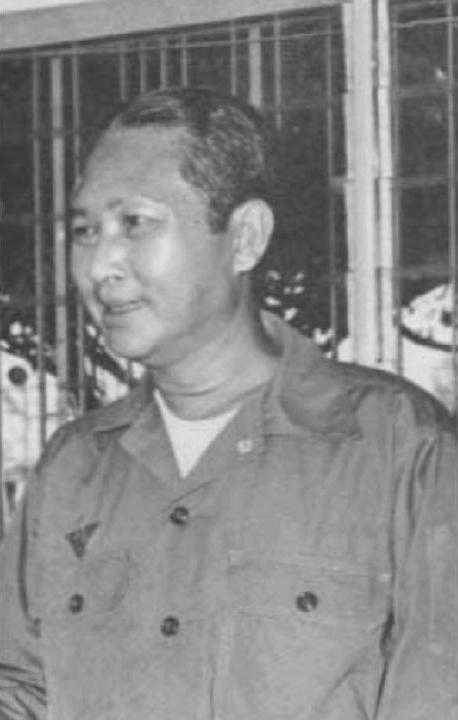


Early life and career
Born under French colonial rule, Lon Nol trained as a soldier and rose through the army to hold senior posts in the 1950s and 1960s. He served in high-level ministerial and military roles during the reign of Prince Norodom Sihanouk, becoming a leading figure in the armed forces and national politics. His background placed him at the intersection of Cambodia's traditional elite and a modernizing military establishment. The Khmer language and titles connected to his name are often rendered in local script; see Khmer references for linguistic forms.
1970 coup and the Khmer Republic
In March 1970 Lon Nol and allied politicians moved against Sihanouk while the prince was abroad, citing national security and political concerns. The action dismantled the monarchy's effective hold on power and produced the short-lived Khmer Republic, with Lon Nol assuming the leading presidential role. The new government aligned itself against North Vietnamese presence in Cambodia and received diplomatic and material assistance from international partners; contemporary accounts discuss relationships with foreign governments and commentators; see political and military analyses.
Civil war and collapse
The republic soon faced an escalating civil war pitting Lon Nol's forces and allied units against the communist insurgency known as the Khmer Rouge. Internal divisions, economic difficulties, corruption, and the intensifying conflict eroded the regime's capacity to govern. In 1975 Phnom Penh fell to the Khmer Rouge; Lon Nol left the country amid the collapse. Observers studying this period consult governmental records and later histories; see discussions of the coup, governance, and wartime diplomacy at sources and analyses.
Exile, death, and legacy
After fleeing first to neighboring states and then to the United States, Lon Nol died in exile in 1985. His legacy is contested: critics blame him for provoking civil war and for administrative failings, while some defenders portray him as a nationalist who sought to defend Cambodia's independence from external communist influence. His life is a prism for studying Cold War interventions, postcolonial state-building, and the tragic sequence that culminated in the Khmer Rouge period. For further context on his life and the period, consult modern histories and archived materials at archives, scholarly works, and retrospectives at regional and international overviews.
Notable facts and distinctions
- Lon Nol was both a military commander and a political leader who transitioned Cambodia from a monarchy to a republic.
- His 1970 takeover remains a pivotal event that reshaped Cambodian politics and contributed to the conditions of the subsequent civil war.
- Assessments of his rule vary widely: he is alternately described as a parochial strongman, a staunch anti-communist, and a flawed reformer.
Questions and answers
Q: Who was Lon Nol?
A: Lon Nol was a Cambodian politician and military leader.
Q: What did Lon Nol do in 1970?
A: Lon Nol led a coup against Prince Norodom Sihanouk in 1970.
Q: What position did Lon Nol take after the coup?
A: Lon Nol made himself President of the newly created Khmer Republic.
Q: What happened to Cambodia after Lon Nol became President?
A: The Khmer Rouge took leadership of Cambodia.
Q: Did Lon Nol stay in Cambodia after the Khmer Rouge took leadership?
A: No, Lon Nol fled from Cambodia to Indonesia and then to the United States.
Q: When was Lon Nol born?
A: Lon Nol was born on November 13, 1913.
Q: When did Lon Nol die?
A: Lon Nol died on November 17, 1985.
Related articles
Author
AlegsaOnline.com Lon Nol: Cambodian military leader who created the Khmer Republic Leandro Alegsa
URL: https://en.alegsaonline.com/art/125309