
List of United States House of Representatives Committees
Overview of House committees: types, roles, major standing committees, history (including the 1946 reorganization), how they process legislation, and distinctions from select and joint panels.
Overview
The committees of the United States House of Representatives are the primary organizational units through which the House develops, reviews, and advances legislation and conducts oversight of the executive branch. Committees concentrate expertise, hold hearings, amend bills in "markup" sessions, and report measures to the full House for consideration. Membership and leadership reflect the partisan composition of the House, with the majority party holding committee chairs.
Image gallery
1 Image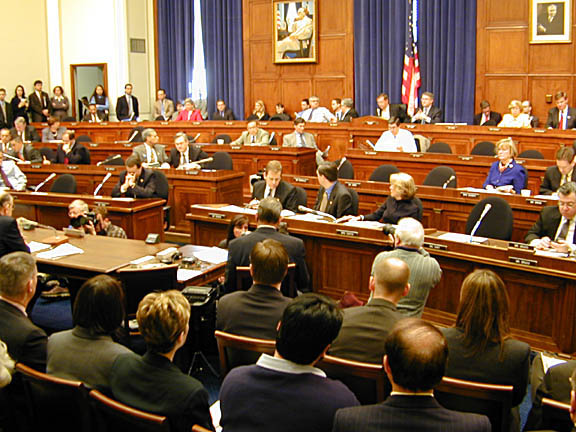
Types and structure
House committees fall into several categories. Standing committees are permanent panels established under the House rules and cover broad subject areas such as finance, defense, and judiciary. Select or special committees are typically temporary bodies created for a specific purpose or investigation; some select committees become long-standing if their work continues. There are also subcommittees within major panels that handle specialized portions of a committee's jurisdiction. While joint committees include members from both the House and Senate, they are distinct from House-only committees.
Major standing committees (examples)
- Appropriations — allocates federal funds to government agencies and programs.
- Ways and Means — oversees taxation, tariffs, and revenue-related policy.
- Rules — sets terms for floor debate and amendment of most House bills.
- Judiciary — addresses legal and constitutional issues, judicial nominations are handled by the Senate.
- Energy and Commerce — covers communications, public health, and interstate commerce.
- Armed Services, Foreign Affairs, Oversight and Reform, Financial Services, Budget, Agriculture, Transportation and Infrastructure, Homeland Security
- Permanent Select Committee on Intelligence — focused on intelligence activities and oversight.
How committees work
When a bill is introduced, it is typically referred to one or more committees with relevant jurisdiction. Committees collect information through hearings, request testimony from experts and officials, conduct investigations, and draft legislative text. During markups, members propose and vote on amendments. A committee that approves a bill issues a report explaining its recommendations and sends the measure to the House floor. Committees also perform continuing oversight of agencies, programs, and policy implementation.
History and development
The modern committee system was shaped substantially by the Legislative Reorganization Act of 1946, which reduced the number of committees and clarified jurisdictions to improve efficiency. Subsequent reforms have adjusted staffing levels, access to research, and procedural rules, but the basic pattern of standing committees and specialized panels remains central to House operations.
Notable distinctions and resources
Committees differ in power and visibility: appropriations and ways and means wield major influence over budget and tax policy, while the Rules Committee controls floor processes. Select committees are often created for focused inquiries or to investigate events of public concern. For up-to-date committee names, memberships and jurisdictions consult the House committee directory such as the official House committees page, which lists current panels and subcommittees for each Congress.
Related articles
Author
AlegsaOnline.com List of United States House of Representatives Committees Leandro Alegsa
URL: https://en.alegsaonline.com/art/125205