
List of rivers of Lebanon
Overview and list of Lebanon's named rivers, their origins, uses, and environmental and historical significance. Includes major rivers such as the Litani, Orontes (Al‑Asi) and Hasbani.
Lebanon (Lebanon) is a small Mediterranean country whose rugged terrain gives rise to a number of short, steep rivers. Although sources differ slightly in naming and counting, official tallies list 16 waterways designated as rivers. Because of their gradient and seasonal variability, these rivers are essentially non‑navigable and function mainly for irrigation, water supply and local ecosystems.
Image gallery
1 Image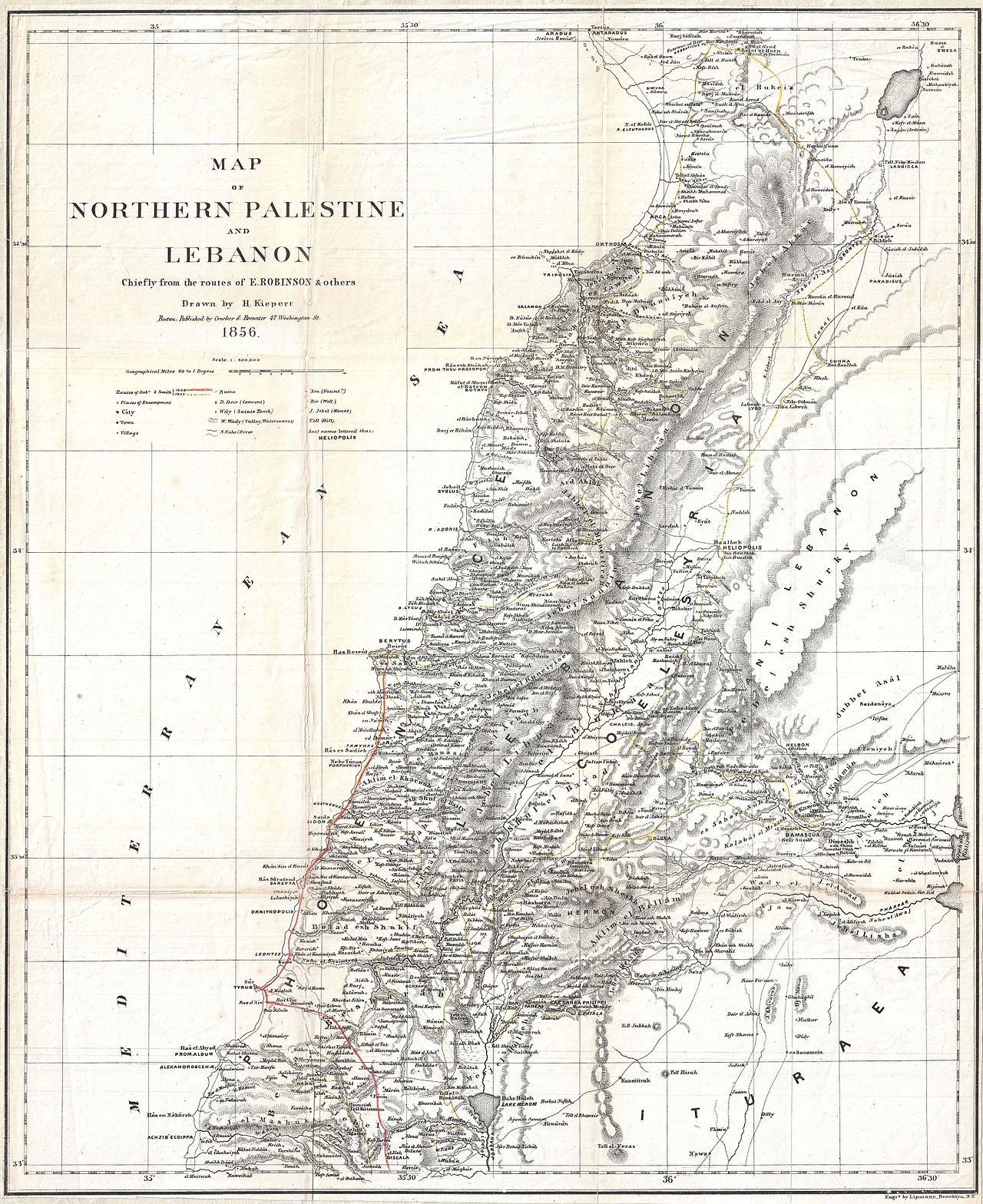
Overview and characteristics
Lebanese rivers typically originate in the Mount Lebanon and Anti‑Lebanon ranges. Many flow westward from the mountains into the Mediterranean; others drain east into the Beqaa Valley or cross into neighbouring Syria. Flows are highly seasonal: winter rains and spring snowmelt create peak discharge, while late summer can see greatly reduced flow. Streams are generally short, with steep channels and high sediment transport.
Major rivers and notable examples
- Litani — the longest river wholly within Lebanon; important for irrigation, drinking water and hydroelectricity (Qaraoun reservoir).
- Orontes (al‑Asi) — rises in the Beqaa and flows north into Syria and Turkey; notable as a cross‑border watercourse.
- Hasbani — a southern headwater tributary of the Jordan River originating in Lebanon.
- Awali — flows into the Mediterranean south of Beirut and supports local agriculture.
- Damour — coastal river south of Beirut with seasonal flow affecting nearby settlements.
- Nahr al‑Kalb (Dog River) — short coastal river known for its historical inscriptions at the mouth.
- Nahr Ibrahim (Adonis) — famed in classical mythology and noted for scenic gorges north of Beirut.
- Beirut River — a small urban watercourse crossing the greater Beirut area.
These examples represent the principal and most commonly cited rivers; the full list of named waterways reaches 16 when smaller seasonal streams and coastal rivers are included.
History, uses and modern challenges
Rivers have shaped settlement patterns, agriculture and trade routes in Lebanon since antiquity. The Litani basin hosts major irrigation schemes and a large reservoir created in the 20th century, and several rivers have historically been associated with local myths and archaeological sites. Today, riparian systems face pressures from urbanization, wastewater discharge, water extraction and climate variability. Conservation and integrated water management are central topics in planning for the country's freshwater resources.
Distinguishing features of Lebanon's rivers are their short length, seasonal flow regime and strong link to mountainous hydrology. While none serve as commercial navigation routes, they remain vital for local economies, ecosystems and cultural heritage.
Related articles
Author
AlegsaOnline.com List of rivers of Lebanon Leandro Alegsa
URL: https://en.alegsaonline.com/art/125034
Sources
- countrystudies.us : "Rivers and Lakes"
- ddc.aub.edu.lb : "The geology of Lebanon - A summary"
- alre7ab.com : "لمحة عامة عن أنهار لبنان"