
Counties of North Carolina
Overview of North Carolina’s 100 counties: organization, history, functions, notable counties and how to access a complete county list and records.
Overview
North Carolina is divided into 100 counties, which serve as the principal administrative subdivisions of the state. Counties provide regional services that are larger in scope than municipal governments, including courts, public records, tax assessment, public health, social services, and law enforcement. Each county has a county seat where many public offices and courthouses are located.
Image gallery
1 Image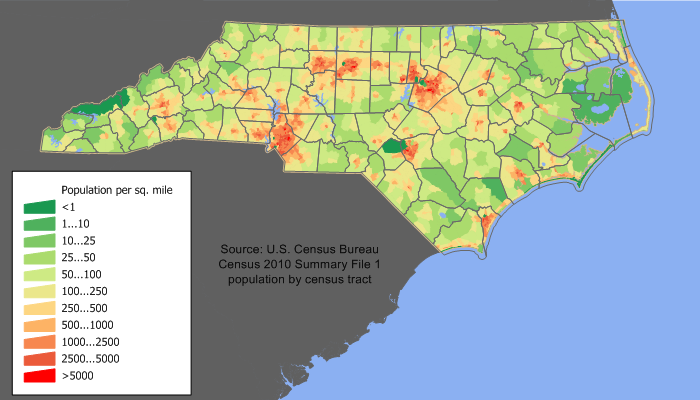
Organization and functions
County governments typically combine a mixture of elected and appointed officials. Common features include an elected board of commissioners (or similar legislative body), an elected sheriff, a register of deeds, and a clerk of court or county manager who administers day-to-day operations. Counties maintain property records, manage elections at the local level, operate jails, administer many social programs and oversee local infrastructure outside municipal boundaries.
History and names
County boundaries and names in North Carolina evolved from the colonial period through the 19th and 20th centuries. Many counties were created, subdivided or renamed as population and settlement patterns changed. County names reflect a range of influences: British place-names and officials from the colonial era, leaders of the Revolutionary and Civil War periods, and names derived from Indigenous peoples and geographic features.
Notable counties and distinctions
- Several counties contain the state’s largest cities and major economic centers; examples include Mecklenburg, Wake, Guilford and Forsyth.
- Counties vary widely in character: coastal, Piedmont urban and suburban, and rural mountain areas each face different policy and service demands.
- County seats are sometimes not the largest municipality in the county, reflecting historical patterns of settlement and transport.
Uses and where to find a full list
A complete county list is useful for legal research, genealogy, real estate, public administration, and statistical reporting. For authoritative lists, maps, and links to each county government and services, consult official state or county resources. For an entry point to state-level resources see North Carolina state resources. For a straightforward full listing of counties and county seats, see a centralized county directory at complete county list.
Further reading: county government charters, local ordinances and county websites provide the most current information about organization, elected officials, and public services.
Related articles
Author
AlegsaOnline.com Counties of North Carolina Leandro Alegsa
URL: https://en.alegsaonline.com/art/124624
Sources
- epa.gov : "EPA County FIPS Code Listing"
- naco.org : "NACo - Find a county"
- statelibrary.dcr.state.nc.us : "County Histories"
- quickfacts.census.gov : "North Carolina QuickFacts"