
List of Kings of Jordan (Hashemite Kingdom)
Chronological list and overview of the Hashemite kings of Jordan, their roles, historical context, powers of the monarchy, and succession practice in the Hashemite dynasty.
Overview
The modern Hashemite monarchy rules the Hashemite Kingdom of Jordan. The king serves as the country's head of state and monarch, styled as His Majesty. The office combines symbolic and substantive authority: the monarch is commander-in-chief of the armed forces, names the government and senior officials, and plays a central role in domestic politics and foreign relations.
Image gallery
6 Images


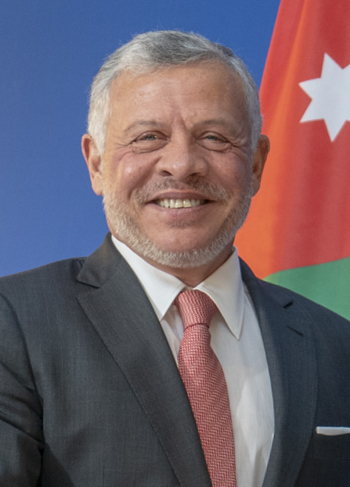
List of monarchs
- Abdullah I (1921–1951) — Founder of the Hashemite rule in Transjordan; served first as Emir under the British mandate (from 1921) and became King when the country gained full independence in 1946. He was assassinated in 1951.
- Talal (1951–1952) — Son of Abdullah I; his reign was brief and ended when he relinquished the throne for health reasons.
- Hussein (1952–1999) — Succeeded in 1952; his long reign oversaw major regional conflicts, domestic reforms, and shifting international alignments in the second half of the twentieth century.
- Abdullah II (1999–present) — Son of Hussein; became king in 1999 and has continued policies of political and economic modernization while maintaining Jordan's regional role.
Role and constitutional powers
Under Jordan's constitution the monarch holds broad prerogatives. The king appoints the prime minister and the cabinet, including security chiefs and senior officials, and selects members of the appointed upper chamber of parliament as well as judges for certain high courts. He signs and promulgates legislation, and in practice can influence the legislative agenda and the timing of elections. The king also represents the state abroad and directs foreign and security policy.
Succession and dynastic practice
Succession follows the Hashemite family's hereditary principles and state law: the crown passes among the male descendants of the founder, but the reigning monarch has the authority to name a successor or crown prince. This flexibility has allowed kings to designate heirs in response to political and personal circumstances; the king may also change the designated heir during his lifetime. The monarch's prerogatives over succession differentiate Jordan's system from strictly automatic primogeniture.
Historical context and significance
The Hashemite family traces its modern political prominence to its historic role as Sharifs of Mecca and to leadership during the Arab Revolt in the early twentieth century. The Hashemite rule in Transjordan emerged under British supervision after World War I and was transformed into the independent Hashemite Kingdom of Jordan in 1946. Since then the monarchy has been a central institution shaping Jordan's stability, social development, and diplomatic posture.
Further reading and related topics
- Constitutional role of the monarch and the process for appointing the prime minister
- History of Transjordan and the creation of the modern Jordanian state
- Hashemite lineage, regional history, and the monarchy's international relations
The monarchy remains a focal point of political life in Jordan: its holders have combined ceremonial status with active engagement in governance, security, and diplomacy. For official and detailed biographical information on individual monarchs, consult authoritative national and historical sources.
Related articles
Author
AlegsaOnline.com List of Kings of Jordan (Hashemite Kingdom) Leandro Alegsa
URL: https://en.alegsaonline.com/art/124781
Sources
- freedomhouse.org : "Jordan"