
Lars Ahlfors — Finnish mathematician and pioneer of complex analysis
Biography and overview of Lars V. Ahlfors, his main contributions to complex analysis, key theorems and concepts named for him, major writings, and his mathematical legacy.
Overview
Lars Valerian Ahlfors (18 April 1907 – 11 October 1996) was a Finnish mathematician best known for fundamental work in complex analysis and geometric function theory. He was one of the first recipients of the Fields Medal (1936) for results on Riemann surfaces and related extremal problems. Ahlfors combined deep function-theoretic techniques with geometric ideas that influenced later work in conformal mapping, value distribution, and quasiconformal theory.
Image gallery
1 Image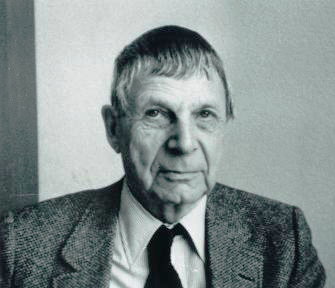
Main contributions and concepts
Ahlfors made several enduring contributions; the most widely cited include:
- Ahlfors function — an extremal analytic map from a given region to the unit disk that maximizes the derivative at a chosen point, used in problems of uniformization and approximation.
- Value distribution and Nevanlinna-type results — extensions and applications of value distribution ideas to Riemann surfaces and meromorphic functions.
- Quasiconformal theory and the Ahlfors–Bers viewpoint — work that helped establish the analytic machinery for solving the Beltrami equation and studying deformation spaces.
- Ahlfors finiteness theorem — a major result about the structure of certain Kleinian groups and the finiteness properties of their action on the Riemann sphere.
Books and pedagogy
Ahlfors wrote a classic graduate text titled Complex Analysis that has educated generations of mathematicians; its clear exposition and wealth of examples made it a standard reference. He also published many research articles that shaped mid-20th-century developments in function theory.
Career and influence
Trained in Finland, Ahlfors studied under prominent analysts and later went on to hold positions abroad, including a long association with Harvard University. Beyond formal honors, his influence is visible in modern Teichmüller theory, geometric function theory, and several active research directions that trace techniques or terminology back to his work.
Further reading
For accessible introductions to Ahlfors's life and work consult biographical summaries and expositions of complex analysis. A general overview is available at biographical source, and for context on the subject he helped shape see treatments of complex analysis.
Related articles
Author
AlegsaOnline.com Lars Ahlfors — Finnish mathematician and pioneer of complex analysis Leandro Alegsa
URL: https://en.alegsaonline.com/art/124033
Sources
- ams.org : "Review: Complex analysis. By Lars V. Ahlfors"
- doi.org : 10.1090/S0002-9904-1953-09722-1
- wikidata.orgQ211642.html : wikidata.orgq211642.html
- authority.bibsys.no : 90507268
- catalogo.bne.es : XX4579590
- catalogue.bnf.fr : cb122990166
- data.bnf.fr : (data)
- cantic.bnc.cat : a10894548
- d-nb.info : 104541164
- isni.org : 0000 0001 1768 6430
- id.loc.gov : n50033197
- genealogy.math.ndsu.nodak.edu : 1430
- id.ndl.go.jp : 00431059
- aleph.nkp.cz : ola2002142289
- nla.gov.au : 35001859