
Kurt Alder — German chemist and co-discoverer of the Diels–Alder reaction
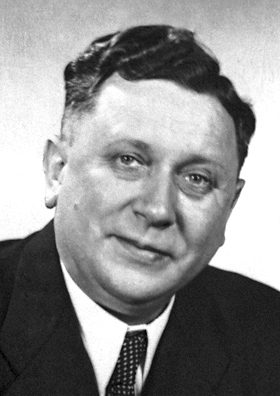
Kurt Alder (1902–1958), German chemist awarded the 1950 Nobel Prize with Otto Diels for the Diels–Alder cycloaddition; foundational to modern organic synthesis and many industrial applications.
Kurt Alder (10 July 1902 – 20 June 1958) was a German chemist best known for his role in discovering and developing the Diels–Alder reaction, a key transformation in organic chemistry. His work transformed approaches to building carbon frameworks and remains central to synthetic strategy in both academic and industrial laboratories.
Image gallery
3 Images

What the Diels–Alder reaction is
The Diels–Alder reaction is a [4+2] cycloaddition between a conjugated diene and a dienophile that produces a six-membered ring in a single concerted step. The process is stereospecific and often highly regioselective, allowing chemists to construct complex cyclic structures with predictable stereochemistry. Its pericyclic mechanism is explained by frontier molecular orbital theory and conservation of orbital symmetry.
Contributions and recognition
Alder developed the reaction in collaboration with Otto Diels, and their joint discovery earned them the Nobel Prize in Chemistry in 1950. The reaction’s simplicity, reliability, and broad applicability made it a staple of synthetic planning. In recognition of his influence, one insecticide was given a name derived from Alder’s, reflecting the chemical community’s habit of honoring notable researchers.
Applications and examples
- Natural product synthesis: construction of polycyclic ring systems found in steroids, terpenes and alkaloids.
- Pharmaceuticals: formation of key cyclic intermediates and rapid assembly of molecular complexity.
- Materials and polymer chemistry: routes to cycloaliphatic monomers and thermally reversible bonds in advanced materials.
The Diels–Alder reaction also underpins many modern synthetic strategies such as retrosynthetic analysis and cascade reactions. Its variants, including intramolecular Diels–Alder and hetero-Diels–Alder reactions, extend its reach to oxygen- and nitrogen-containing rings.
Although Kurt Alder’s life was relatively short, his scientific legacy endures in textbooks and laboratories worldwide. For an overview of his work and historical context see additional references and biographical entries, including commemorations of his contributions to organic chemistry. Further reading
Related articles
Author
AlegsaOnline.com Kurt Alder — German chemist and co-discoverer of the Diels–Alder reaction Leandro Alegsa
URL: https://en.alegsaonline.com/art/123897
Sources
- nobelprize.org : "Biography"
- doi.org : 10.1002/jlac.19284600106