
Blue Is the Warmest Colour — film, themes, reception and legacy
A comprehensive overview of the 2013 French romantic drama Blue Is the Warmest Colour: origins, plot and characters, production and release, critical response, controversies, and cultural significance.
Overview
Blue Is the Warmest Colour (French title La Vie d'Adèle – Chapitres 1 & 2) is a French romantic drama directed by Abdellatif Kechiche and released in 2013. The movie adapts a 2010 graphic novel by Julie Maroh and stars Adèle Exarchopoulos and Léa Seydoux. As a coming-of-age story it follows the emotional life of a young woman as she discovers desire, intimacy, and the limits of a long-term relationship. For background on the cinematic production see the film overview here and the original graphic novel here.
Image gallery
5 Images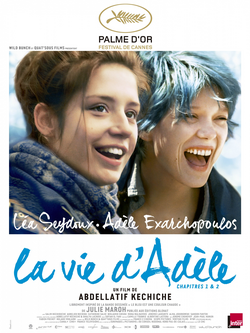




Plot and principal characters
The narrative centers on Adèle, a teenager with ambitions to become a teacher, whose life changes after meeting a blue‑haired art student. Their intense, evolving relationship forms the heart of the story as it traces years of passion, growth, and separation. The protagonist is described in the source material and promotional texts; for a character summary consult this reference. The central relationship — its tenderness, conflicts, and sexual frankness — is often described simply as a lesbian romance, though the film also explores identity, friendship, and career aspirations.
Production, premiere and release
Shot in France with a naturalistic aesthetic, the film drew attention for lengthy, intimate scenes and for the performances of its two leads. It premiered at the Cannes Film Festival on May 23, 2013, where it sparked immediate discussion and was honored with major awards; see festival information at this Cannes entry. In the United States the Motion Picture Association assigned an NC-17 rating because of explicit sexual content, a classification that affected distribution and publicity; further details are available here.
Reception, controversies and critical response
Critics praised the actors' performances and the film's emotional intensity, while others criticized its length and the staging of certain scenes. After release there were public disputes and legal complaints concerning working conditions and the director's methods; these prompted broader industry conversations about consent, on-set practices, and the depiction of sexuality. Reviews also debated how faithfully the film translated the source graphic novel and whether the film's explicitness served artistic aims or provoked exploitation concerns.
Legacy and significance
Blue Is the Warmest Colour influenced discussions about LGBTQ representation in mainstream cinema and remains a frequently cited example of contemporary French filmmaking that foregrounds intimate realism. Its awards recognition and the public debates it generated have made the film a reference point in courses and essays on adaptation, performance, and film ethics. Notable aspects to consider include its adaptation from a graphic novel, the prominence of naturalistic acting, and the film's role in debates over cinematic depictions of sexuality.
Further reading and context
- Adaptation: comparisons between the film and Julie Maroh's graphic novel highlight changes in narrative focus and character detail.
- Acting and direction: the film is often discussed for its method‑style approach and its effect on performers.
- Cultural impact: the film spurred academic and journalistic essays on representation, censorship, and festival culture.
Tags
Related articles
Author
AlegsaOnline.com Blue Is the Warmest Colour — film, themes, reception and legacy Leandro Alegsa
URL: https://en.alegsaonline.com/art/12346