
Josiah Bartlett: Physician, Revolutionary Delegate, Judge and Governor
Josiah Bartlett (1729–1795) was an American physician and Founding Father who represented New Hampshire in the Continental Congress, signed the Declaration of Independence, and later served as chief justice and governor.
Overview
Josiah Bartlett (November 21, 1729 – May 19, 1795) was an American figure best known for his combined careers in medicine and public service. Trained and respected as a physician, Bartlett also became a prominent statesman, representing New Hampshire during the Revolutionary era and participating in the national debates that produced the United States.
Image gallery
8 Images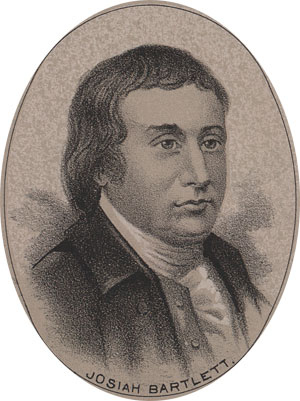




Early life and medical practice
Bartlett apprenticed in medicine as a young man and established a practice that served rural communities. His medical work won him local respect and provided a network of contacts that eased his entry into civic life. Like many 18th‑century practitioners, Bartlett combined empirical observation with community leadership, tending patients while also engaging in town government and militia affairs.
Revolutionary activity and national service
During the years leading up to the American Revolution, Bartlett emerged as an active voice in provincial politics. He served as a delegate from New Hampshire to the Continental Congress, where he participated in deliberations over colonial rights and independence. Bartlett is one of the signers of the Declaration of Independence, placing him among the group of leaders who formally broke political ties with Britain.
Judicial and executive roles
After the Revolutionary conflict, Bartlett returned to state service. He was elevated to the bench as Chief Justice of New Hampshire's highest court and later served as governor. In these capacities he helped to stabilize government institutions during the transition from wartime assemblies to peacetime state administrations, contributing to legal and administrative precedents in the young republic.
Positions held
- Local physician and community leader
- Delegate to the Continental Congress from New Hampshire
- Signer of the Declaration of Independence
- Chief Justice of the state superior court
- Governor of New Hampshire
Legacy
Bartlett's legacy rests on both his signature on a founding document and his practical service in state institutions. Historians regard him as an example of the professional leadership—physicians, lawyers, and merchants—that moved into politics in the Revolutionary era. His life illustrates how local prominence and civic responsibility combined to shape national events. For further reference and primary sources, readers may consult collections of Continental Congress records and studies of New Hampshire's Revolutionary generation (general reference, congressional records).
Notable facts include that Bartlett balanced medical practice with public duties and that his name appears among the signers whose collective choice defined the new nation's political course. Institutions and historical works continue to note his contributions to both medicine and governance.
Related articles
Author
AlegsaOnline.com Josiah Bartlett: Physician, Revolutionary Delegate, Judge and Governor Leandro Alegsa
URL: https://en.alegsaonline.com/art/122982