
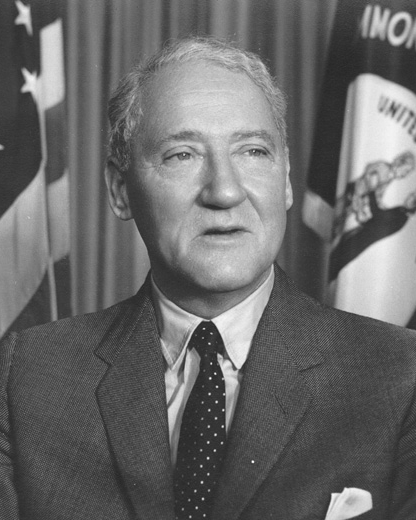
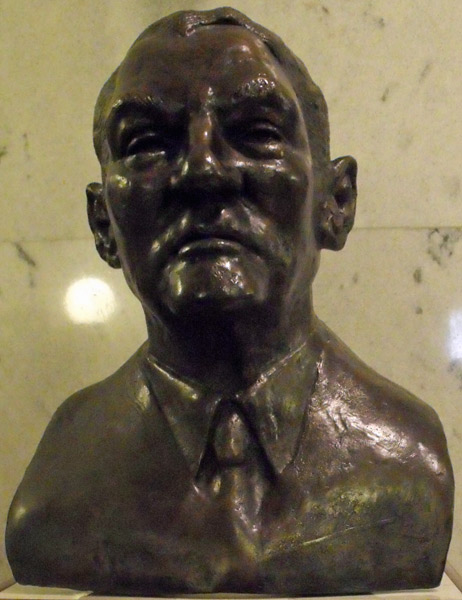
John Sherman Cooper — Kentucky senator, jurist, and diplomat
Republican statesman John Sherman Cooper (1901–1991) was a Kentucky jurist, three‑term U.S. senator and two‑time ambassador whose independent style shaped mid‑20th century American foreign and domestic policy.
John Sherman Cooper (August 23, 1901 – February 21, 1991) was an American politician, jurist and diplomat who represented the interests of the U.S. state the commonwealth of Kentucky at the national level. Over a long public career he combined elected service in the United States Senate with diplomatic assignments abroad. He was widely regarded as a pragmatic, independent member of the Republican party who worked across party lines on both domestic and foreign affairs.
Image gallery
9 Images


Overview and political career
Cooper served multiple nonconsecutive terms in the Senate before winning two full six‑year terms in 1960 and 1966. His time in Washington spanned a formative era of the Cold War and domestic change in the United States. In addition to his Senate tenure he held important diplomatic posts, including ambassadorial appointments that reflected his interest in international engagement and conflict management.
Early public life and legal background
Trained in the law and described in contemporary accounts as a jurist, Cooper began his public life in legal and judicial roles before entering national politics. This legal background contributed to a reputation for careful deliberation and respect for institutional process. Throughout his career he emphasized constitutional procedures and the rule of law when addressing both policy disputes and questions of executive and legislative authority.
Senate service and legislative style
Cooper’s Senate career was notable for its nonconsecutive nature: he served in several separate stints, returning to the chamber at different points in mid‑century politics. He cultivated a centrist, independent approach, often stressing bipartisan solutions and deliberate oversight of foreign policy. Observers credited him with a measured temper and a willingness to depart from strict party orthodoxy when he judged national interest required it.
Diplomacy: India and East Germany
Between periods in the Senate, Cooper accepted diplomatic assignments. He served as U.S. ambassador to India during the mid‑1950s and later as ambassador to East Germany in the 1970s. Those roles placed him at the intersection of Cold War diplomacy, decolonization and the evolving relations between East and West. His ambassadorships were seen as extensions of his interest in pragmatic engagement and in using diplomacy to reduce tensions.
Positions, achievements and legacy
Cooper’s political identity combined party affiliation with notable independence. He supported measures aimed at strengthening American alliances and was involved in legislative oversight of foreign policy. On domestic issues he was regarded as a moderate who could appeal to voters across ideological lines; he set records in his home state for wide electoral margins and was the first member of his party from Kentucky to be popularly reelected to more than one Senate term. Historians and contemporaries remember him for steadiness, courtesy, and a focus on consensus building.
- Born: August 23, 1901
- Died: February 21, 1991
- Senate: multiple nonconsecutive terms; elected to full terms in 1960 and 1966 (Senate career)
- Diplomacy: U.S. ambassador to India (1955–1956) and to East Germany (1974–1976)
- Party: Republican
- State: Kentucky (commonwealth)
For researchers and readers interested in mid‑20th century American politics, Cooper exemplifies a strand of Republicanism characterized by internationalism and institutional caution. His career illustrates how legislative experience and diplomatic service can combine to influence both domestic debates and international postures during periods of rapid change.
Related articles
Author
AlegsaOnline.com John Sherman Cooper — Kentucky senator, jurist, and diplomat Leandro Alegsa
URL: https://en.alegsaonline.com/art/122650