
John Dryden: Restoration poet, playwright, translator and critic
John Dryden (1631–1700), England's dominant Restoration poet and first official Poet Laureate, noted for heroic couplets, political satire, translations and influential literary criticism.
John Dryden (9 August 1631 – 1 May 1700) was a central literary figure of the English Restoration. He served as Poet Laureate and held royal appointments, produced work across genres — poetry, drama, essays and translations — and helped shape standards of English verse and dramatic criticism in the late 17th century. Dryden's career combined artistic achievement with public engagement: his poems and satires often addressed contemporary politics and his criticism advanced neoclassical ideas about order, decorum and the use of classical models.
Image gallery
9 Images


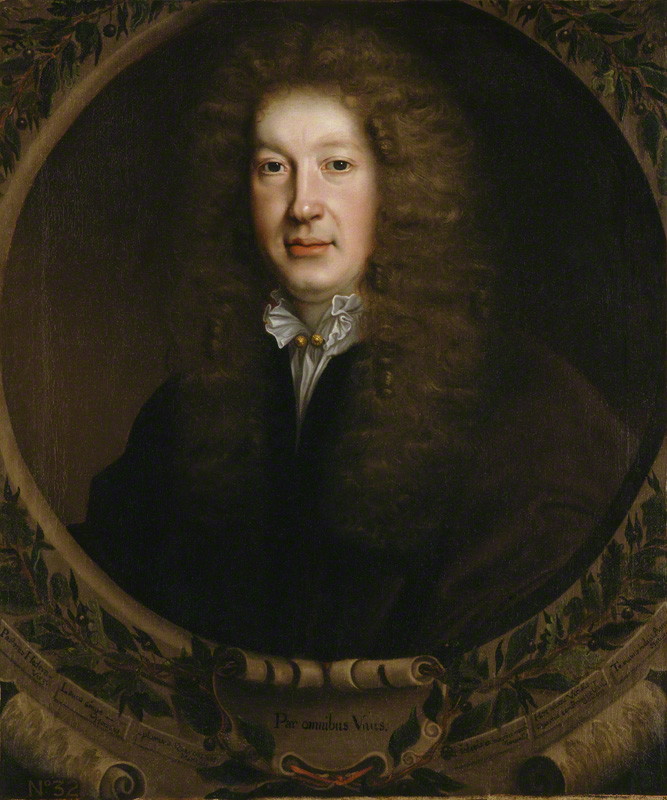

Life and career
Born in Aldwincle, Northamptonshire, Dryden was the eldest of a large family and received a classical education at Westminster School before attending Trinity College, Cambridge. After university he moved to London, where he found early employment in public service and cultivated connections in literary and court circles. In 1663 he married Elizabeth Howard; the couple had children and Dryden established himself as a professional writer.
Dryden's public appointments included the office of Poet Laureate (he is often associated in writing with the office itself, see Poet Laureate) and later the post of Historiographer Royal. His political and religious commitments shifted over time, a circumstance reflected in some of his most controversial works: he supported the Stuart monarchy in poetry and satire, converted to Catholicism after 1685, and declined to swear allegiance after the Glorious Revolution, a stance that cost him governmental preferment.
Major works and forms
Dryden wrote in a wide range of forms. He experimented in the new Restoration theatre, produced tragicomedies and heroic dramas, and also wrote lyric and narrative poems. Notable works include:
- Early drama: The Wild Gallant (1663) and later courtly plays and adaptations, among them the tragedy All for Love (1677), an imitation of Antony and Cleopatra written in a neoclassical register.
- Political and satirical verse: the allegorical and polemical poem Absalom and Achitophel (1681) and the mock-epic Mac Flecknoe (1682), which attack public figures and rival writers.
- Occasional and public poems: Annus Mirabilis (1667), an account of the year of war and the Great Fire of London, and the religious-allegorical The Hind and the Panther (1687), composed after his conversion to Catholicism.
- Criticism and theory: An Essay of Dramatic Poesy (1668) argued for judgment guided by classical models and comparative reading of English, French and ancient drama.
- Translations: late in life Dryden undertook major translations that influenced English taste, most famously his translation of Virgil, which reached a wide readership and showcased his mastery of the heroic couplet.
Style, criticism and influence
Dryden helped to popularize the heroic couplet as a dominant verse form in English, using its balance and closure for narrative, satirical and encomiastic purposes. His prose criticism combined practical judgments about drama with theoretical appeals to unity, decorum and the classical unities, yet he was also flexible in practice: he praised Shakespeare's imaginative power even while recommending classical restraint.
As a critic and translator, Dryden shaped expectations for polished diction, clear argument and rhetorical force. His translations modeled how classical texts could be rendered into bracing English verse; his critical essays provided instructive comparisons among traditions and asserted the value of learned standards without slavish literalism. Later figures, including 18th-century poets and critics, acknowledged his influence on taste and versification.
Legacy and notable facts
Dryden's mixture of political engagement, technical skill and theoretical writing made him a dominant voice of his age. He was both celebrated and controversial: his satires could blacken reputations, and his public conversion and subsequent refusal to swear political oaths led to censure and the loss of official posts. He continued working as a translator and writer to support his family. Dryden died in 1700 and was buried in Westminster Abbey's Poets' Corner. His role in shaping Restoration literature, promoting critical standards and refining English verse ensures his continuing presence in discussions of 17th-century letters and the development of literary criticism.
Further reading typically introduces his dramatic works, major poems and critical essays in sequence to grasp how his practice and theory inform each other. For general overviews and collections of his works consult printed and digital editions, as well as scholarly introductions that situate Dryden in the political and cultural context of the Restoration era. For additional resources see representative online and library guides (resources on London and literary life, educational histories, university archives, and institutional pages about the Poet Laureate tradition).
Related articles
Author
AlegsaOnline.com John Dryden: Restoration poet, playwright, translator and critic Leandro Alegsa
URL: https://en.alegsaonline.com/art/122432
Sources
- books.google.com : The Story of English: How an Obscure Dialect Became the Worlds Most-Spoken Language
- wikidata.orgQ213355.html : wikidata.orgq213355.html
- catalogo.bne.es : XX880861
- catalogue.bnf.fr : cb119862951
- data.bnf.fr : (data)
- biografischportaal.nl : 35352108
- cantic.bnc.cat : a10420964
- ci.nii.ac.jp : DA0025088X
- d-nb.info : 118680897
- isni.org : 0000 0001 1028 8042
- id.loc.gov : n79006406
- kopkatalogs.lv : 000035307
- musicbrainz.org : 525993e8-47af-44d5-91d1-dd1bfb5fdab4
- id.ndl.go.jp : 00438269
- aleph.nkp.cz : jn19990001882