
Jaswant Singh: Indian politician, former minister and long-serving parliamentarian
Biography of Jaswant Singh (1938–2020), a founding BJP leader who held finance, defence and external affairs portfolios, served in parliament for decades, and was later expelled after a controversial book.
Jaswant Singh (3 January 1938 – 27 September 2020) was an Indian politician and diplomat who played a prominent role in national politics for more than three decades. A founding member of the Bharatiya Janata Party, he served repeatedly as a member of parliament between 1980 and 2014 and held several senior cabinet portfolios, including finance, defence and external affairs. His long public life combined service in government, policy influence and episodes of controversy that shaped his later years.
Image gallery
9 Images


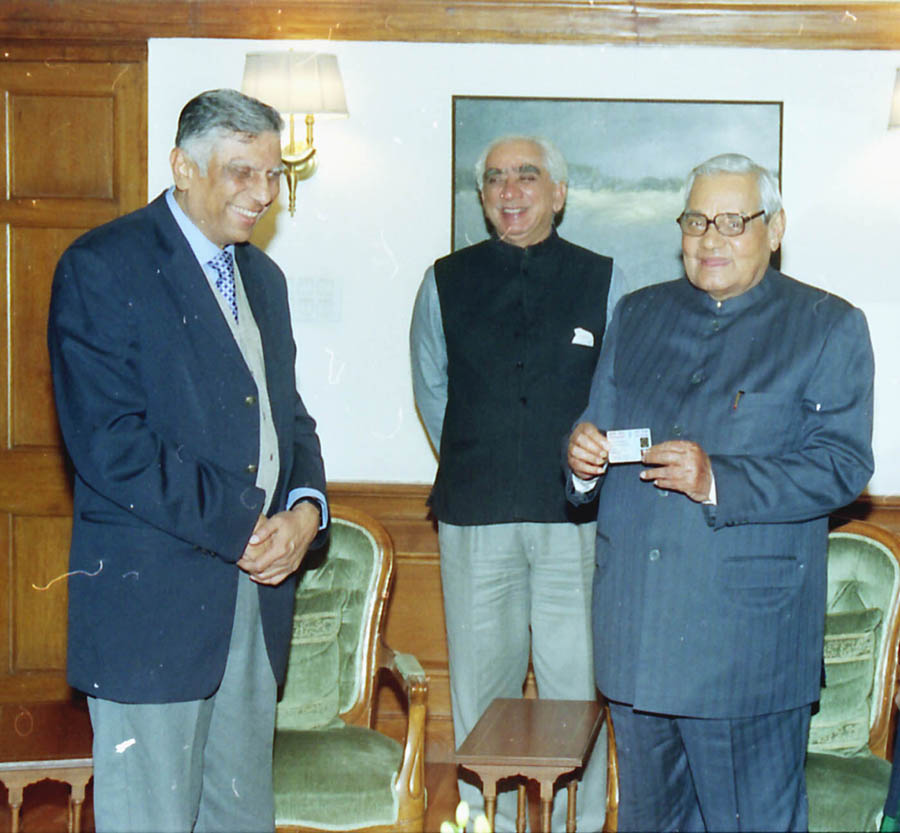


Early life and education
Born in Jasol in the then Rajputana Agency, British India, Singh came from a family with a background in the erstwhile princely states of western Rajasthan. He received his schooling at Mayo College, a distinguished boarding school, and underwent military training at the Indian Military Academy, reflecting an early connection to disciplined public service. These formative experiences influenced his subsequent entry into national politics and public administration.
Political career and key offices
Jaswant Singh emerged as a senior leader within the political movement that created the BJP. Over a long parliamentary career he was repeatedly entrusted with major ministries. Between the late 1980s and early 2000s he held top-level portfolios under coalition governments and served in managerial roles such as the deputy chairmanship of the national planning body.
- Minister of Finance — supervised economic policy during periods of coalition rule.
- Minister of Defence — managed defence affairs and strategic planning during his tenure.
- Minister of External Affairs — represented India internationally and conducted diplomacy with other states.
- Deputy Chairman, Planning Commission — participated in national development planning (1998–99).
- Leader of the Opposition, Rajya Sabha — after the 2004 general election he led the party’s presence in the upper house of parliament (Rajya Sabha).
Singh was widely regarded as an articulate parliamentarian with experience across security, economic and foreign-policy areas. His career demonstrated a readiness to work within coalition governments and to take on responsibilities that bridged domestic policy and international diplomacy.
Contests, controversy and party discipline
In 2012 he was nominated as a candidate for the office of vice-president of India; the election ultimately went to another candidate after a national ballot (vice-presidential election). Later, a book he wrote that included an assessment of historical figures provoked strong reactions within his party and the wider public. The disagreement culminated in his expulsion from the BJP in March 2014 and affected his standing in that year’s elections.
Singh’s life and career mixed statesmanship with moments of dispute over interpretation of history and party loyalty, illustrating the tensions that can arise between individual opinion and collective party positions.
Later years, accident and death
Jaswant Singh continued to live in New Delhi after his active political career. In August 2014 he suffered a serious fall at his home in New Delhi that caused a head injury. Medical reports noted he remained in a prolonged coma and required ongoing hospital care. Official accounts and later reports linked his eventual passing to complications arising from that injury; press releases and medical summaries cited cardiac arrest and multiple organ failure as immediate causes (cause of death reports).
Jaswant Singh’s death on 27 September 2020 closed a public life marked by high office, diplomatic engagement and contested episodes that continue to be discussed by scholars and commentators of contemporary Indian politics.
For further reading on his parliamentary record, policy positions and speeches consult dedicated archives and biographical sources linked to his long tenure in public office. Additional context on the party he helped found is available from organizational histories and analyses of India’s political development in the late 20th century (Jasol (Rajputana Agency) background).
Related articles
Author
AlegsaOnline.com Jaswant Singh: Indian politician, former minister and long-serving parliamentarian Leandro Alegsa
URL: https://en.alegsaonline.com/art/121565
Sources
- rediff.com : "Jaswant's expulsion is the BJP's gift to the RSS"
- livemint.com : "BJP expels Jaswant Singh over Jinnah book - Livemint"
- articles.timesofindia.indiatimes.com : "Jaswant Singh to challenge Hamid Ansari test Vice-President's post"
- indianexpress.com : Jaswant Singh rules out withdrawal from Barmer Lok Sabha seat
- hindustantimes.com : BJP expels defiant Jaswant Singh for 6 years
- zeenews.india.com : "Jaswant Singh in coma after severe head injury, condition 'highly critical'"
- thehindu.com : Jaswant Singh: End of a long journey for the Army man-turned-parliamentarian