
Blaustein (Alb-Donau-Kreis) — town on the Blau River near Ulm
Blaustein is a municipality in Alb-Donau-Kreis, Baden-Württemberg, Germany, on the Blau River west of Ulm. Formed by mergers in 1968–1970s, it includes several villages and notable local sites.
Overview
Blaustein is a municipality in the district of Alb-Donau-Kreis in the state of Baden-Württemberg, Germany. It lies on the Blau River a few kilometres west of Ulm and has roughly fifteen thousand inhabitants. The municipality combines residential areas, local businesses, agricultural land and woodland close to the foothills of the Swabian Jura (Schwäbische Alb).
Image gallery
3 Images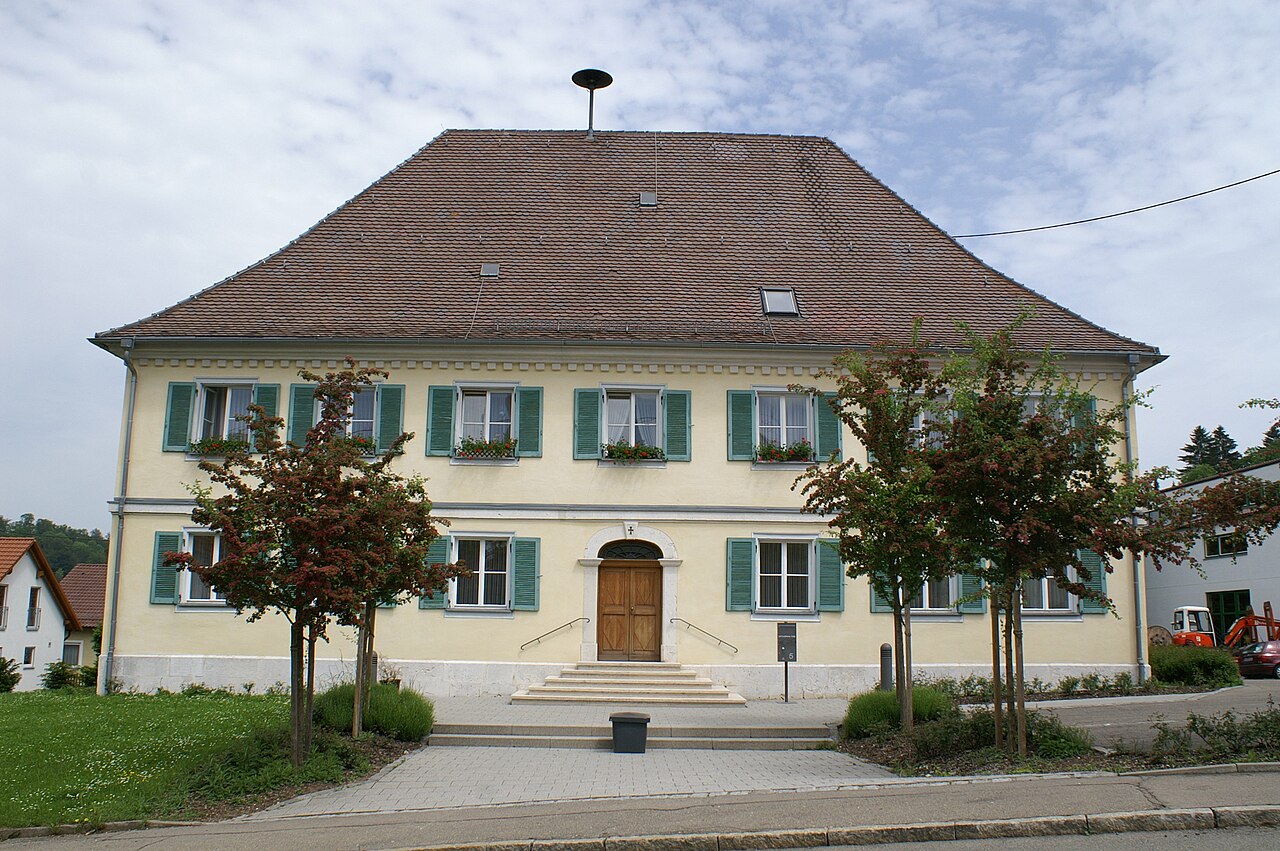


Geography and subdivisions
The municipal area follows the valley of the Blau and includes low river plains, terraces and nearby wooded ridges typical of the region around Ulm. Blaustein is made up of a number of formerly independent villages and districts that retain their own village centres and local identities. The principal parts include Ehrenstein and Klingenstein, together with Arnegg, Bermaringen, Dietingen, Herrlingen, Lautern, Markbronn, Weidach and Wippingen.
History and municipal formation
The modern municipality was established in 1968 by the merger of the villages of Ehrenstein and Klingenstein. During the municipal reforms of the late 1960s and 1970s further neighbouring communities were incorporated, shaping the administrative boundaries that exist today. The area has a longer local history reflected in village churches, farmsteads and traditional Swabian architecture.
Sights, culture and recreation
Blaustein and its districts offer riverside walks along the Blau, historic village centres and small local museums or exhibition spaces focused on regional life. The surrounding countryside provides opportunities for hiking and cycling, and events at village halls and community centres preserve Swabian customs and seasonal festivals. Visitors often combine a stay in Blaustein with excursions to nearby Ulm and the Swabian Jura.
- Historic churches and traditional village streets
- Walking and cycling routes along the Blau valley
- Local cultural events and community clubs
Notable person and memorial sites
The district of Herrlingen is known as the burial place of Field Marshal Erwin Rommel. His gravesite and related local memorials are points of historical interest and attract visitors with an interest in twentieth-century history. Local interpretation tends to place such sites in the context of regional history.
Economy, transport and community life
The economy of Blaustein is typical of suburban–rural municipalities in the region: a mix of small and medium-sized enterprises, services, trades and agriculture. Many residents commute to Ulm for work; the municipality is connected to the regional road network and to local public transport that serves daily commuting and school travel. Municipal services are managed from central offices while cultural and sporting life remains active at the village level.
For detailed administrative information, community news and events consult municipal resources and regional guides provided by the district and local authorities.
Related articles
Author
AlegsaOnline.com Blaustein (Alb-Donau-Kreis) — town on the Blau River near Ulm Leandro Alegsa
URL: https://en.alegsaonline.com/art/12121