
Isabel Martínez de Perón
María Estela 'Isabel' Martínez de Perón (born 1931) served as Argentina's vice president and then president (1974–1976). Her tenure followed Juan Perón's death and preceded the 1976 military coup.
Overview
María Estela Martínez Cartas de Perón (born 4 February 1931), commonly known as Isabel Perón, is an Argentine political figure who served as vice president and then as president of Argentina. She became president on 1 July 1974 after the death of her husband, President Juan Perón, and remained in office until the military coup of 24 March 1976. Her name is often cited in discussions of women in high political office because she was one of the first women to assume the formal title of head of state in the modern era.
Image gallery
5 Images


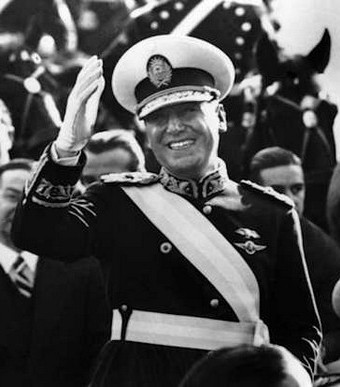
Early life and rise to prominence
Born María Estela Martínez Cartas in 1931, she worked in entertainment and later met Juan Perón while he was living in exile. They married and she became closely associated with Peronist politics. When Perón returned to power in 1973 he chose her as his running mate; she held the dual roles of vice president and First Lady during his final term. Her elevation to the vice presidency reflected both personal proximity to Perón and the factional alliances within the Peronist movement at that time.
Presidency: context and challenges
Isabel Perón inherited a deeply divided political landscape. Her administration faced mounting economic difficulties, rising inflation, labor unrest, and violent confrontations between left-wing and right-wing armed groups. Political decision-making was often criticized as fragmented; a small circle of advisors, most notably José López Rega, exerted strong influence over policy and security matters. During her presidency, state and paramilitary responses to political dissent intensified, contributing to a climate of repression and fear.
Coup, exile and later legal matters
In March 1976 the Argentine military removed Isabel Perón from office and established a junta that launched a campaign of systematic repression against perceived opponents. Isabel went into exile in Spain, where she lived for many years. Decades later, she faced legal scrutiny related to human rights violations dating from the final months of her rule; her detention in Spain in January 2007 drew international attention and underscored continuing efforts to address crimes from that turbulent era.
Legacy and historical significance
Her tenure is remembered for its abrupt transition from a populist civilian government to a military dictatorship that presided over widespread human rights abuses. Isabel Perón's presidency remains controversial: some historians emphasize her symbolic role as an early woman to hold a national presidency, while others focus on the administration's paralysis, internal Peronist conflicts, and the escalation of violence that preceded the coup. Her period in office is a central episode in Argentina's modern political history and often invoked in studies of gender, populism, and state violence.
Key facts and further reading
- Full name: María Estela Martínez Cartas de Perón.
- Presidential term: 1 July 1974 – 24 March 1976.
- Previously served as vice president and First Lady under President Juan Perón.
- Arrested in Spain in January 2007 in connection with investigations into disappearances from 1976; legal proceedings and requests for extradition have been part of her later biography.
- Her life and rule are important for understanding the end of democratic rule in Argentina and the lead-up to the country's so-called Dirty War.
For broader context on the office she held, see the role of the President of Argentina. For background on Argentina's political history during this period consult sources on Peronism and the military dictatorship that followed.
Related articles
Author
AlegsaOnline.com Isabel Martínez de Perón Leandro Alegsa
URL: https://en.alegsaonline.com/art/120990
Sources
- latimes.com : "Isabel Peron's arrest signals shift in Argentina"