
Hamad bin Isa Al Khalifa
King of Bahrain since 2002, previously Emir from 1999. His reign has combined constitutional reform and economic development with political unrest and ongoing reform efforts.
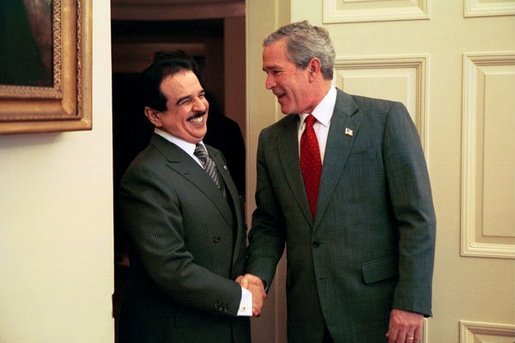
Hamad bin Isa Al Khalifa (born 28 January 1950) is the head of state of the Kingdom of Bahrain. He became Emir following the death of his father in 1999 and adopted the title of King on 14 February 2002, after a period of constitutional change. Public biographies and official materials describe his role as monarch and head of the ruling House of Khalifa; further information is available in official sources such as government publications.
Image gallery
7 Images


Early life and succession
Born into the ruling family, Hamad was proclaimed Crown Prince in 1964. He received military and administrative training abroad, including at institutions that prepare many Gulf leaders for government service. On 6 March 1999 he succeeded his father, Isa bin Salman Al Khalifa, as Emir; later, in response to a national referendum and legal reforms, he changed his title to King. Details on the dynastic succession and the previous generation are provided in historical and biographical accounts, including references to his father Isa bin Salman Al Khalifa.
Governance, reforms and institutions
Early in his rule he promoted a package of political and institutional reforms presented to the public as a National Action Charter, which aimed to modernize government structures and expand civic participation. The reform program led to constitutional amendments and the establishment of elected institutions alongside appointed bodies. Over time his government emphasized economic diversification, financial services, and infrastructure as part of broader modernization efforts.
2011 unrest and subsequent developments
Like other countries in the region, Bahrain experienced substantial political protests in 2011. The demonstrations prompted a strong state response, the declaration of a national emergency for a limited period, and intervention by a regional security force. The events produced international scrutiny and spurred a series of reviews and commissions intended to address grievances, with reform proposals and some institutional changes implemented in the years that followed. Coverage of these events and official responses can be found in a range of human rights, governmental, and academic sources, including policy reports.
Foreign relations and economy
Under his rule Bahrain has maintained close relations with neighboring Gulf states and external partners, balancing ties on defense, trade, and financial services. The kingdom positions itself as a regional financial and commercial center while continuing to rely on energy resources and expatriate labor. Foreign policy emphasizes security cooperation within the Gulf Cooperation Council and partnerships with Western states in areas such as training and intelligence.
Personal life and succession
Hamad is head of the royal family and plays a central role in national ceremonial, political and religious life. The Crown Prince and other senior family members hold prominent positions in government and business, and succession arrangements have been publicized through official channels. Observers of Bahraini politics note that the King’s legacy will be shaped by economic performance, the success of institutional reforms, and the management of social and political tensions.
- Key offices: Crown Prince (from 1964), Emir (1999–2002), King (2002–present).
- Major themes of rule: constitutional reform, economic modernization, and management of political dissent.
- Further reading: government and academic sources, and reports on the 2011 protests and subsequent reform efforts.
Related articles
Author
AlegsaOnline.com Hamad bin Isa Al Khalifa Leandro Alegsa
URL: https://en.alegsaonline.com/art/120238
Sources
- bahrainembassy.org : "Embassy of the Kingdom of Bahrain to the United States"
- acrli.org : "Country Profiles Bahrain"
- mofa.gov.bh : "H.M the King"