
Gilbert Taylor — British cinematographer known for Dr. Strangelove and Star Wars
Biography and career of Gilbert Taylor (1914–2013), a British cinematographer noted for versatile lighting and camera work on films including Dr. Strangelove, A Hard Day's Night, The Omen and Star Wars.
Gilbert Taylor (12 April 1914 – 23 August 2013) was a British cinematographer whose career spanned several decades and many genres. He is best known for creating memorable photographic looks for landmark films of the 1960s and 1970s while remaining adaptable to comedies, thrillers and large-scale studio productions.
Image gallery
1 Image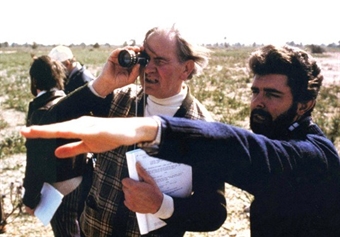
Career highlights and style
Taylor was admired for his command of both black-and-white and color cinematography and for a practical, image-focused approach. Directors sought him for his ability to use light and lensing to support narrative tone—whether the stark, documentary-like interiors of a political satire or the dramatic lighting of a supernatural thriller. He combined careful composition with on-location resourcefulness.
Notable films
- Dr. Strangelove (1964) — an influential black-and-white satire where photographic contrast and framing played a central role.
- The Omen (1976) — a horror film noted for its moody, foreboding visuals.
- A Hard Day's Night — a 1960s musical-comedy that captured youthful energy with lively camera work.
- Star Wars — he contributed to establishing the look of the original space-fantasy feature.
Taylor's filmography demonstrates range: he moved from intimate character pieces to effects-driven spectacles while maintaining clarity of storytelling through imagery. Colleagues praised his steady hand, economical lighting setups and ability to solve practical problems on set.
Early life and wartime service
Born in Bushey Heath, Hertfordshire, Taylor came to film after early technical and photographic training. During World War II he served as an officer in the Royal Air Force Volunteer Reserve and worked as an operational cameraman, flying in Avro Lancaster aircraft to document aerial operations and damage—experience that deepened his technical knowledge and compositional instincts.
In later years Taylor continued to work on high-profile projects and remained a respected figure in cinematography communities. He died on 23 August 2013 in Newport, Isle of Wight, at the age of 99 (Isle of Wight). His legacy is preserved in the influential visual styles he helped create and in the many films that continue to be studied by filmmakers and students.
Further reading and archives of his interviews and credits are available through cinematography resources and film institutions; his work is frequently cited in discussions of mid-20th-century British and international cinema.
Related articles
Author
AlegsaOnline.com Gilbert Taylor — British cinematographer known for Dr. Strangelove and Star Wars Leandro Alegsa
URL: https://en.alegsaonline.com/art/119797
Sources
- bbc.co.uk : "Gilbert Taylor, Star Wars cinematographer, dies aged 99"