
Dr. Strangelove: Stanley Kubrick’s Cold War satire
1964 black comedy by Stanley Kubrick, starring Peter Sellers in multiple roles; a satirical exploration of nuclear deterrence, military bureaucracy and Cold War paranoia, preserved in the US National Film Registry.
Overview
Dr. Strangelove or: How I Learned to Stop Worrying and Love the Bomb is a 1964 black-and-white black comedy film directed and produced by Stanley Kubrick. The film converts the anxiety of Cold War nuclear politics into absurdist satire, skewering the logic of deterrence, the rigidity of military institutions and the limits of political control. Its blend of deadpan performance and tightly controlled visuals secured its long-standing reputation as one of the great political comedies in cinema.
Image gallery
9 Images
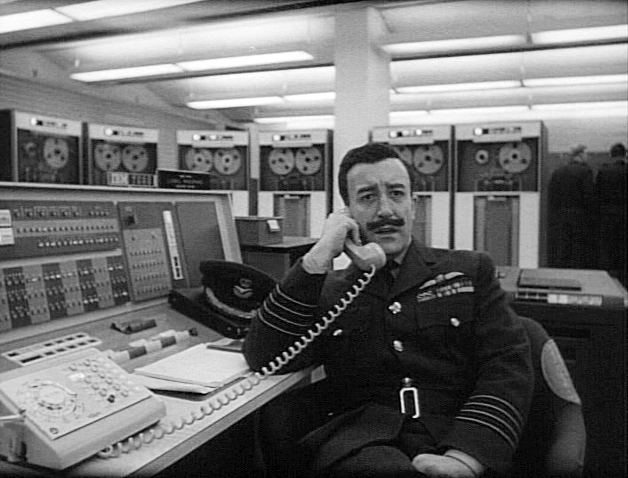
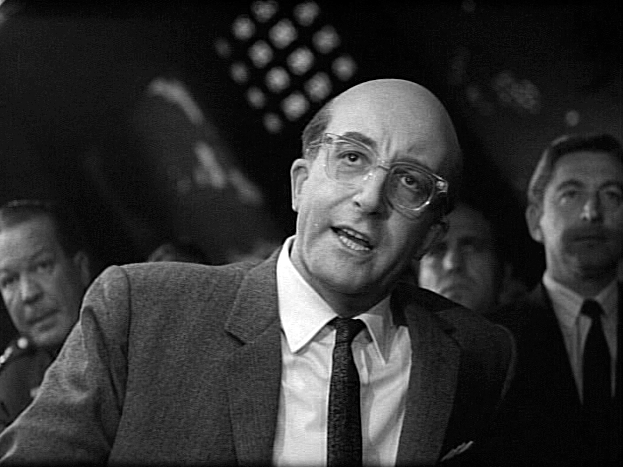


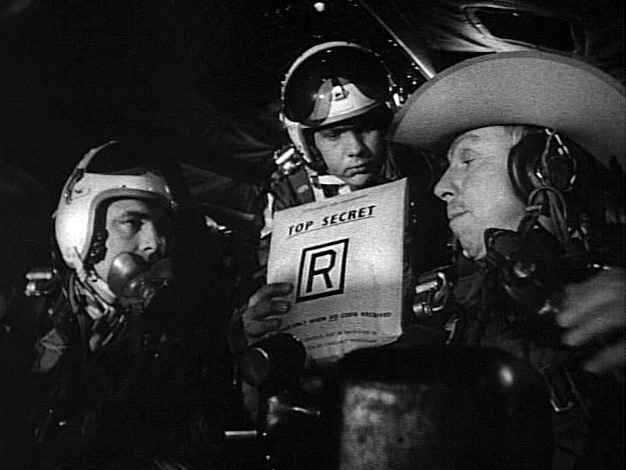

Plot summary
The narrative follows a chain of events set in motion when an unstable United States Air Force officer issues an unauthorized order that sends B-52 bombers to the Soviet Union with live thermonuclear weapons. Much of the film alternates between the President’s emergency sessions in the War Room and the tense drama aboard a lone bomber determined to carry out its mission. The President and his advisers, including military chiefs and scientific counsellors, attempt to recall the strike and avoid catastrophe. The plot culminates in the discovery of a Soviet doomsday deterrent and a bleakly comic coda underscored by a wartime ballad, which reinforces the film’s darkly ironic tone.
Characters and performances
Peter Sellers supplies three of the film’s most memorable portrayals: the eccentric scientific adviser Dr. Strangelove, the mild-mannered President Merkin Muffley and Group Captain Lionel Mandrake of the Royal Air Force. Sellers’ versatility and comic precision are central to the film’s effect. Other notable performances include Sterling Hayden as the unstable General Jack D. Ripper, George C. Scott as the hawkish General Buck Turgidson, and Slim Pickens as Major T.J. "King" Kong, the B-52 pilot whose final scenes combine gallows humor with spectacle. The cast’s restraint amplifies the grotesque logic of the story.
Production and adaptation
Kubrick drew on Peter George’s novel Red Alert for basic plot elements but transformed the material into a mordant comedy rather than straight thriller. The film’s carefully designed War Room set, spare cinematography and deliberate pacing help maintain tonal control between satire and catastrophe. Kubrick’s collaboration with his cast and screenwriters reworked characters and dialogue so that institutional language and protocol become a source of absurdity rather than reassurance.
Themes and style
At its core the film interrogates the contradictions of nuclear deterrence, the delegation of lethal authority and the complacency of hierarchical systems in moments of crisis. Kubrick’s approach is formally cool: measured camera work, concise editing and an economy of visual information highlight how ordinary professional manners can coexist with extraordinary danger. The juxtaposition of comedic performance and catastrophic stakes creates a persistent sense of unease that fuels the satire.
Reception and legacy
On release the film provoked a range of reactions: some viewers were offended by its irreverent treatment of nuclear annihilation, while many critics and filmmakers hailed it as a singular achievement in political satire. Over time it has been widely reassessed as a milestone in film comedy and a touchstone for commentary on Cold War culture. The film has influenced writers, directors and commentators who address the ethics of command, the psychology of deterrence and the role of bureaucratic ritual in modern states.
Preservation and influence
In recognition of its cultural, historical and aesthetic importance, the United States Library of Congress selected Dr. Strangelove for preservation in the National Film Registry. The film remains a frequent subject of academic study and public discussion, cited for its sharp construction, performances and its capacity to make grave subject matter the object of sustained, uneasy laughter.
Further reading and resources
- Production history and background
- Stanley Kubrick: career overview
- Peter Sellers: roles and legacy
- Black comedy and satire in film
- On the War Room set design
- Interviews and archival documents
- Cast biographies and filmographies
- Military context and historical background
- Contemporary reviews from the 1960s
- Cold War diplomatic history
- Adaptation: from Red Alert to satire
- Nuclear strategy and deterrence theory
- Critical essays on performance and characterization
- Analysis of accents and impersonation in film
- Scientific advisers and public culture
- The film's doomsday device as dramatic device
- Music, soundtrack and cultural resonance
- Vera Lynn and wartime songs in postwar film
- Archival images and promotional materials
- Library of Congress and National Film Registry notes
Questions and answers
Q: What is the title of the movie?
A: The movie is called Dr. Strangelove or: How I Learned to Stop Worrying and Love the Bomb.
Q: Who directed and produced the film?
A: The film was directed and produced by Stanley Kubrick.
Q: Who starred in the movie?
A: Peter Sellers starred in the movie.
Q: What is the plot of Dr. Strangelove?
A: The plot of Dr. Strangelove follows an unhinged United States Air Force general, George C. Scott as General Buck Turgidson, who orders a first strike nuclear attack on the Soviet Union, as well as President, his advisers, Joint Chiefs of Staff, and a Royal Air Force (RAF) officer attempting to recall bombers to prevent a nuclear apocalypse and crew of one B-52 bomber trying to deliver their payload.
Q: What role did Peter Sellers play in Dr. Strangelove?
A: Peter Sellers played three main roles in Dr. Strangelove - Dr. Strangelove, President Merkin Muffley, and Group Captain Lionel Mandrake of RAF - all key roles for which he received much praise for his acting ability..
Q: What is special about this movie that it was chosen by United States Library of Congress to be kept in National Film Registry?
A: This means that this movie will be protected from damage that happens to older films used to make movies due its historical value and importance as determined by US Library of Congress .
Q: Is there any connection between this movie with book Red Alert (1958)?
A: It seems that director Stanley Kubrick had intended to use ideas from Red Alert (1958), but as the film developed it changed its direction due influence tragi-comedy and genius acting by Peter Sellers .
Author
AlegsaOnline.com Dr. Strangelove: Stanley Kubrick’s Cold War satire Leandro Alegsa
URL: https://en.alegsaonline.com/art/137684