
Frederick I. Dretske
American philosopher Frederick I. Dretske (1932–2013) developed influential externalist and information-based accounts in epistemology and the philosophy of mind, focusing on knowledge, perception, and consciousness.
Overview
Frederick Irwin Dretske was an American philosopher known for shaping contemporary debates in epistemology and the philosophy of mind. Born in Waukegan, Illinois, he pursued advanced study in philosophy and later taught at several major universities. Dretske is widely remembered for applying an information-theoretic and naturalistic outlook to questions about knowledge, perception, and mental content.
Image gallery
1 Image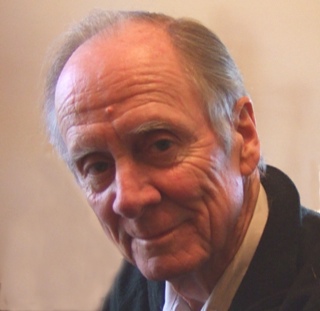
Philosophical contributions
Dretske argued that knowledge and mental representation can be understood in terms of information-carrying relations between the world and cognitive systems. Rather than treating content as purely a matter of internal subjectivity, his work emphasized how external causal and informational connections help determine what mental states represent. This perspective places him among the externalists in epistemology and the philosophy of mind, challenging strict internalist accounts that privilege only what is directly introspectible.
In the philosophy of mind, Dretske developed views about perceptual representation and conscious experience that stress the informational function of mental states. He explored how perception can yield knowledge when the relevant information reliably flows from environment to subject, and he probed the limits of self-knowledge and "privileged access"—how, and to what extent, subjects can know their own mental states.
Career and honors
Dretske completed his doctoral work at the University of Minnesota and held faculty positions including a lengthy appointment at the University of Wisconsin–Madison before teaching at Stanford University. After retiring from Stanford he moved to Duke University, where he continued research as a senior scholar. He received recognition from the international philosophical community, including awards such as the Jean Nicod Prize.
Key themes and examples
- Information and content: Mental states represent when they carry information about distal objects or properties in suitable causal or reliable ways.
- Knowledge through perception: Perceptual systems can provide knowledge when they transmit the right kind of information from environment to agent.
- Externalism vs internalism: Dretske's proposals contributed to debates over whether mental content and justification depend on factors outside an individual's subjective perspective.
- Consciousness and self-knowledge: Later work focused on how conscious experience and self-ascription of mental states should be understood within a largely naturalistic framework.
Legacy and significance
Dretske's blend of analytic clarity and attention to empirical notions of information helped bridge philosophy with cognitive science and communication theory. His ideas influenced discussions about representation, perception, and the conditions under which belief counts as knowledge. Students and colleagues continued to engage with his arguments after his death in 2013, and his work remains a touchstone in contemporary philosophy.
For general biographical information and further reading, see entries and resources that discuss his life and publications in more detail. Dretske's writings are commonly cited in surveys of modern epistemology and philosophy of mind, and they are studied in courses on perception, representation, and the nature of knowledge.
See also: American contributions to analytic philosophy; major topics in epistemology and the philosophy of mind.
Related articles
Author
AlegsaOnline.com Frederick I. Dretske Leandro Alegsa
URL: https://en.alegsaonline.com/art/119252
Sources
- books.google.com : Fred Dretske biography
- leiterreports.typepad.com : In Memoriam Fred Dretske 1932-2013