
Fouad Siniora: Lebanese statesman and prime minister (2005–2009)
Profile of Fouad Siniora, Lebanese politician who served as prime minister from 2005 to 2009 and as acting president during the 2007–2008 presidential vacuum; overview of career, events, and legacy.
Fouad Siniora (Arabic: فؤاد السنيورة) is a Lebanese politician best known for leading the government of Lebanon in a turbulent period after the 2005 Cedar Revolution. He served as prime minister from mid-2005 through late 2009 and acted as head of state during a prolonged vacancy of the presidency in 2007–2008.
Image gallery
3 Images
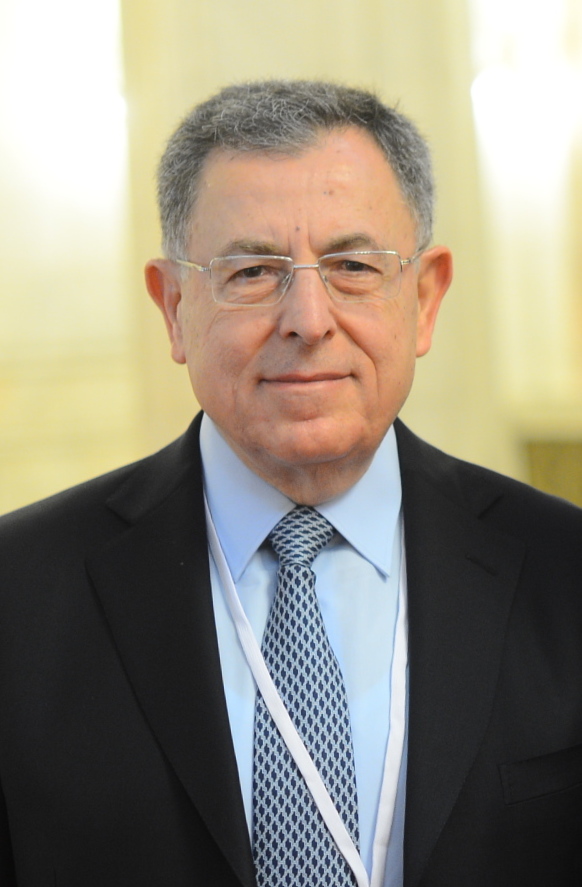

Background and rise to prominence
Siniora trained and worked in finance before entering high-level politics. He served in ministerial roles, notably overseeing public finances in cabinets that followed the long tenure of Prime Minister Rafik Hariri. His appointment as prime minister on July 19, 2005, followed months of political realignment after Hariri's assassination and the withdrawal of Syrian troops.
Tenure as prime minister
During his premiership Siniora led a government formed by the March 14 coalition and faced a series of domestic and regional crises. He took office after the administration of Najib Mikati and remained in the role until he was replaced by Saad Hariri in November 2009. His government prioritized reconstruction, fiscal management and securing international support in the wake of conflict.
Major events and acting presidency
Siniora's time in office coincided with the 2006 war between Israel and Hezbollah and with intensifying domestic polarization between rival political blocs. When the presidency became vacant in late 2007 he assumed the constitutional duties of the president in an acting capacity from November 2007 until a settlement in May 2008. That interval included intense negotiations, local unrest, and an international push for mediation that culminated in an agreement to elect a new president.
Policies, challenges and legacy
Siniora's administration emphasized rebuilding infrastructure damaged in the 2006 conflict, attracting donor assistance, and pursuing fiscal reforms. Critics cited political gridlock and sectarian tensions that limited deeper reform, while supporters credit his government with maintaining a pro-sovereignty stance and securing foreign aid. The period highlighted the fragility of Lebanon's consociational political system and the difficulty of governing amid competing domestic and regional pressures.
Offices and roles
- Finance minister and senior economic official in cabinets of the 1990s and early 2000s
- Prime minister of Lebanon (appointed July 19, 2005)
- Acting president during the 2007–2008 presidential vacancy (November 2007–May 2008)
Siniora remains a prominent figure in contemporary Lebanese politics: his premiership is often studied for how elected leaders navigate external pressures, internal divisions and the task of post-conflict recovery. For further reading on his career and the events of that era, consult dedicated political histories and contemporary news archives.
Related articles
Author
AlegsaOnline.com Fouad Siniora: Lebanese statesman and prime minister (2005–2009) Leandro Alegsa
URL: https://en.alegsaonline.com/art/118995