
Fernando Botero: the artist of exaggerated volume and global public sculpture
Colombian painter and sculptor Fernando Botero (born 1932) is known for his distinctive inflated, rounded figures—a style called Boterismo—and for large bronze sculptures displayed in public spaces worldwide.
Fernando Botero (born 19 April 1932) is a Colombian painter and sculptor famous for a distinctive style often called "Boterismo," in which people, animals and objects are rendered with exaggerated, rounded volume. His work spans paintings, drawings, prints and large bronze sculpture. Botero's art is widely exhibited and appears in public collections and squares in many countries; he is regarded as one of Latin America's most internationally recognized modern artists. Biography and background
Image gallery
10 Images


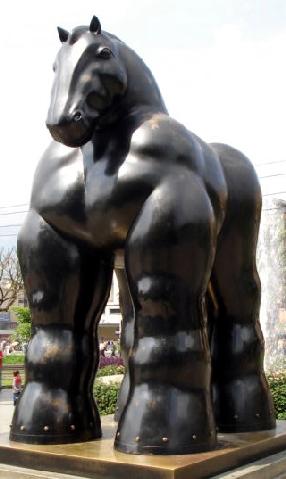


Characteristics of his work
Botero's images are immediately recognizable for their inflated proportions, smooth surfaces and deliberate simplification of detail. The effect can read as humorous, elegiac, critical or sensual depending on subject and setting. He works in several media, most notably:
- Painting and drawing — oil on canvas, tempera, watercolour and printmaking.
- Sculpture — primarily cast bronze figures produced at large scale from the mid-1970s onward.
- Recurring themes — domestic scenes, musicians, portraits, animals, religious subjects and scenes of public ritual.


Artistic development and history
Born in Medellín, Botero traveled and lived in Europe for extended periods, where he encountered classical and modern European art. In the 1950s and 1960s he developed his pictorial voice; in 1976 he began to produce free-standing sculptures. His practice balances an interest in formal simplification with cultural and art-historical references: he often reworks classical or canonical subjects through his volumetric lens. For further historical context see critical introductions.


Public works, collections and impact
Botero's large bronzes have become familiar features of plazas and parks around the world, inviting public engagement and photography. Museums in Colombia and abroad exhibit his paintings and donated collections. He and his family have contributed substantial holdings to institutions, notably a museum in Bogotá that displays many of his works. His combination of scale, accessibility and a recognizable visual language has made him commercially successful and influential for later Latin American artists. Explore museum holdings and public installations via museum resources and public art guides.

Notable aspects and reception
Critics and viewers vary in their reading of Botero: some emphasize irony or satire in his enlarged figures, others point to empathy, monumentality and formal play. In the early 21st century he also produced works responding to contemporary events, which broadened public debate about art and politics. For curated lists of works and exhibitions consult catalogue and exhibition links. Botero remains a central figure for understanding how a single, consistent visual idea can be developed across media, scale and context.
Related articles
Author
AlegsaOnline.com Fernando Botero: the artist of exaggerated volume and global public sculpture Leandro Alegsa
URL: https://en.alegsaonline.com/art/118917