
Bamberg: historic town in Upper Franconia, Bavaria
Bamberg is a Bavarian town famed for its exceptionally preserved medieval centre, UNESCO status, seven hills with churches, cathedral history, university presence and long brewing traditions.
Bamberg is a city in northern Bavaria noted for a remarkably intact historic centre and a long continuity of urban life. The town sits in the region of Upper Franconia within the state of Bavaria and serves as the seat of the district administration of Bamberg. It is also a university town, with a campus that shapes local culture and the student population (university). The German name is pronounced in various ways — audio and pronunciation guides are available (pronunciation).

Image gallery
10 Images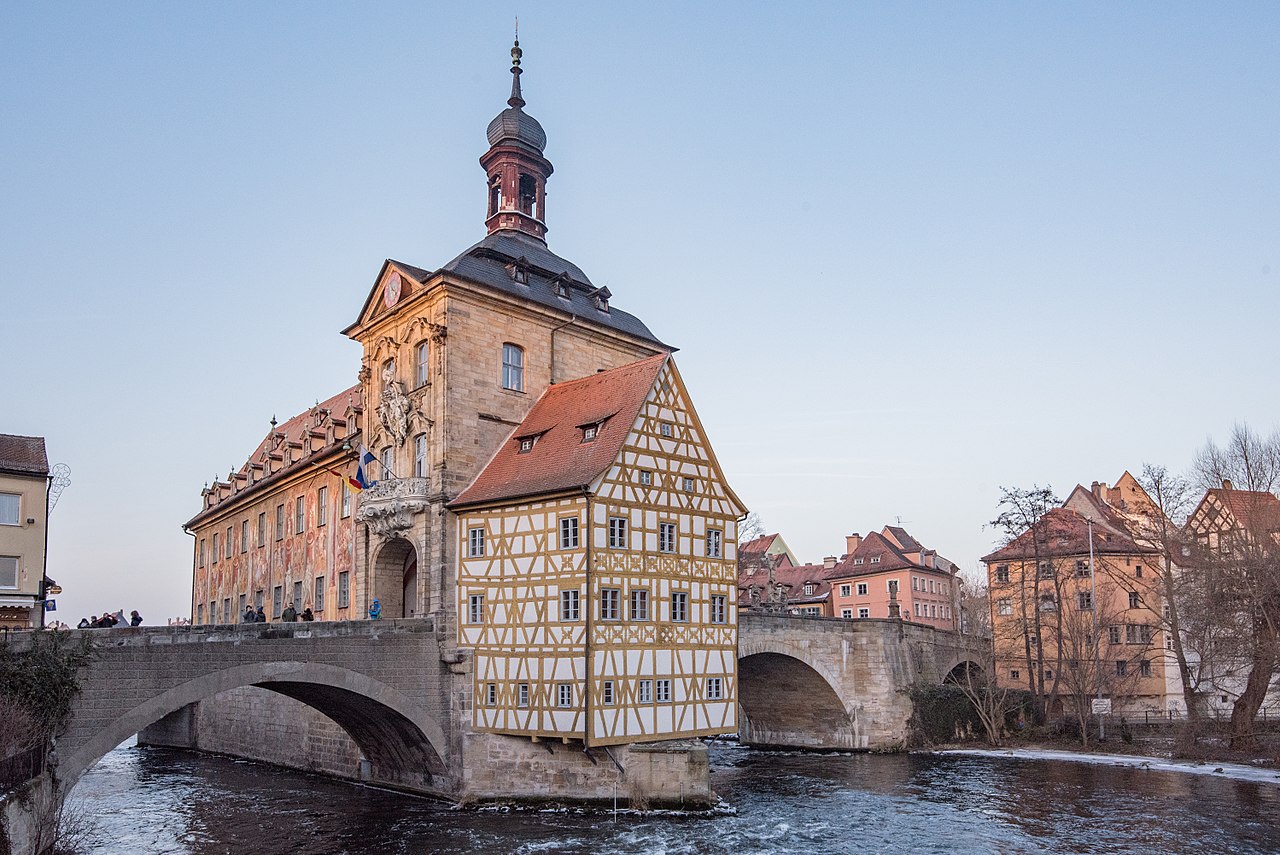





Overview and character
The town has a population of roughly 70,000 and combines contemporary regional services with an exceptionally well-preserved historic core. A compact old town clustered along the river contrasts with residential and administrative neighbourhoods. Bamberg suffered relatively little destruction in World War II, preserving much of its medieval and Baroque architecture; wartime damage and reconstruction are often discussed in local histories (World War II).
Geography and urban layout
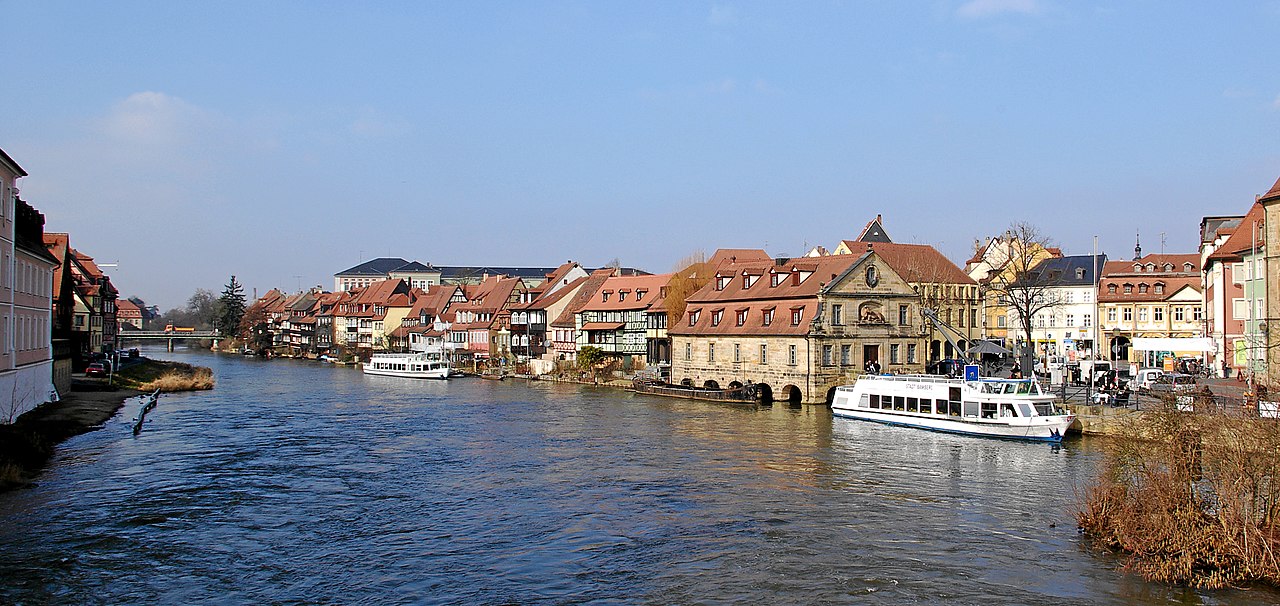
Bamberg is built on several hills surrounding the river Regnitz, whose branches divide and rejoin as they pass through the town. The layout recalls other historic hill towns: it is frequently compared to Rome because seven hills in the municipal area each carry a church or religious site. One of the main hills is crowned by the cathedral (Bamberg Cathedral), which, together with episcopal residences, shaped both the skyline and medieval governance.
History and development
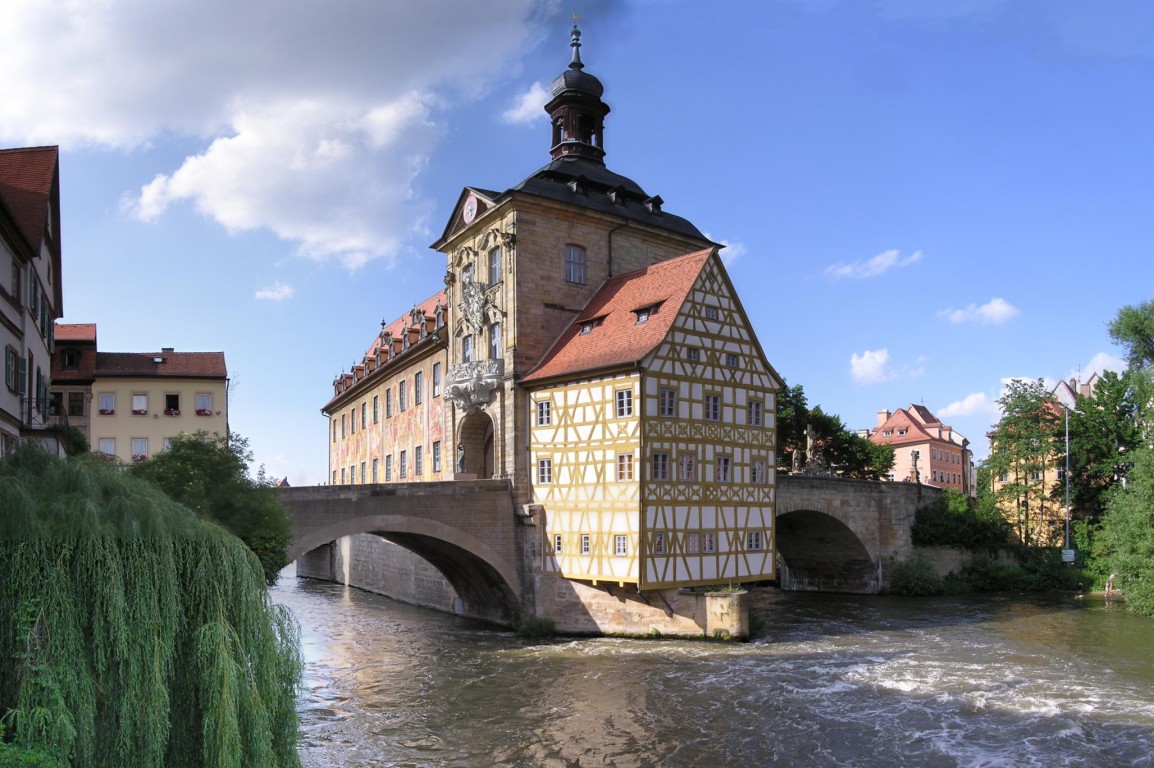
For centuries Bamberg was the seat of prince-bishops whose secular authority extended over the surrounding territory; their influence lasted into the era of Napoleonic reorganization and beyond, after which their role became primarily ecclesiastical (19th-century changes). The surviving street pattern, bridges and merchant houses reflect growth from the medieval period through the Baroque and later eras. Sculptural works such as the celebrated equestrian figure in the cathedral and numerous churches and monasteries record artistic and religious life across the centuries.
Culture, economy and uses
Bamberg combines cultural institutions, a university, and craft and commerce. Tourism focuses on the historic centre, museums and cathedral, while academic life brings conferences and research. The town also has a strong brewing tradition; local breweries and beer culture form a notable part of Bamberg's identity. The Main–Danube connection has long linked the area to wider inland waterways: the town lies on waterways that connect the Main and the Danube systems, aiding transport and trade.
Notable sites and distinctions
- The medieval and Baroque town centre is protected as a UNESCO World Heritage Site because of its preserved ensemble of buildings and urban fabric.
- The cathedral hill and former bishop’s palace illustrate the city’s ecclesiastical past; these remain focal points for visitors and local ceremonies (cathedral).
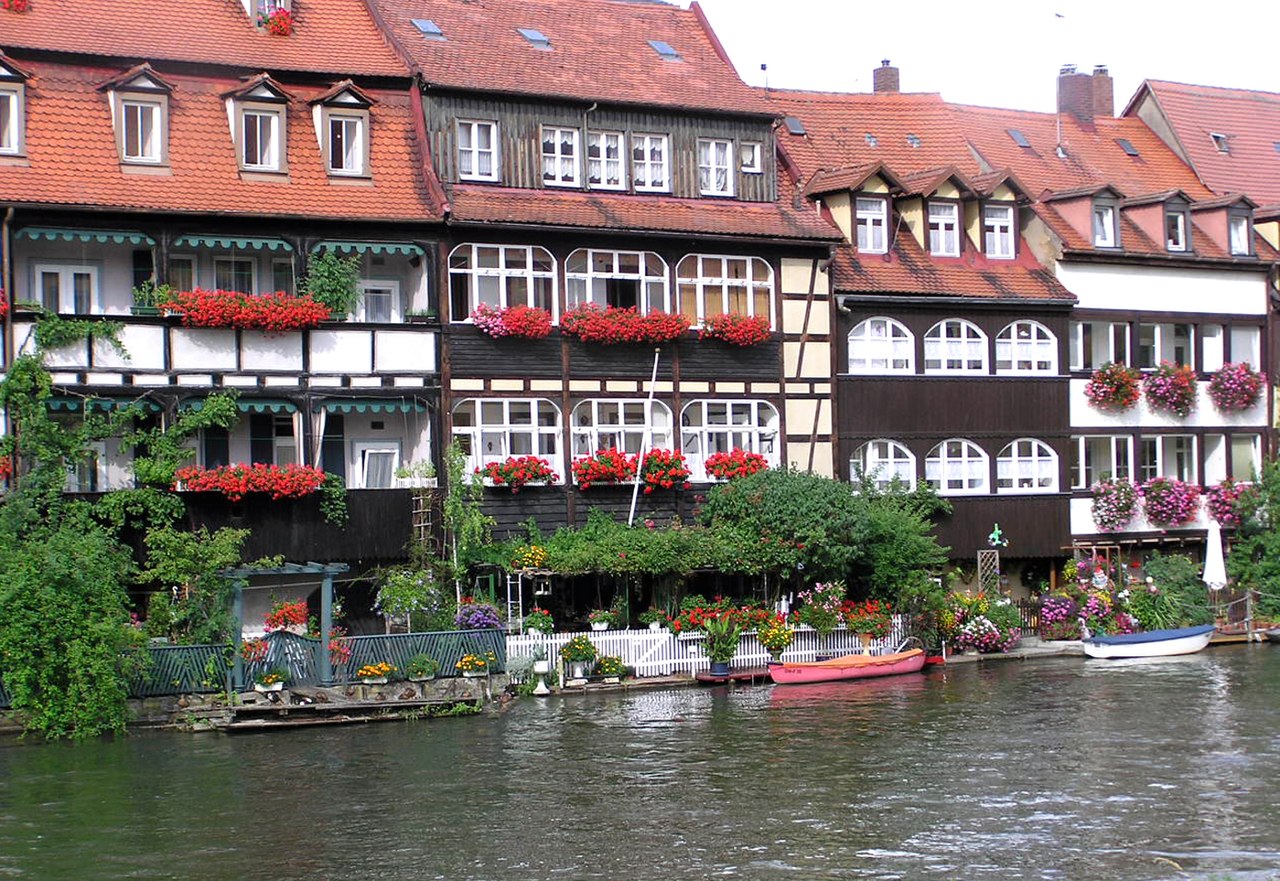
- Rivers, canals and historic bridges create distinctive quarters such as the waterfront area often called "Little Venice." Navigation and canals continue to influence commerce and leisure.
- Contemporary Bamberg balances heritage conservation, higher education and municipal functions administered from the district headquarters (district), under locally elected leaders (mayor).
Bamberg’s appeal rests on the tangible continuity of place: streets, churches and houses that embody centuries of German urban history. Visitors and residents encounter layered architectural styles and civic institutions that reflect both regional Franconian character and wider European currents, from medieval princely rule to modern university life.
For further reading and practical information—maps, transport and cultural programming—consult local guides and official resources, including university pages and heritage authorities (university, UNESCO, pronunciation).
Questions and answers
Q: What is the population of Bamberg?
A: The town of Bamberg has about 70,000 inhabitants.
Q: Who is the Lord Mayor of Bamberg?
A: The Lord Mayor of Bamberg is Andreas Starke (SPD).
Q: How was Bamberg affected by World War II?
A: Unlike most other German towns, Bamberg was little damaged in World War II and only 4.6% was totally ruined.
Q: Is there anything special about the architecture in Bamberg?
A: Yes, the basic structure of the town remained untouched through the centuries and it has many buildings which are very old. It is also protected as a UNESCO World Heritage Site.
Q: What makes Bamberg similar to Rome?
A: Like Rome, Bamberg is built on seven hills, each one with a church at the top.
Q: Who ruled over land in Bamberg for hundreds of years?
A: For hundreds of years, prince-bishops from the cathedral ruled over the land until the beginning of 19th century when they just continued their religious function as archbishops.
Q: What river runs through the town centre below in Bamberg?
A: The river Regnitz splits into two parts and runs throught he town centre below in Bamberg. The left arm of this river holds the old town centre while its right arm holds Main-Danube Canal (Main-Donau-Kanal), which allows big ships to travel from river Main to Danube.
Related articles
Author
AlegsaOnline.com Bamberg: historic town in Upper Franconia, Bavaria Leandro Alegsa
URL: https://en.alegsaonline.com/art/8634