
Erhard Eppler — German Social Democratic Politician and Development Advocate
Erhard Eppler (1926–2019), SPD politician, served as Federal Minister for Economic Cooperation (1968–1974), founded GTZ and shaped post‑war German development, ecological and social‑democratic debates.
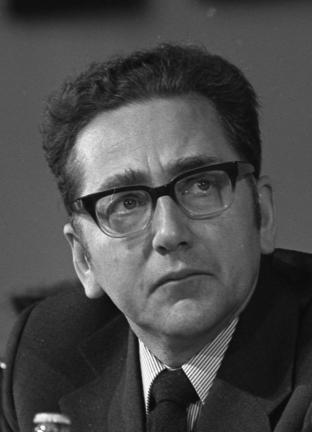
Erhard Eppler (9 December 1926 – 19 October 2019) was a prominent German politician and public intellectual associated with the Social Democratic Party (SPD). He is best known for his work in development policy, his role in creating modern German development institutions, and his influence on debates about social democracy, ecology and international solidarity. Eppler combined ministerial office with sustained engagement as an author and party reformer.
Image gallery
3 Images

Political career and offices
Eppler served as Federal Minister for Economic Cooperation and Development from 1968 to 1974, a period when West Germany expanded its post‑war development relationships. During those years he promoted practical cooperation with developing countries and helped build administrative structures for technical assistance. For much of the period from 1970 to 1991 he was a member of the SPD's National Executive Committee, taking part in internal debates about the party's direction and policies.
Institution building and development work
One of Eppler's lasting institutional legacies was his central role in founding the German technical cooperation agency commonly known as GTZ, an organization dedicated to development cooperation and capacity building. That agency later became part of the integrated development organization GIZ. Eppler championed policies linking economic, social and ecological dimensions of development and emphasized long‑term partnerships between Germany and countries of the Global South.
Ideas, commissions and party reform
Within the SPD Eppler chaired commissions on tax reform and on the party's basic values, helping to clarify platforms and to modernize the party's program. He was known for arguing that social‑democratic politics must address environmental limits, social justice and international responsibility together. In later decades he remained an independent voice, often critical of purely market‑oriented reforms and urging a stronger ethical dimension to economic policy.
Writings, public engagement and legacy
Eppler was an active publicist and author of essays and books on development, democracy and the future of social democracy. His texts were read widely in German political circles and contributed to debates about sustainable development and North–South relations. His efforts influenced successive generations of politicians and civil servants working in development cooperation, environmental policy and participatory governance.
Notable facts
- Founder of the GTZ, an important German technical cooperation agency (GTZ/GIZ).
- Federal Minister for Economic Cooperation and Development (1968–1974), shaping early German development policy.
- Longstanding member of the SPD National Executive Committee and chair of internal commissions on tax reform and core party values; see party biography and selected writings for further context.
Related articles
Author
AlegsaOnline.com Erhard Eppler — German Social Democratic Politician and Development Advocate Leandro Alegsa
URL: https://en.alegsaonline.com/art/118587
Sources
- gtz.de : "GTZ. Interview Erhard Eppler" · web.archive.org