
Dominick Cirillo — "Quiet Dom", longtime Genovese family leader
An encyclopedic profile of Dominick "Quiet Dom" Cirillo (b.1929), his role in the Genovese crime family, tenure as acting boss, health and legal setbacks, and his reputation within New York organized crime.
Overview
Dominick Vincent Cirillo (born July 4, 1929), widely known by the nickname "Quiet Dom," is an American organized‑crime figure associated with the Genovese crime family. Born and raised in Harlem in New York, Cirillo built a reputation for maintaining a low public profile while exercising significant influence within one of New York’s most powerful criminal organizations.
Image gallery
1 Image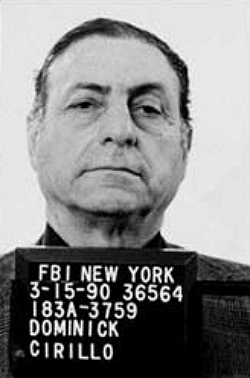
Rise and position in the organization
Cirillo emerged as a trusted lieutenant within the Genovese organization, which is one of the major families that have historically dominated organized crime in the United States. Members of the family have typically managed a range of activities such as labor racketeering, extortion, gambling, and loan‑sharking; as a senior figure Cirillo was involved in overseeing parts of the family's operations and in advising on strategy and relations with other groups.
Acting boss and responsibilities
When long‑time boss Vincent "Chin" Gigante was imprisoned, Cirillo was tapped to act on behalf of the family's leadership, representing Genovese interests in dealings with the other major New York Mafia organizations. In this capacity he was often described in law‑enforcement reporting as an acting boss who coordinated with peers and maintained internal discipline while Gigante remained the nominal head. His quiet manner and preference for working behind the scenes earned him the sobriquet "Quiet Dom." The family he represented is part of the wider network of Mafia families that have operated in New York City.
Health, legal troubles, and later life
Cirillo’s tenure as acting boss was interrupted in the late 1990s when he suffered a serious health event and stepped back from frontline leadership. In subsequent years he was the subject of federal investigations and prosecutions that targeted racketeering and related crimes involving organized‑crime networks. He served a period in federal custody and was released in August 2008 after serving more than three years. Accounts of his later life emphasize his diminished public role following imprisonment and health issues.
Significance and assessment
Observers of organized crime note Cirillo’s case as illustrative of how leadership can be delegated within hierarchical criminal groups: a principal boss may retain formal authority while a trusted deputy handles day‑to‑day interactions. Cirillo’s long association with the Genovese organization and his discreet style made him a notable example of a senior figure who combined influence with a low public profile. For further contextual reading on the family's history and structure, see general resources on the Genovese crime family and the broader history of New York City organized crime.
Key points
- Born in Harlem in 1929; nicknamed "Quiet Dom."
- Served as a senior representative and acting leader for the Genovese family during periods of imprisonment for its boss.
- Stepped down from active leadership after a serious health problem in the late 1990s.
- Subject to federal prosecution and incarceration; released in August 2008 after more than three years in custody.
For related topics on organized crime families and their interactions in mid‑ and late‑20th century New York, consult historical overviews and law‑enforcement summaries that discuss how syndicates negotiated power, succession, and external relations across the city's crime networks.
Related articles
Author
AlegsaOnline.com Dominick Cirillo — "Quiet Dom", longtime Genovese family leader Leandro Alegsa
URL: https://en.alegsaonline.com/art/117771
Sources
- nytimes.com : "'Quiet Dom' Is Seen as Heir to Gigante as Crime Family Boss"
- bop.gov : "Dominick Cirillo"