
Dennis Rader (BTK) — American serial killer
Dennis Rader, known as the BTK killer, murdered ten people near Wichita, Kansas between 1974 and 1991. He communicated with police and media, was arrested in 2005 and given multiple life sentences.
Overview
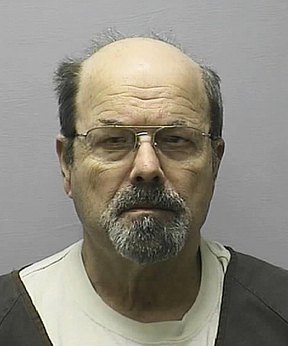
Dennis Lynn Rader (born March 9, 1945) is an American convicted serial killer who murdered ten people in the Wichita, Kansas area between 1974 and 1991. He became widely known as "BTK," an acronym for "Bind, Torture, Kill," a signature that described the method he admitted using in his attacks. Rader taunted investigators and the public with letters describing the crimes, some of which contained details that were not publicly available. After a long hiatus in communications, renewed messages in 2004 led to his identification, arrest in 2005, and eventual conviction.
Image gallery
9 Images



Modus operandi and communications
Rader's crimes were characterized by home invasions, restraint of victims, sexual violence in several cases, and death by strangulation. He chose victims and returned to their homes in several instances, leaving little immediate forensic trace at the scene. A defining aspect of the case was Rader's correspondence: he sent taunting letters, poems, and reports of his actions to local news organizations and law enforcement. Those communications kept the case in the public eye and provided investigators with both challenges and leads as the letters sometimes mixed accurate crime scene information with ritualized language.
Investigation and arrest
Local law enforcement, federal agents, and forensic specialists followed many leads over decades. The written communications both aided and misled investigators: they confirmed that the author had knowledge of specific facts while also complicating the timeline. After the letter campaign paused for many years, the sender resumed contact in 2004. Advances in forensic technology and careful analysis of a floppy disk handed over by the sender's communications ultimately helped link the messages to Rader. Investigators then used traditional police work to establish probable cause, leading to Rader's arrest in early 2005.
Trial, conviction, and sentence
Rader cooperated with investigators only after his arrest and later pleaded guilty to the murders. To avoid the death penalty, he entered guilty pleas to multiple counts of first-degree murder. He received consecutive life terms and an aggregate sentence that amounts to at least 175 years in prison, effectively ensuring he will spend the remainder of his life in custody. The sentencing acknowledged the gravity of the crimes and provided a formal closure to the criminal proceedings.
Impact and notable aspects
The BTK case had several lasting effects on criminal investigations and public perception. It highlighted the role of offender communications in both aiding capture and prolonging public fear. The case demonstrated how relatively small mistakes by a suspect using contemporary technology can be exploited by investigators. Public reaction to the case also raised questions about media coverage of taunting criminals and the balance between informing the public and avoiding amplification of a perpetrator's messages. Families of victims have continued to advocate for remembrance and studied approaches to victim support and privacy.
Further reading and resources
- General information on the case
- Chronology of events and victims
- Analysis of the BTK letters
- Regional context: Wichita area reporting
- Discussion of motive and criminal pattern
- Forensic techniques used in the investigation
- Arrest and legal proceedings
- Victim impact and memorials
- Media coverage and ethical considerations
- Further academic and law-enforcement resources
Related articles
Author
AlegsaOnline.com Dennis Rader (BTK) — American serial killer Leandro Alegsa
URL: https://en.alegsaonline.com/art/117542
Sources
- biography.com : "Dennis Rader Biography"
- nbcnews.com : "BTK killer gets maxmum life sentence"