
Deng Xiaoping: Architect of China's Reform and Opening
Chinese Communist leader Deng Xiaoping (1904–1997) led China's shift from Maoist economics to market-oriented reforms, launching policies that transformed the country's economy and global role.

Deng Xiaoping (22 August 1904 – 19 February 1997) was a Chinese Communist revolutionary and the country's paramount leader from the late 1970s into the early 1990s. Although he seldom held the formal offices of head of state or head of government, Deng exercised decisive authority through senior party and military positions and through his role as a guiding strategist. His tenure is best known for initiating the policy of "reform and opening up," which shifted China toward a mixed economy while retaining the Communist Party's political control.
Image gallery
10 Images

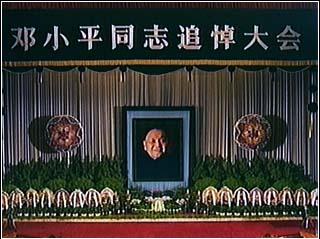


Early life and political background
Deng was born in Guang'an, Sichuan province, and spent part of his youth abroad in Europe where he encountered socialist and communist ideas. He returned to China and took part in revolutionary activities, rising through the ranks of the Communist movement during its formative decades. Long involved in party organization and administration, his experience combined practical governance with revolutionary credentials.
Rise to influence
After the turmoil of the Cultural Revolution and the death of Mao Zedong, China faced economic dislocation and political uncertainty. Deng emerged as the leader who offered a new course. He consolidated influence not by occupying the highest ceremonial posts but by commanding authority within the Communist Party and the armed forces, shaping policy through consensus among senior cadres and by promoting reform-minded allies.
Economic reforms and key policies
Deng's most significant legacy is the set of policies that opened China to foreign investment, market mechanisms and private enterprise under state supervision. His approach is often summarized as "Socialism with Chinese characteristics": a pragmatic fusion of central political control with economic liberalization. Important elements included:
- Decollectivization of agriculture and the Household Responsibility System, which increased farm productivity and rural incomes.
- Creation of Special Economic Zones, most famously Shenzhen, to attract foreign capital and technology and to pilot market-oriented reforms.
- Encouragement of private business, foreign joint ventures, and export-led growth that integrated China into global trade.
- Emphasis on the Four Modernizations—industry, agriculture, science and technology, and national defense—as a framing goal for development.
Political challenges and 1989
Deng's reforms produced rapid economic growth but also social tensions and demands for political change. In 1989, mass protests centered on calls for political reform were met by a government decision to restore order, a choice that remains a focal point of debate about Deng's leadership. The episode illustrated the limits Deng set on political pluralism: economic opening proceeded without equivalent political liberalization.
Legacy and assessment
Deng Xiaoping transformed China's economy and altered its role in the world. Supporters credit him with lifting hundreds of millions of people out of poverty and with laying the foundations for China's emergence as a major global power. Critics note the uneven social effects of rapid growth and the continued centralization of political authority. Today, Deng is remembered both for pragmatic economic policies and for defining the modern Chinese state's combination of market practices under one-party rule.
For further context, see references and resources on language, biography and institutions: Simplified Chinese, Traditional Chinese, revolutionary background, political roles, reform policies, Communist Party, state offices, de facto leadership, People's Republic of China, Guang'an, Sichuan, health and death, Beijing.
Related articles
Author
AlegsaOnline.com Deng Xiaoping: Architect of China's Reform and Opening Leandro Alegsa
URL: https://en.alegsaonline.com/art/117497
Sources
- china.org.cn : "Deng Xiaoping – Childhood"
- sacu.org : sacu.org
- timeshighereducation.co.uk : "Exiled son who saved the state"