
Date Masamune
Powerful 16th–17th century Japanese regional lord (daimyo) who founded the Sendai domain, was nicknamed the "one-eyed dragon", and is remembered for military skill, diplomacy and cultural patronage.
Date Masamune (伊達 政宗, September 5, 1567 – June 27, 1636) was a prominent Japanese daimyo who became the founder and first ruler of the Sendai domain in the Tōhoku region. He is widely known by the sobriquet dokuganryū, the "one-eyed dragon", a name that refers both to the loss of sight in one eye during childhood and to his formidable reputation as a warrior and leader.
Image gallery
9 Images
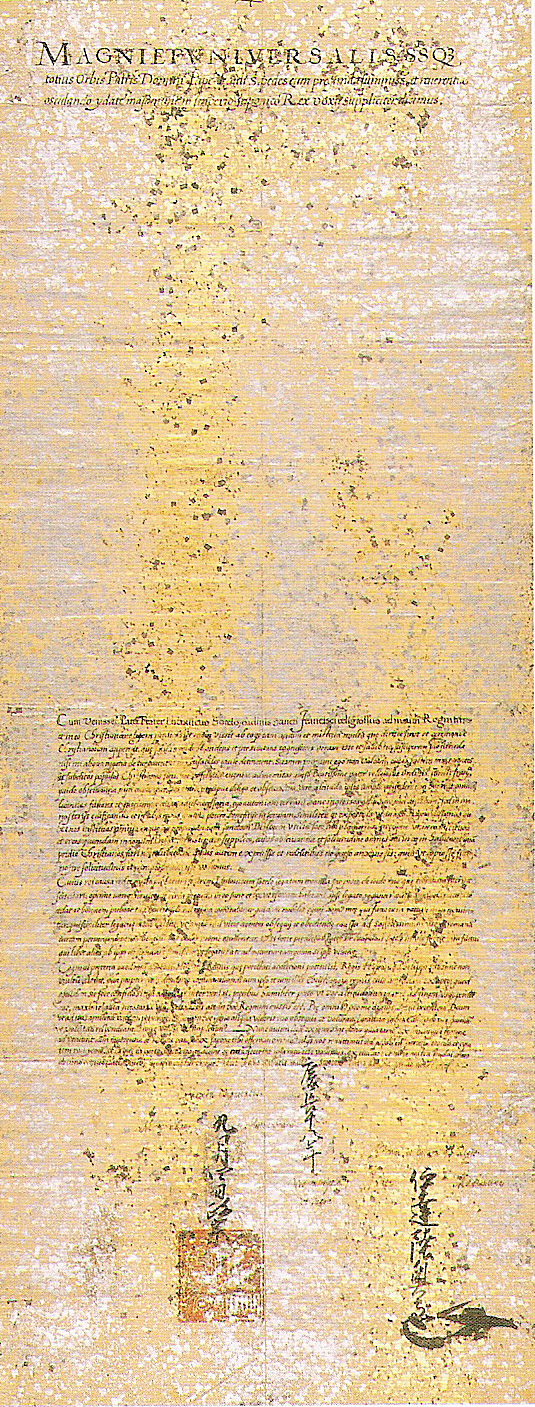


Overview
Masamune belonged to the Date clan; in Japanese naming order the family name is Date and his given name is Masamune. He was active during the late Azuchi–Momoyama and early Edo period, a time of political consolidation after long civil wars. As a daimyo he ruled a large northern territory on the main island of Honshū, centered in the Sendai basin of Tōhoku.
Early life and rise
Born into the regional warrior elite, Masamune succeeded his father as head of the clan while still young. Sources attribute his one-eyed condition to illness in childhood, and the image of the one-eyed dragon became a lasting part of his public persona. During his rise he combined military action, strategic marriage alliances, and calculated negotiations with neighboring lords to expand and stabilize Date control across much of northern Japan.
Governance and the founding of Sendai
Masamune reorganized administration in his domains, promoted castle building and local infrastructure, and attracted merchants and artisans to strengthen the regional economy. He established a new political center that evolved into the modern city of Sendai. His use of distinctive symbols, such as the crescent-moon crest and elaborate helmets, reinforced both authority and identity for his retainers.
Diplomacy, trade and international contacts
Unlike some contemporaries who isolated themselves, Masamune showed interest in foreign trade and contacts. He permitted Christian missionaries for a time and sponsored overseas commerce. One notable episode associated with his policies was the embassy to the Americas and Europe led by Hasekura Tsunenaga, an ambitious diplomatic and commercial mission that reflected a regional openness to exchange before national policy shifted under the Tokugawa shogunate. For general context on Japanese international links and missionary activity, see surveys of Japanese contacts and studies of naming and identity such as Japanese name conventions.
Legacy
Masamune's legacy is regional and national. His governance created institutions and urban centers that shaped Tōhoku for centuries. He is a recurring figure in Japanese literature, theatre, film and folklore, depicted as both a vigorous warrior and a cultured patron. Modern museums, reconstructed castle sites and annual commemorations preserve the history of the Date domain and attract scholarly and public interest.
- Key topics: feudal lordship and domain administration.
- Region: the Sendai basin and broader Tōhoku area.
- Historical periods: active in the Azuchi–Momoyama transition and the early Edo period.
- Further resources: studies of regional daimyo and archives on daimyo history and Japanese historical collections.
For introductory overviews consult general histories that cover the era's political consolidation and cultural life; specialized works examine Masamune's military campaigns, administrative reforms, patronage of the arts, and international initiatives such as the Hasekura embassy. Scholarly treatments analyze how his image as the "one-eyed dragon" has been used in later historical memory and popular culture.
Questions and answers
Q: Who is Date Masamune?
A: Date Masamune was a Japanese daimyo in the Tōhoku region during the Azuchi-Momoyama period and Edo period.
Q: When was Date Masamune born?
A: Date Masamune was born on September 5, 1567.
Q: When did Date Masamune die?
A: Date Masamune died on June 27, 1636.
Q: Why was Date Masamune known as the "one-eyed dragon"?
A: Date Masamune was known as the "one-eyed dragon" because he lost the use of an eye.
Q: In what period did Date Masamune live in?
A: Date Masamune lived during the Azuchi-Momoyama period and Edo period.
Q: In which region was Date Masamune a daimyo?
A: Date Masamune was a daimyo in the Tōhoku region.
Q: What is the meaning of the Japanese name "Date Masamune"?
A: "Date Masamune" is a Japanese name where "Date" is the family name and "Masamune" is the personal name.
Related articles
Author
AlegsaOnline.com Date Masamune Leandro Alegsa
URL: https://en.alegsaonline.com/art/117169
Sources
- books.google.com : Ancien Japon, p. 64.
- minorplanetcenter.net : 6859 Datemasamune