
Corneille Heymans: Belgian physiologist and Nobel Prize laureate
Corneille Heymans (1892–1968) was a Belgian physician and physiologist who won the 1938 Nobel Prize for demonstrating how peripheral chemoreceptors and nerve pathways regulate breathing.
Corneille Heymans (28 March 1892 – 18 July 1968) was a Belgian physician and physiologist best known for his work on the physiological control of respiration. His experiments showed how sensors in blood vessels detect chemical changes and communicate with the brainstem to adjust breathing. For this work he received the Nobel Prize in Physiology or Medicine in 1938.
Image gallery
2 Images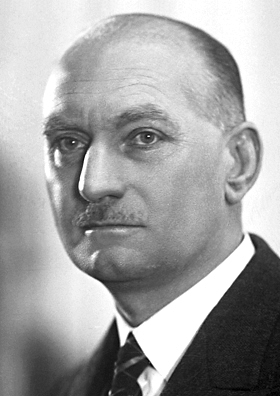

Scientific contributions
Heymans clarified the role of peripheral chemoreceptors — especially those located near the carotid and aortic arteries — in monitoring blood oxygen, carbon dioxide and pH. He demonstrated that these receptors send signals by way of specific cranial nerves to respiratory centers in the medulla, producing rapid adjustments in breathing. His findings established a chemical reflex mechanism that complements central nervous system controls.
Methods and experiments
Using physiological experiments on animals, Heymans combined surgical denervation, blood perfusion and nerve stimulation to separate local receptor effects from central control. By altering blood gases and observing reflex changes in respiration when particular nerves were cut or preserved, he drew clear links between peripheral chemical stimuli and respiratory responses.
Key contributions included:
- Identifying carotid and aortic chemoreceptors as detectors of blood gas and pH changes.
- Showing the importance of cranial nerve pathways in transmitting chemoreceptor signals.
- Integrating peripheral chemical feedback into models of respiratory regulation.
Life and career
Heymans trained and worked in Belgium, notably at the University of Ghent, where he pursued research in physiology and pharmacology. His career combined clinical training with laboratory investigation, reflecting an era when experimental physiology was rapidly revealing the mechanisms that underlie vital reflexes.
Impact and legacy: Heymans' discoveries had immediate importance for understanding respiratory disorders, anesthesia, and clinical care of patients with impaired oxygenation. By defining how the body senses and responds to blood-gas changes, his work influenced later research into sleep apnea, chronic obstructive pulmonary disease and the control of breathing in newborns and other vulnerable patients. He remains a central figure in the history of respiratory physiology.
Related articles
Author
AlegsaOnline.com Corneille Heymans: Belgian physiologist and Nobel Prize laureate Leandro Alegsa
URL: https://en.alegsaonline.com/art/116826
Sources
- nobelprize.org : "Biography of Corneille Heymans"
- nobelprize.org : "The Nobel Prize in Physiology or Medicine 1938"